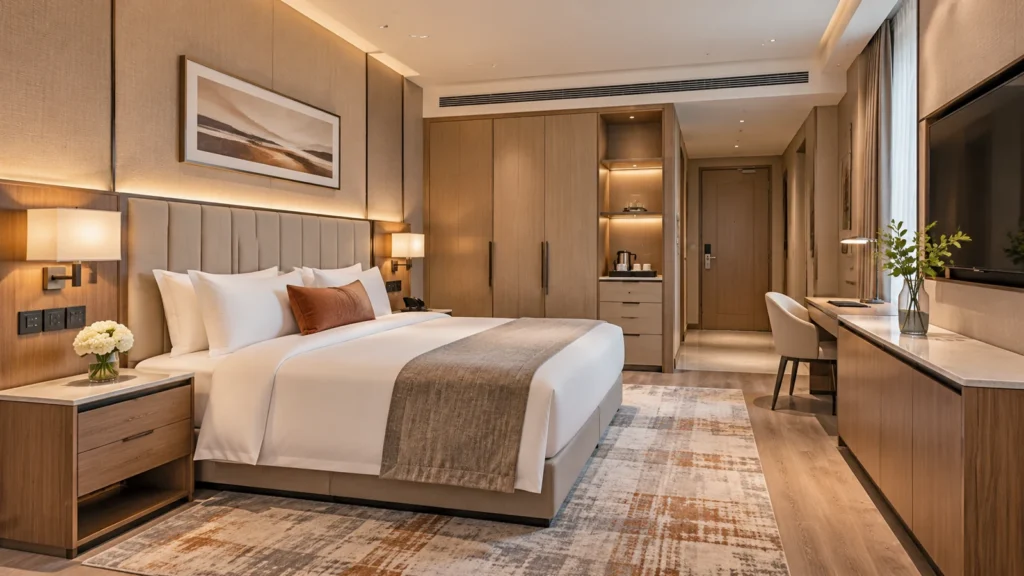
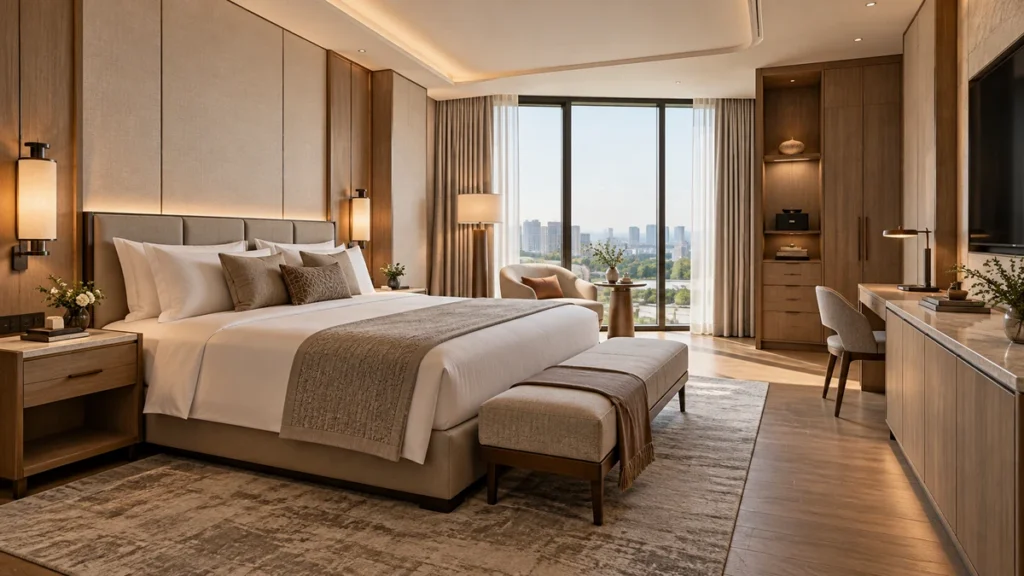
Renovating a hotel involves more than replacing outdated furniture. You must balance design standards, material quality, installation costs, and project timelines. Without a clear budget, even a minor furniture upgrade can lead to unexpected expenses.
So, how much does hotel FF&E replacement cost per key?
The answer depends on your hotel category, replacement scope, furniture specifications, and project location. Replacing a few wardrobes costs far less than upgrading every guestroom and public area.
This guide breaks down hotel FF&E replacement costs, key furniture categories, budget calculations, and practical cost-saving strategies. You’ll also learn how factory-direct manufacturing and modular furniture systems can improve renovation efficiency.
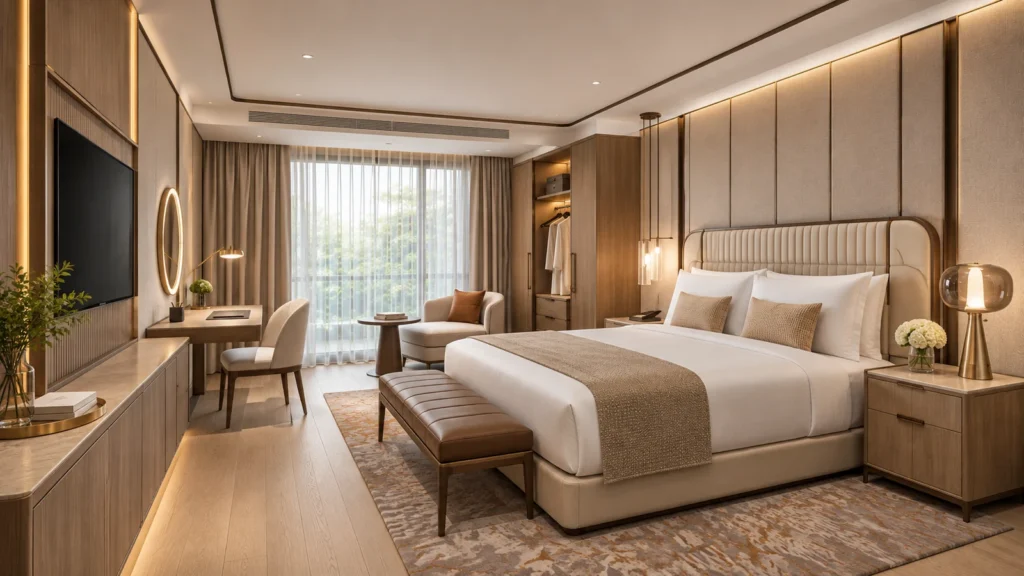
What Is Hotel FF&E Replacement Cost per Key?
Hotel FF&E stands for Furniture, Fixtures, and Equipment. It includes the physical items that support guest comfort and daily hotel operations.
During a hotel renovation, FF&E replacement involves removing, upgrading, or replacing existing items. The scope can range from individual furniture pieces to complete guestroom and public area upgrades.
What Does Hotel FF&E Replacement Include?
Hotel FF&E replacement typically covers several furniture and equipment categories.
| Category | Typical Items |
|---|---|
| Guestroom Furniture | Beds, headboards, nightstands, desks, wardrobes, and TV cabinets |
| Bathroom Furniture | Vanity cabinets, mirrors, countertops, and storage units |
| Public Area Furniture | Lobby seating, reception desks, restaurant furniture, and conference tables |
| Soft Goods | Carpets, curtains, upholstery, and decorative fabrics |
| Equipment | Lighting, televisions, safes, and selected operational equipment |
| Custom Millwork | Built-in cabinets, wall panels, and integrated furniture systems |
Custom millwork and built-in furniture are also common in hotel renovation projects. Their classification depends on the project scope and procurement specifications.
FF&E vs. OS&E vs. Hotel Fit-Out
These terms often overlap in hotel renovation planning. Understanding their differences helps define supplier responsibilities and avoid budget gaps.
FF&E
Furniture, fixtures, and equipment used in guestrooms and public areas.
- Guestroom casegoods and seating
- Lighting and televisions
- Carpets, curtains, and soft goods
OS&E
Operating supplies and equipment required for daily hotel operations.
- Bed linens and towels
- Tableware and glassware
- Uniforms and housekeeping supplies
Hotel Fit-Out
Interior construction, finishing work, fixed joinery, and installation.
- Flooring and wall finishes
- Fixed cabinets and custom millwork
- Furniture installation and coordination
The exact boundaries depend on the project contract. Some fit-out packages also include FF&E procurement and installation.
For a broader overview, see our guide to hotel FF&E and its key components.
What Does Cost per Key Mean?
Hotel FF&E replacement cost per key measures the total replacement budget against the number of guestroom keys covered by the project.
Cost per Key = Total FF&E Replacement Budget ÷ Number of Keys in Scope
For example, a hotel spending $500,000 to replace FF&E across 100 guestrooms has a replacement cost of $5,000 per key.
If the $500,000 budget covers guestrooms only, additional public area expenses must be included in the total project budget. For example, adding $100,000 for lobby and restaurant furniture brings the total to $600,000, or $6,000 per key.
This calculation allocates shared public area costs across the hotel’s guestroom keys. Always define the replacement scope before comparing hotel FF&E costs per key.
New Construction vs. FF&E Replacement
New hotel construction and existing property renovations require different budgeting approaches.
| Cost Consideration | New Hotel Construction | FF&E Replacement |
|---|---|---|
| Furniture Scope | Complete furniture package | Selected or full replacement |
| Existing Furniture | No existing inventory to reuse | Existing items may be retained or refurbished |
| Installation | Planned around new construction | Must accommodate existing building conditions |
| Removal and Disposal | Usually not required for existing FF&E | May add significant project costs |
| Project Scheduling | Coordinated with construction | May require phased installation |
During renovations, existing furniture may still have usable structures. Some items only need new finishes, hardware, or replacement components.
For this reason, new-build FF&E benchmarks should not be treated as direct hotel furniture replacement cost estimates. For reference, HVS’s 2026 U.S. Hotel Development Cost Survey provides new-development cost benchmarks rather than universal replacement prices.
Hotel FF&E Development Cost Benchmarks by Hotel Category
Hotel category is an important factor in hotel FF&E replacement costs. Limited-service hotels typically use simpler, more standardized furniture packages. Luxury properties often require custom designs, premium materials, and more detailed millwork.
However, hotel category alone cannot determine the replacement cost per key. The actual budget also depends on furniture specifications, replacement scope, and project requirements.
2026 Hotel FF&E Development Cost Benchmarks
Published benchmarks specifically for hotel FF&E replacement costs are limited. The HVS 2026 survey provides median FF&E development costs for new hotel projects, offering useful context for comparing FF&E budgets across hotel categories, but these figures should not be interpreted as replacement cost estimates.
The HVS U.S. Hotel Development Cost Survey 2026 analyzes actual U.S. hotel development budgets from projects proposed or under construction during 2025.
The survey reports the following median FF&E development costs per room:
| Hotel Category | Median FF&E Development Cost per Room |
|---|---|
| Limited-Service | $16,079 |
| Midscale Extended-Stay | $16,594 |
| Select-Service | $18,321 |
| Upscale Extended-Stay | $25,661 |
| Full-Service | $36,752 |
| Luxury | $138,317 |
HVS includes several FF&E categories in these figures:
- Guestroom and guest bathroom furniture and fixtures
- Kitchen and laundry equipment
- Public area and meeting room furniture
- Carpeting, drapes, and room accessories
- Technology and telecommunications equipment
Therefore, these figures should not be treated as custom furniture quotations or direct renovation budget estimates. They provide a general reference for understanding FF&E cost differences across hotel categories.
How Does Replacement Scope Affect Cost?
The replacement scope can have as much impact on the budget as the hotel category itself. A soft goods refresh requires a very different budget from a full-property FF&E replacement.
| Renovation Type | Typical Scope |
|---|---|
| Soft Goods Refresh | Replacing carpets, curtains, upholstery, and decorative fabrics |
| Partial FF&E Replacement | Replacing selected wardrobes, headboards, vanities, or furniture |
| Full Guestroom Replacement | Replacing most or all guestroom and bathroom FF&E |
| Full Property FF&E Replacement | Upgrading guestrooms, public areas, and other included spaces |
Before comparing hotel furniture replacement costs, define exactly which items and areas are included. A guestroom-only budget should not be compared with a full-property renovation budget.
Hotel FF&E Replacement Cost Breakdown by Furniture Category
A detailed hotel FF&E cost breakdown helps owners understand where their budgets go and compare supplier quotations. Because guestroom casegoods, public-area furniture, and custom millwork can overlap, assign each item to one BOQ cost line to avoid double-counting.

- Wardrobes and storage cabinets
- Headboards and bedside tables
- TV cabinets and desks
- Minibar cabinets
- Built-in shelving
Custom dimensions, materials, hardware, finishes, and production quantities affect replacement costs.

- Bathroom vanity cabinets
- Countertops and storage units
- Mirrors and integrated accessories
Moisture-resistant materials and durable edge treatments help protect furniture from humidity and frequent cleaning.

- Sofas and lounge chairs
- Upholstered seating
- Curtains and drapes
- Carpets and rugs
- Decorative fabrics
Include these items in the overall FF&E budget, even when they require separate suppliers.

- Decorative wall panels
- Integrated headboard systems
- Built-in cabinets
- Reception counters
- Custom storage systems
Retaining existing structures and replacing visible surfaces can reduce material waste and renovation disruption.

- Lobby and reception furniture
- Restaurant and bar furniture
- Conference room furniture
- Public-area millwork
- Selected back-of-house equipment
Include public-area and applicable back-of-house FF&E expenses in the total replacement budget, then allocate those shared costs across the guestroom keys in scope.
What Factors Affect Hotel FF&E Replacement Costs?
Why can two hotels with similar room counts have very different replacement budgets?
Several factors influence hotel FF&E replacement costs. Understanding them helps you plan a realistic hotel renovation budget and compare supplier quotations.

Hotel Category and Brand Standards
Hotel category and brand standards influence furniture specifications, materials, finishes, and quality requirements.
Luxury properties often require custom designs and premium finishes. Midscale hotels may prioritize durability and standardized production.
More complex brand requirements can increase customization and replacement costs.
Furniture Materials and Finishes
Material selection directly affects hotel furniture replacement costs, durability, and maintenance requirements.
Common options include:
- Solid Wood and Natural Veneer: Offer distinctive appearances and premium finishes.
- HPL and Engineered Panels: Provide practical options for high-use hotel environments.
- Premium Hardware: Hinges, drawer slides, and handles affect durability and product costs.
- Metal and Stone Details: Add material, fabrication, and installation requirements.
Choose materials based on appearance, maintenance needs, durability, and expected service life.
Furniture Customization and Production Methods
The level of customization and production method directly affect hotel furniture replacement costs.
Custom hotel furniture offers greater design flexibility. However, unique dimensions, finishes, and structural details can increase engineering and production complexity.
Modular hotel furniture systems use standardized dimensions and components. They help reduce unnecessary variations across guestrooms and simplify repeat production.
This approach works particularly well for chain hotels and large-scale renovation projects. It can also improve production efficiency and installation consistency.
Room Size and Furniture Configuration
Room size and furniture configuration affect the quantity and specifications of replacement furniture.
Larger guestrooms may require additional storage, seating, and integrated furniture. Different room types can also increase design, engineering, and production requirements.
A clear room-by-room furniture schedule helps control these variations.
Shipping, Import Duties, and Installation
Factory pricing represents only part of the total hotel FF&E replacement cost.
For international procurement, consider:
- International freight and cargo insurance
- Import duties and customs clearance
- Warehousing and local delivery
- On-site handling and installation
- Removal and disposal of existing furniture
Always check which services are included in the supplier’s quotation. Additional logistics and installation charges can significantly affect the final project budget.
Existing Building Conditions and Renovation Schedule
Existing building conditions can create additional costs during hotel furniture replacement.
Older properties may require additional measurements, repairs, or installation adjustments. Limited access and irregular room layouts can also complicate furniture delivery.
Phased renovations can help hotels keep some guestrooms operational. However, repeated deliveries, installation mobilization, and coordination may increase project costs.
Plan the replacement schedule around site conditions, room availability, and delivery requirements.
How to Calculate Hotel FF&E Replacement Cost per Key
A reliable hotel FF&E replacement budget starts with a clear scope and detailed Bill of Quantities (BOQ).
Follow these six steps to estimate your hotel furniture replacement costs more accurately.
First, confirm the number of guestrooms included in the renovation.
Separate different room types when their furniture specifications or quantities vary. This helps establish an accurate replacement budget.
Identify which furniture items need replacement, refurbishment, or reuse.
Include all applicable areas:
- Guestrooms and bathrooms
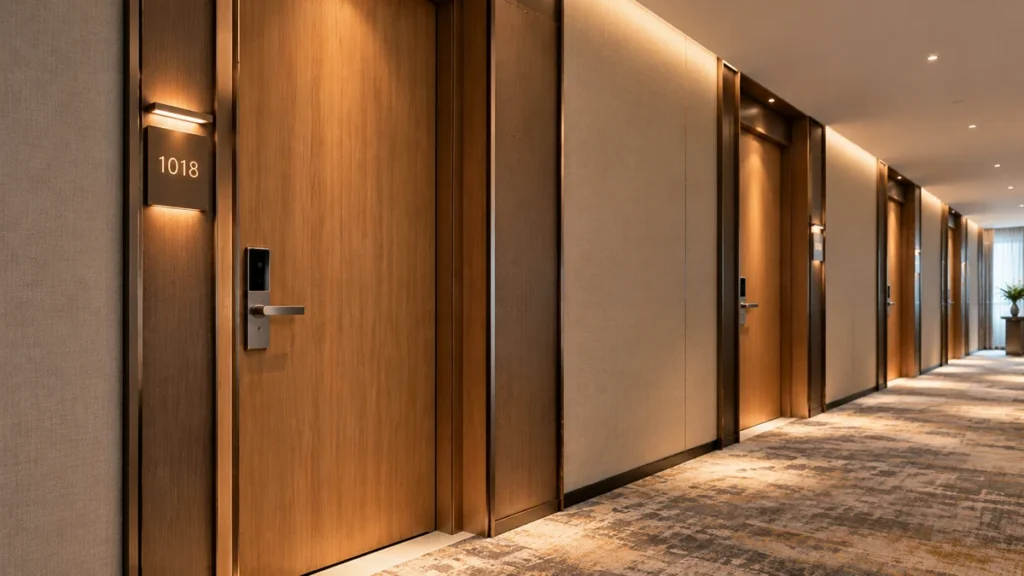
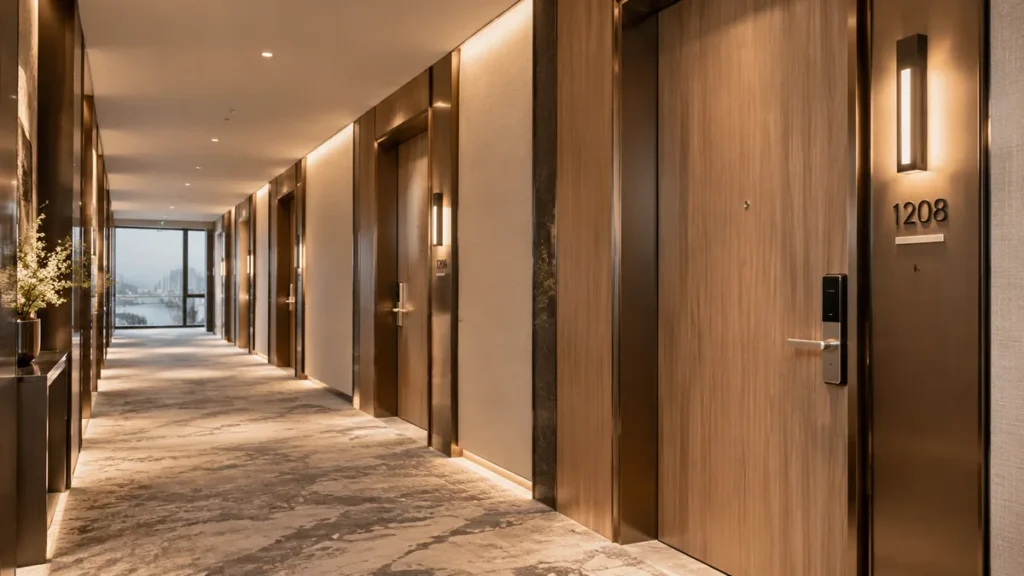
- Corridors and elevator lobbies
- Reception and public areas
- Restaurants and meeting rooms
A clearly defined scope prevents missing items and unexpected expenses.
A detailed Bill of Quantities helps manufacturers understand your requirements and provide more accurate quotations.
Your hotel FF&E BOQ should include:
- Furniture descriptions and product specifications
- Product dimensions and drawings
- Material and finish specifications
- Required quantities
- Room types and installation locations
The more detailed your BOQ, the easier it becomes to compare supplier quotations on the same basis.
These three cost levels are budgeting stages rather than standardized Incoterms, and their exact inclusions depend on the supplier's quotation and agreed delivery terms.
| Cost Level | Main Components |
|---|---|
| Factory Price | Furniture manufacturing and agreed supply scope |
| Landed Cost | Product cost, freight, insurance, duties, customs clearance, and agreed delivery charges |
| Installed Cost | Landed cost plus on-site handling, assembly, and installation |
Use the agreed Incoterm to confirm which party is responsible for export clearance, freight, insurance, and delivery, and define on-site handling and installation separately in the contract to avoid omissions or double-counting.
Your hotel renovation budget may include expenses beyond furniture procurement and installation.
Consider the following:
- Existing furniture removal and disposal
- Design and engineering
- Site preparation
- Warehousing and storage
- Project management
- Contingency allowances
- Applicable taxes
Only add expenses that are not already included in supplier quotations or installation contracts.
Once all project expenses are identified, calculate the total replacement budget.
The following example illustrates a 100-key hotel renovation project.
100-Key Hotel FF&E Replacement Budget
| Cost Category | Illustrative Budget |
|---|---|
| Guestroom Casegoods and Fixed Furniture | $520,000 |
| Loose Furniture and Soft Goods | $120,000 |
| Public Area FF&E Allocation | $80,000 |
| Freight, Duties, and Local Delivery | $70,000 |
| Removal and Site Preparation | $25,000 |
| Installation | $45,000 |
| Design, Engineering, and Contingency | $90,000 |
| Total Project Budget | $950,000 |
Calculation:
The public area expenses are included in the total project budget and allocated across the 100 guestroom keys.
This example shows why furniture procurement costs alone cannot represent the complete hotel FF&E replacement budget.
Your actual cost per key will depend on the replacement scope, furniture specifications, logistics, and project requirements.
Partial Furniture Replacement vs. Full FF&E Replacement
Not every hotel renovation requires a complete furniture replacement. Reusing or refurbishing existing furniture can reduce costs when the underlying structures remain sound.
The right choice depends on furniture condition, brand standards, repair costs, and remaining service life.
When Should Hotels Replace Existing Furniture?
Full hotel furniture replacement may be necessary when:
- Furniture structures are damaged or unstable.
- Moisture has compromised cabinet materials.
- Existing furniture no longer meets brand standards.
- Repair costs are becoming too high.
- New room layouts require different furniture configurations.
When Is Furniture Refurbishment More Cost-Effective?
Furniture refurbishment can be a practical alternative when existing structures remain in good condition.
Common upgrades include:
- Replacing cabinet doors and hardware
- Refinishing existing furniture surfaces
- Refreshing decorative wall panels
- Replacing damaged countertops
- Upgrading bathroom vanity components
These targeted improvements may extend furniture life without requiring complete replacement.
Reuse, Refurbish, or Replace: A Furniture Decision Guide
| Furniture Condition | Recommended Option |
|---|---|
| Sound cabinet structure | Retain or refinish existing surfaces |
| Damaged cabinet doors | Replace doors and hardware |
| Worn wall panels | Refresh or replace panels |
| Functional wardrobe | Retain or upgrade components |
| Damaged bathroom cabinet | Repair or replace the cabinet module |
| Structurally damaged furniture | Full replacement |
Before making a decision, inspect existing furniture and compare repair costs, remaining service life, and warranty requirements.
Full Renovation vs. Phased Renovation
A full renovation allows hotels to update furniture across the property within one coordinated project.
Phased hotel renovations spread furniture replacement across different rooms or floors. This approach may reduce operational disruption and help maintain room availability.
However, phased projects require careful scheduling, storage, and delivery coordination to control additional costs.
How to Reduce Hotel FF&E Replacement Costs
Lowering hotel furniture replacement costs doesn’t mean choosing the cheapest products.
It means controlling procurement, manufacturing, logistics, and long-term maintenance costs.
Control purchasing expenses through better supplier selection and complete project cost planning.
Working directly with a hotel furniture manufacturer simplifies communication and provides better access to material specifications, production details, and customization options.
Compare durability, maintenance, replacement parts, logistics, installation, and warranty support. A lower purchase price doesn't always mean lower long-term costs.
Optimize furniture specifications while maintaining design consistency and durability.
Standardized components reduce repeated engineering work and design variations, especially for chain hotels and large renovation projects.
Consistent dimensions, materials, and components streamline production and simplify installation, maintenance, and future replacement.
Balance initial prices with service life. Engineered panels, protective finishes, and reliable hardware suit high-use hotel environments.
Improve production preparation, shipping coordination, and on-site installation.
Factory pre-assembly allows manufacturers to check critical components before shipment, reducing on-site adjustments and installation errors.
Combine related furniture categories, use room-based packaging, and coordinate delivery schedules to improve installation efficiency.
Reducing hotel FF&E replacement costs requires more than lowering furniture prices. A well-planned combination of direct sourcing, standardized designs, efficient manufacturing, and coordinated logistics can help control the total project budget while maintaining furniture quality and long-term value. Working with an experienced hotel furniture manufacturer makes these strategies easier to implement.
Why Choose VOLANT for Hotel FF&E?

Choosing the right hotel furniture manufacturer affects project costs, product quality, and delivery efficiency.
VOLANT FIT-OUT provides custom hotel furniture, modular guestroom systems, public-area millwork, and integrated fit-out solutions for hotel renovation and new-build projects.
VOLANT integrates digital engineering, CNC machining, material optimization, and quality inspection to support consistent production across large hotel furniture orders.
- Digital engineering and production data
- Automated CNC machining
- Factory pre-assembly and quality inspection
VOLANT manufactures custom guestroom furniture, bathroom vanities, wall panels, and public-area millwork to meet different hotel layouts and brand standards.
- Wardrobes, headboards, and TV cabinets
- Bathroom vanities and storage systems
- Decorative wall panels and public-area millwork
Standardized furniture components simplify large-scale production and support consistent specifications across different guestrooms.
- Standardized furniture dimensions
- Reduced design and engineering variations
- Consistent room-by-room configurations
- Efficient production and installation planning
VOLANT coordinates key project stages to simplify communication, supplier management, and furniture delivery.
- Design solutions and material selection
- Engineering and technical development
- Custom furniture manufacturing
- Delivery and installation coordination
- Targeted hotel renovation and furniture upgrades
Share your project requirements with VOLANT. Let's find the right furniture solutions for your renovation budget.
Final Thoughts: Plan Your Hotel FF&E Replacement Budget with Confidence
A reliable hotel FF&E replacement budget starts with a clearly defined scope.
Identify which items need replacement, refurbishment, or reuse. Prepare a detailed BOQ and separate factory, landed, and installed costs. Include public-area expenses when they fall within the project scope.
Then divide the total project budget by the number of guestroom keys covered. This gives you a clearer picture of your hotel FF&E replacement cost per key.
Choosing the right manufacturing partner also matters. Look for experience in custom hotel furniture, modular systems, and project coordination.
VOLANT provides hotel furniture manufacturing and integrated fit-out solutions for renovation and new-build projects.
Planning a hotel renovation or furniture replacement project?
Contact VOLANT with your room count, BOQ, drawings, and delivery location to discuss your project requirements.
FAQs
How Much Does Hotel FF&E Replacement Cost per Key?
There is no fixed cost per key. It depends on hotel category, replacement scope, materials, and location. A hypothetical $950,000 budget for 100 guestrooms equals $9,500 per key.
How Do You Calculate Hotel FF&E Replacement Cost per Key?
Divide the total FF&E replacement budget by the number of guestroom keys included in the project.
Formula: Cost per Key = Total Replacement Budget ÷ Number of Keys
Does Hotel FF&E Replacement Cost per Key Include Public Areas?
Yes, if public areas are included in the project scope. Add their FF&E expenses to the total budget, then divide by the number of guestroom keys covered.
What Is Included in a Hotel FF&E Replacement Budget?
A typical hotel FF&E replacement budget includes guestroom and bathroom furniture, public-area furniture, soft goods, selected equipment, and any millwork included in the agreed FF&E scope. Freight, removal, installation, and other project expenses may also apply. OS&E items such as linens, tableware, and uniforms are generally budgeted separately unless included in the contract.
What Factors Affect Hotel FF&E Replacement Costs?
Key factors include hotel category, brand standards, materials, finishes, customization, production quantities, shipping, import duties, installation requirements, and existing building conditions.
What Is the Difference Between FF&E, OS&E, and Hotel Fit-Out?
FF&E covers furniture, fixtures, and equipment included in the procurement package. OS&E includes operating supplies such as linens and tableware. Hotel fit-out generally covers interior construction, finishes, fixed joinery, and installation, although some built-in furniture and millwork may be procured as FF&E depending on the contract scope.
Is It Better to Refurbish or Replace Hotel Furniture?
Refurbishment is more practical when furniture structures remain sound. Full replacement is preferable when furniture is damaged, moisture-affected, or no longer meets hotel brand standards.