Choosing the right furniture solution is a critical decision for any hotel project. Custom hotel furniture and ready-made furniture can both support hotel projects, but each option serves different priorities based on design goals, timeline, budget, and operational requirements.
For hotel owners, developers, and designers, the challenge is not simply choosing between custom and ready-made furniture. It is understanding which option provides the best balance of design flexibility, efficiency, durability, and long-term value for the specific project.
In this guide, we compare custom hotel furniture and ready-made furniture from a hospitality project perspective. You will learn the key differences between both options, when each solution works best, and how to make a more informed furniture decision for your hotel.
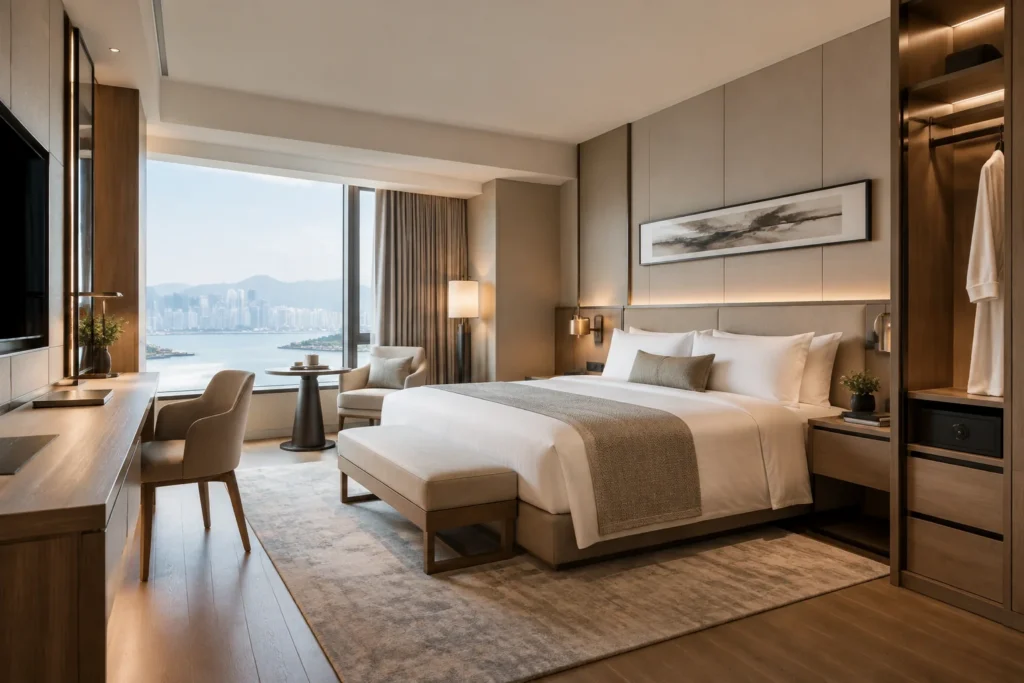
What Are Custom Hotel Furniture and Ready-Made Furniture?
Custom Hotel Furniture
Designed around specific project requirements
Custom hotel furniture is designed and manufactured for a specific hospitality project. Manufacturers work with project teams to define requirements such as dimensions, materials, finishes, and functional details.
- Project-specific design
- Flexible specifications
- Custom dimensions and finishes
- Higher design control
Ready-Made Hotel Furniture
Based on existing designs and specifications
Ready-made hotel furniture uses existing designs, standard dimensions, and established production processes. It can help projects move faster when customization is not a priority.
- Existing product designs
- Faster sourcing process
- Standard specifications
- Lower development requirements
The difference between custom and ready-made furniture is not the furniture category itself. Both options can serve similar hotel applications. The main difference is how products are designed, specified, and manufactured for the project.
Custom Hotel Furniture vs Ready-Made Furniture: Key Differences
At first glance, custom and ready-made furniture may seem like opposite approaches. However, both options can support hotel projects depending on the design requirements, timeline, and budget.
Custom furniture focuses on project-specific flexibility, while ready-made furniture focuses on faster sourcing and simpler decision-making.
The better choice depends on what your hotel project actually requires. In addition to custom and ready-made furniture, many hotel projects also consider semi-custom solutions as a middle option between flexibility and efficiency.
| Factor | Custom Hotel Furniture | Ready-Made Furniture |
|---|---|---|
| Design flexibility | Designed around project requirements | Limited to existing designs |
| Dimensions | Made for specific room layouts | Standard sizes |
| Materials | Flexible material selection | Predefined options |
| Finishes | Can match hotel concepts and brand standards | Limited finish choices |
| Hardware | Selected according to project needs | Standard configurations |
| Brand identity | Supports brand-specific design concepts | Follows existing design styles |
| Initial investment | Usually higher upfront cost | Usually lower upfront cost |
| Lead time | Requires planning and approvals | Faster sourcing |
| Quality control | Specifications can be defined for the project | Quality depends on selected products and suppliers |
| Space utilization | Optimized for specific layouts | May require compromises |
| Long-term value | Stronger alignment with long-term project goals | Depends on product suitability |

The difference is similar to choosing between a standard solution and a project-specific solution.
A ready-made option provides speed and simplicity. A custom solution provides greater control over the final result.
For hotels, this difference can influence not only appearance but also daily operations, maintenance, and long-term project performance.
When Should Hotels Choose Custom Hotel Furniture?
Hotels are complex commercial environments with unique design and operational requirements. A hotel may repeat the same room type hundreds of times, but each project still has different design goals, layouts, and operational requirements. Furniture needs to support the interior concept, guest experience, and long-term hotel operations.
This is why some hotels choose custom hotel furniture instead of fully standardized solutions. The purpose is not simply to create different furniture, but to develop furniture that fits the project’s specific requirements, from space planning and design concepts to daily operational needs.
Brand identity matters
Furniture needs to support a unique hotel concept and guest experience.
Layouts require flexibility
Furniture must adapt to different room sizes, layouts, or space requirements.
Specifications need control
Materials, finishes, hardware, and construction details require project-level adjustment.
Long-term value matters
The project requires durability, functionality, and better lifecycle performance.
When Brand Identity Matters
A hotel brand is often expressed through small design details. Guests may not notice every furniture specification, but they experience the overall atmosphere, consistency, and quality of the space.
Furniture can influence:
- Room appearance
- Brand consistency
- Guest perception
- Overall design direction
For example, a boutique hotel may need a unique room concept that reflects its positioning. A luxury resort may require specific finishes, materials, and furniture proportions to match its design vision.
Standard furniture can meet basic functional needs. However, when a hotel needs stronger control over design details and brand expression, custom hotel furniture can provide a more suitable solution.
When Hotel Layouts Require More Flexibility
Hotel spaces are rarely identical. Even within the same property, different room types may require different furniture solutions.
Examples include:
- Standard rooms
- Suites
- Villas
- Connecting rooms
- Accessible rooms
A standard wardrobe or desk size may work well in one room but create wasted space or layout compromises in another.
Custom furniture allows manufacturers and designers to adjust products according to:
- Room dimensions
- Storage requirements
- Interior layouts
- Guest usage patterns
This is especially valuable for hotels with complex spaces. Resorts, luxury hotels, boutique properties, and other projects with unique layouts often benefit from this flexibility.
When Hotels Need More Control Over Specifications
Hotel furniture needs to perform reliably under daily use.
A guestroom chair, wardrobe, or nightstand may be used thousands of times during its service life. Small differences in materials, hardware, and construction details can directly affect durability, maintenance needs, and long-term performance.
This is why furniture specifications matter.
With custom hotel furniture, hotels can define important requirements, including:
- Surface finishes
- Hardware quality
- Construction details
- Functional features
- Durability requirements
Commercial furniture standards also emphasize product performance, safety, and durability requirements. For example, BIFMA commercial furniture standards provide voluntary guidelines for commercial furniture testing and performance evaluation.
The key point is simple:
Hotel furniture should not only meet design expectations on opening day. It should continue performing reliably throughout years of daily operation.
When Long-Term Value Matters
Many buyers focus heavily on the initial quotation. However, hotel projects should consider the bigger picture because the lowest purchase price does not always result in the lowest total cost.
Over the life of a hotel project, furniture decisions can affect:
- Maintenance requirements
- Replacement frequency
- Repair costs
- Operational disruption
A furniture solution that fits the project properly can help reduce future issues and improve long-term performance.
For example, custom casegoods designed around a hotel’s room layout may provide better space utilization, durability, and functionality compared with standard products that require compromises.
This is why experienced hotel buyers often evaluate lifecycle value rather than only the initial purchase price. Understanding how different factors influence custom furniture cost for hotels can help teams make better decisions during the planning stage.
The right furniture solution should support both the opening phase and years of daily hotel operations.
When Should Hotels Choose Ready-Made Hotel Furniture?
Custom furniture offers greater flexibility, but it is not always the best solution for every hotel project.
Ready-made hotel furniture can be a practical choice when speed, simplicity, and standardized requirements are the main priorities.
The right decision is not about choosing the most customized option. It is about selecting the furniture solution that best fits the project’s timeline, design needs, and operational goals.
Speed is a priority
The project requires faster sourcing and shorter decision cycles.
Standardization matters
Existing designs can support consistent rooms and efficient operations.
Requirements are simple
The project does not require extensive customization or unique specifications.
Efficiency is important
The goal is to simplify procurement and reduce development time.
When Speed Is a Priority
Some hotel projects operate under strict opening schedules.
Renovations, property upgrades, or time-sensitive projects may require furniture solutions that can be sourced and delivered within a shorter timeframe.
In these situations, ready-made furniture can provide advantages such as:
- Faster product availability
- Shorter decision-making cycles
- Simpler procurement processes
When existing products already meet the project’s design and functional requirements, ready-made solutions can help reduce development time and keep the project moving efficiently.
When Standardization Matters
Some hotel concepts prioritize consistency, repeatability, and operational efficiency across multiple rooms or properties.
Examples include:
- Limited-service hotels
- Budget-focused properties
- Large-scale standardized developments
For these projects, furniture solutions often need to support consistent room layouts, simplified specifications, and efficient procurement processes.
Ready-made furniture can provide reliable functionality while reducing design development, approval steps, and production complexity. However, ready-made furniture may provide less flexibility when hotels require unique layouts, specific finishes, or stronger brand differentiation.
When Project Requirements Are Simple
Not every hotel project requires fully customized furniture solutions.
Ready-made furniture can be a practical choice when the project requirements are clearly defined and existing products can meet the functional and design expectations.
It may work well when:
- Room layouts are standard
- Design requirements are straightforward
- Custom modifications are limited
- Existing solutions meet project needs
In these situations, ready-made furniture can help simplify sourcing, reduce development time, and improve project efficiency.
The goal is not to choose the most customized option.
The goal is to choose the furniture solution that best fits the project’s requirements and delivers the right balance of design, efficiency, and value.
Custom Hotel Furniture, Semi-Custom, or Ready-Made: Which Option Fits Your Hotel?
Many hotel buyers start by comparing two common choices: custom furniture and ready-made furniture. However, as hospitality projects become more complex, many developers and designers also consider a third option: semi-custom furniture.
Semi-custom solutions combine standardized manufacturing methods with selected project-specific adjustments. They allow hotels to maintain production efficiency while adding flexibility where it matters most.
Choosing between custom, semi-custom, and ready-made furniture depends on the project’s design goals, customization requirements, timeline, and budget.
Custom Hotel Furniture
Maximum FlexibilityDesigned for projects that require strong control over design, specifications, and final results.
Best for:
- Luxury hotels
- Boutique hotels
- Resorts
Key advantages:
- Unique design concepts
- Specific dimensions
- Strong brand differentiation
Semi-Custom Hotel Furniture
Balance Between Flexibility & EfficiencyCombines standardized manufacturing methods with selected project-specific adjustments.
Best for:
- Hotel chains
- Large-scale projects
- Projects needing consistency
Key advantages:
- Standardized construction
- Selected customization
- Improved production efficiency
Ready-Made Hotel Furniture
Speed & SimplicityUses existing designs and specifications to support faster sourcing and simpler project execution.
Best for:
- Standard guestrooms
- Quick renovations
- Limited customization needs
Key advantages:
- Existing product designs
- Faster sourcing
- Reduced development time

Which Hotel Furniture Solution Fits Your Project?
| Project Type | Recommended Furniture Solution |
|---|---|
| Luxury hotel | Custom hotel furniture |
| Boutique hotel | Custom hotel furniture |
| Resort | Custom or semi-custom furniture |
| International hotel chain | Semi-custom or custom furniture |
| Limited-service hotel | Semi-custom or ready-made furniture |
| Temporary project | Ready-made furniture |
The best furniture solution depends on your project’s design goals, budget, timeline, and operational requirements.
How Hotel Project Requirements Affect Furniture Selection
The right furniture solution depends heavily on the type of hotel project. A luxury resort, an international hotel chain, and a renovation project may all require guestroom furniture, but their priorities can be very different.
Some projects focus on design identity and guest experience, while others prioritize efficiency, consistency, or faster delivery.
Understanding these differences helps hotel owners, developers, and designers select a furniture strategy that matches their project goals.
Luxury Hotels
Focus on Design and Guest ExperienceLuxury hotels usually place strong importance on visual identity and guest perception. Furniture is not only functional, but also part of the overall interior experience.
Typical priorities:
- Unique room concepts
- Premium finishes
- Custom dimensions
- High attention to detail
For luxury properties, a custom furniture approach can better support the hotel's positioning, design standards, and guest experience.
Hotel Chains
Focus on Consistency and EfficiencyLarge hotel groups often manage multiple properties with similar brand requirements. Furniture solutions usually need to balance consistency, quality, and efficiency.
Typical priorities:
- Consistent room standards
- Repeatable production
- Stable quality
- Efficient maintenance
For these projects, semi-custom furniture can provide a practical balance between brand consistency and production efficiency.
Resorts and Villas
Focus on Space and FlexibilityResorts often include more varied spaces than traditional city hotels, which creates greater demand for layout flexibility and design coordination.
Typical priorities:
- Villas
- Suites
- Outdoor areas
- Larger guest rooms
Custom furniture can help maximize available space while maintaining design consistency across different areas of the property.
Renovation Projects
Focus on Speed and CoordinationRenovation projects often involve tighter schedules and more coordination challenges than new hotel developments, especially when reducing downtime is important.
Typical priorities:
- Production schedules
- Delivery timing
- Installation planning
- Existing space limitations
In these situations, ready-made or semi-custom furniture may be a more suitable choice because it can simplify sourcing and reduce project timelines.
How Hotel Furniture Selection Fits Into FF&E Planning

Furniture selection is only one part of a hotel development project. In most hospitality projects, furniture is planned as part of a broader FF&E strategy that covers the items required for hotel operation and guest experience.
FF&E stands for Furniture, Fixtures, and Equipment. For a detailed explanation of hotel FF&E scope, categories, and project applications, see our guide to What Is Hotel FF&E.
Depending on the project scope, FF&E planning may include:
- Guestroom furniture
- Public-area furniture
- Lighting and fixtures
- Operational equipment
- Other project-related items
A furniture decision affects more than the final product. It can also influence:
- BOQ planning
- Room packages
- Procurement schedules
- Installation coordination
For example, a hotel may need hundreds of guestrooms completed within a specific opening timeline. The furniture supplier must consider:
- Product quantities
- Room types
- Packaging requirements
- Delivery sequence
- Installation process
This is why hotel furniture selection should be considered early in the project planning stage.
An experienced furniture supplier can help coordinate specifications, quantities, and production requirements before manufacturing begins. Early planning can help identify potential issues and create a smoother process from design approval to final installation.
Why Hotel Furniture Manufacturer Experience Matters
Once you understand which furniture solution fits your project, working with an experienced hotel furniture manufacturer becomes an important next step.
A suitable manufacturer should provide more than production capacity. They should support key stages such as:
- Design and specification review
- Material and sample confirmation
- Production quality control
- Delivery and installation coordination
For custom hotel furniture projects, manufacturing experience is especially important. A capable supplier can help turn project requirements into consistent production results while reducing risks during delivery.
Conclusion: Choosing the Right Hotel Furniture Solution
Choosing between custom hotel furniture, semi-custom furniture, and ready-made furniture depends on your project’s specific needs. There is no single solution that works for every hotel. The right choice should balance design goals, project efficiency, budget expectations, and long-term operational value.
Ready-made furniture can provide faster sourcing and simpler project execution, while custom hotel furniture offers greater control over design, specifications, and space requirements. Semi-custom solutions can provide a practical balance between flexibility and production efficiency.
Before making a decision, hotel owners and developers should consider:
- Hotel concept and positioning
- Guest expectations
- Room requirements
- Budget and timeline
- Operational needs
Working with an experienced hotel furniture manufacturer can help transform design concepts into practical furniture solutions while reducing risks during production and delivery. VOLANT provides custom furniture solutions, engineering support, manufacturing capabilities, and project coordination for hospitality projects worldwide. Learn more or contact us for your hotel furniture project.
FAQs
What is the difference between custom hotel furniture and ready-made furniture?
Custom hotel furniture is designed and manufactured according to a hotel’s specific requirements, including dimensions, materials, finishes, and design standards. Ready-made furniture uses existing designs and specifications, making it faster and simpler to source.
Is custom hotel furniture more expensive than ready-made furniture?
Custom hotel furniture usually requires a higher initial investment because it involves project-specific design, engineering, materials, and production processes.
However, the total value depends on more than the purchase price. Factors such as durability, maintenance, replacement frequency, and long-term performance should also be considered.
When should a hotel choose custom furniture instead of ready-made furniture?
Hotels should consider custom furniture when they need stronger control over design identity, room layouts, specifications, or brand standards.
Custom hotel furniture is often suitable for luxury hotels, resorts, boutique properties, and projects with unique space requirements.
When is ready-made hotel furniture a better option?
Ready-made furniture can be a practical choice when project speed, simplicity, and standardization are the main priorities.
It is often suitable for hotels with standard room layouts, quick renovation schedules, or limited customization requirements.
What is semi-custom hotel furniture?
Semi-custom hotel furniture combines standardized manufacturing methods with selected customization, such as modified dimensions, custom finishes, or upgraded hardware.
It can provide a balance between the flexibility of custom furniture and the efficiency of ready-made solutions, making it suitable for many large hotel projects.