Custom hotel furniture is more than a design choice. It shapes how guests feel, move, rest, work, and remember your hotel. A guest may forget the wall color, but they will remember the comfort of the bed, the function of the desk, the feel of the chair, and the first impression of the lobby sofa. These pieces become part of the stay.
For hotel owners, designers, developers, and FF&E teams, furniture is also a business decision. It affects brand image, room function, maintenance costs, delivery schedules, and long-term value. The right custom hotel furniture can make a space feel more thoughtful, more efficient, and more memorable.
In this guide, we will walk you through the full process of planning custom hotel furniture for hospitality projects. You will learn what it is, why hotels choose it, what materials work best, how the project workflow looks, and how to choose the right manufacturer.
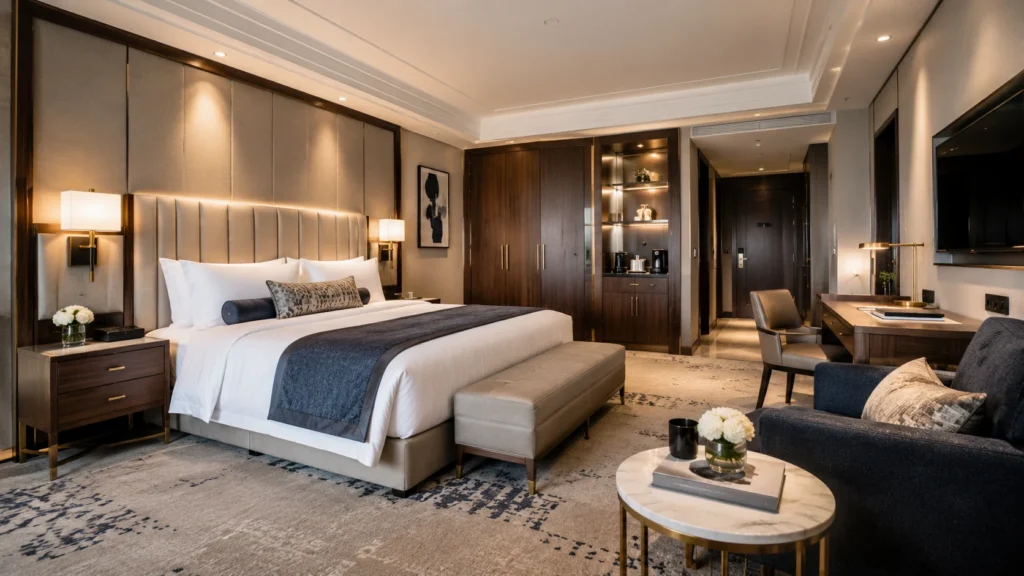
What Is Custom Hotel Furniture?
Custom hotel furniture is furniture designed and manufactured for a specific hotel project. It is built around the hotel’s brand, room layout, guest profile, budget, and daily operating needs.
Unlike standard furniture, it is not pulled from a fixed catalog. The size, material, finish, structure, hardware, and details can be adjusted to fit the project. This makes custom hotel furniture especially useful for hotels, resorts, serviced apartments, and other hospitality spaces.
Common examples include:
Guest Room Furniture
Custom hotel room furniture helps create comfortable, functional, and brand-consistent guest spaces.
- Headboards
- Bed bases
- Nightstands
- Wardrobes
- TV cabinets
- Desks
- Luggage racks
- Bathroom vanities
- Hotel casegoods
Public Area Furniture
Public area furniture shapes the first impression guests have when they enter your hotel.
- Lobby sofas
- Lounge chairs
- Coffee tables
- Reception desks
- Side tables
- Decorative cabinets
Restaurant & Bar Furniture
Custom restaurant and bar furniture supports comfort, durability, and a better dining experience.
- Restaurant tables
- Dining chairs
- Bar stools
- Banquette seating
- Buffet counters
- Host stations
In short, custom furniture is made to fit the room, the brand story, and the way guests actually use the space.
Custom Hotel Furniture vs. Standard Hotel Furniture
Standard hotel furniture can work for simple projects. It is often faster to buy and may cost less upfront. But for hotels that need a clear brand identity, better space use, or project-specific dimensions, standard furniture can feel limited.
Custom hotel furniture gives you more control. You can choose the size, material, color, finish, hardware, and structure. You can also match each piece to the hotel’s design standards and operating requirements.
Here is a simple comparison:
| Factor | Custom Hotel Furniture | Standard Hotel Furniture |
|---|---|---|
| Design | Project-specific and matched to the hotel concept | Generic designs from a fixed catalog |
| Size | Made to fit guest rooms, lobbies, and public areas | Fixed sizes with limited flexibility |
| Materials | Flexible options based on budget, durability, and style | Limited material choices |
| Finish | Matched to brand standards and interior design | Pre-set finishes and colors |
| Hardware | Can be specified for function, durability, and appearance | Usually standard hardware |
| Brand Identity | Strong and consistent across the hotel project | Basic and less distinctive |
| Lead Time | Longer due to design, sampling, and production | Shorter and easier to source quickly |
| Long-Term Fit | High, because each piece is planned for the project | Medium, depending on layout and use |
For hospitality projects, fit matters. A chair that looks good in a catalog may not work in a compact guest room, a busy lobby, or a high-traffic restaurant. Customization helps each piece look right, function well, and support the guest experience.
Why Hotels Choose Custom Furniture
Hotels do not choose custom furniture only because it looks good. They choose it because it solves real project problems. The right custom hotel furniture can improve brand identity, room function, guest comfort, durability, and long-term value.
Stronger Brand Identity
Furniture tells guests who you are before your team says a word. Custom hospitality furniture helps turn your brand concept into a real guest experience.
Better Space Use
Hotel rooms need to work hard. Custom hotel room furniture can fit compact rooms, unusual layouts, and different room types without wasting valuable space.
Improved Guest Experience
Guests notice comfort fast. A stable bed, a comfortable chair, useful storage, and easy charging access can make the whole stay feel smoother.
Long-Term Durability
Hotel furniture faces daily use, cleaning, luggage impact, spills, and constant turnover. Custom commercial furniture can use stronger structures and finishes.
Lower Long-Term Costs
Cheap furniture can become expensive later. Durable custom hotel furniture can reduce repairs, replacements, complaints, and project risks over time.
Types of Custom Hotel Furniture by Area

A hotel is not just one room. It is a full guest journey. Each area needs furniture that fits its function, traffic level, design style, and maintenance needs.
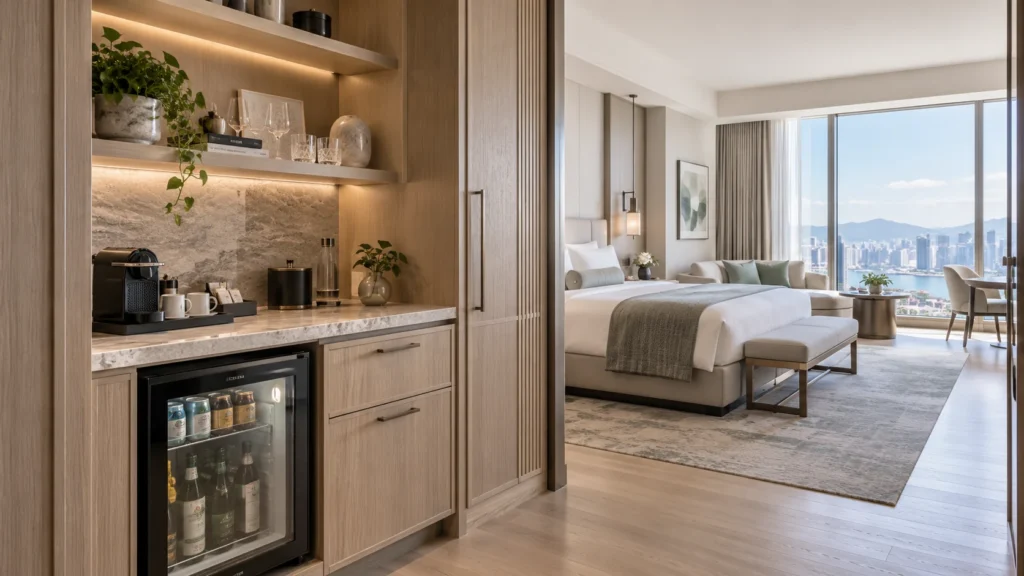
Custom Hotel Room Furniture
Guest room furniture is the core of most hotel furniture projects. It affects comfort, storage, workflow, and how guests use the room every day.
- Bed frames and bases
- Hotel headboard wall systems
- Nightstands
- Wardrobes
- Desks and workstations
- TV cabinets
- Minibars
- Luggage racks
- Hotel bathroom vanities
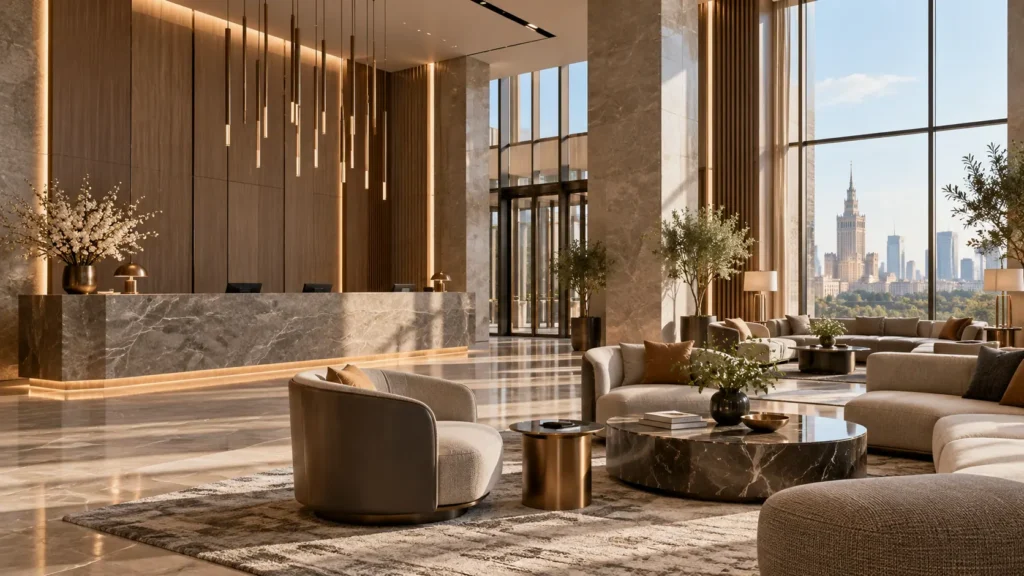
Custom Hotel Lobby Furniture
The lobby creates the first impression. Custom lobby furniture should look beautiful while managing traffic, luggage, waiting time, and constant use.
- Reception desks
- Lobby sofas
- Lounge chairs
- Coffee tables
- Side tables
- Waiting area seating
Custom Restaurant & Bar Furniture
Hotel dining areas need furniture that feels inviting and performs under pressure. Comfort and cleanability both matter here.
- Dining tables
- Restaurant chairs
- Bar stools
- Banquette seating
- Buffet counters
- Host stations
Custom Outdoor Hotel Furniture
Outdoor areas need weather-resistant materials and finishes. Sun, rain, salt air, and moisture can damage the wrong furniture fast.
- Pool loungers
- Outdoor sofas
- Patio tables
- Resort cabanas
- Daybeds
- Outdoor dining sets
Custom Furniture for Public Areas
Hotel public area furniture should be easy to move, easy to clean, and consistent with the hotel design.
- Corridor furniture
- Meeting room furniture
- Banquet furniture
- Business center furniture
- Lounge furniture
- Shared waiting spaces
The Custom Hotel Furniture Project Workflow

This is where many hotel furniture projects succeed or fail.
A good project is not just about production. It is about process. From the first brief to final installation, each step helps reduce mistakes, control costs, and keep the project on schedule.
Here is a typical custom hotel furniture workflow.
Project Brief and Brand Requirements
Define the hotel type, brand position, target guest, room types, project location, budget range, opening date, and required standards.
Space Planning and Furniture Layout
Review floor plans, circulation, bed clearance, door swings, outlets, lighting, luggage storage, housekeeping access, and accessibility needs.
Concept Design and Style Direction
Confirm the furniture style that fits the hotel story, guest profile, market position, and interior design direction.
Material and Finish Selection
Choose materials and finishes based on appearance, durability, cleaning needs, budget, and the expected use of each area.
Shop Drawings and Technical Specifications
Confirm dimensions, materials, finish codes, edge details, joinery, hardware, power access, installation details, and packing notes.
Samples and Prototype Approval
Review wood, finish, fabric, leather, metal, hardware, stone, and full prototypes before moving into bulk production.
Mock-Up Room Review
Test comfort, scale, color, storage, lighting, cleaning access, safety, and installation fit in a real room setting.
Bulk Production
Start woodwork, upholstery, metalwork, finishing, assembly, and hardware installation after all details are approved.
Quality Control and Inspection
Check dimensions, finish quality, color consistency, hardware function, upholstery seams, stability, packaging, labels, and quantity.
Packaging, Shipping, and Installation
Prepare export packaging, room labels, packing lists, container loading, site delivery, installation sequence, and punch list review.
Best Materials for Custom Hotel Furniture

There is no single “best” material for custom hotel furniture. There is only the best material for the job.
The right choice depends on where the furniture will be used, how often guests touch it, how easy it is to clean, and how long it needs to last.
| Material | Best For | Advantages | Considerations |
|---|---|---|---|
| Wood Veneer | Headboards, wardrobes, desks, TV cabinets | Warm, premium, and cost-efficient compared with solid wood | Needs proper sealing and finish control |
| Solid Wood | Frames, legs, feature pieces | Strong, natural, and high-end | Can move with humidity and costs more |
| Plywood & Engineered Panels | Hotel casegoods, cabinets, wardrobes | Stable, practical, and good for cost control | Ask for formaldehyde compliance documents |
| HPL & Laminate | Desks, counters, high-traffic guest rooms | Durable, scratch-resistant, and easy to clean | Less luxurious than natural veneer |
| Metal | Legs, frames, bases, decorative details | Strong, modern, and structurally reliable | Needs anti-rust treatment in humid areas |
| Stone, Quartz & Solid Surface | Vanities, tabletops, reception desks | Durable, easy to clean, and premium-looking | Adds weight and cost |
| Fabric & Upholstery | Sofas, chairs, headboards, banquettes | Comfortable, warm, and design-friendly | Should meet durability, cleaning, and fire requirements |
| Leather & Faux Leather | Luxury seating, lounge chairs, restaurants | Refined look and easy cleaning | Needs the right grade for heavy use |
| Outdoor Materials | Pool areas, patios, rooftops, resorts | Weather-resistant and suitable for outdoor use | Corrosion resistance is critical near pools or coasts |
Custom Hotel Furniture Cost: What Affects the Price?
Custom hotel furniture cost depends on the project. There is no honest one-size-fits-all quote because every hotel has different rooms, materials, quantities, and delivery needs.
The main cost drivers usually include hotel category, furniture type, material grade, finish complexity, order quantity, custom size, hardware, upholstery, packaging, shipping, installation, and project timeline.
Hotel Category
A select-service hotel and a luxury resort will not have the same furniture budget.
Luxury projects may need wood veneer, stone, leather, brass details, and fully custom finishes. Midscale hotels may focus more on durability, clean design, and long-term value.
Both approaches can work. They just need different solutions.
Material Selection
Materials can change the price quickly.
Solid wood, natural stone, premium leather, and special metal finishes usually cost more. HPL, engineered panels, standard hardware, and durable upholstery can help control the budget.
The trick is balance. Spend more where guests touch and notice. Save where they do not.
Customization Level
Semi-custom furniture usually costs less than fully bespoke furniture.
If you can standardize hidden structures, internal dimensions, hardware, or repeated parts, you may reduce cost without hurting the design.
This is called value engineering. It is not about making furniture cheap. It is about making the budget work harder.
Shipping and Installation
Do not compare only factory prices.
Packaging, freight, duties, site delivery, room labeling, installation, and replacement parts can change the total project cost.
In the end, a lower unit price is not always the best final price. The smarter choice is to compare the full project cost, including materials, packaging, shipping, installation, and after-sales support.
Custom Hotel Furniture Lead Time
Custom hotel furniture takes time because it is not pulled from a shelf. It has to be designed, engineered, sampled, produced, inspected, packed, shipped, and installed.
A typical project may include design confirmation, shop drawings, material samples, prototypes, a mock-up room, bulk production, quality inspection, packing, shipping, and installation. The final lead time depends on project complexity, order quantity, material availability, customization level, shipping distance, and approval speed.
Many delays happen before production starts. Late drawing approval, frequent design changes, unclear specifications, slow sample approval, material shortages, site delays, and logistics issues can all push the schedule back.
The best way to stay on schedule is to make decisions early. Lock the design before production, approve samples on time, confirm all details in writing, and arrange inspection before shipment. A clear timeline will not remove every risk, but it will make the project much easier to control.
Certifications and Compliance to Consider
Hotel furniture may need to meet safety, environmental, accessibility, and brand requirements. These requirements can vary by country, state, hotel brand, project type, and furniture application.
That is why compliance should be reviewed early, not after production starts. For custom hotel furniture projects, the most common areas to check include furniture performance, fire safety, composite wood emissions, accessibility, and sustainable material standards.
Furniture Performance Standards
Commercial hotel furniture must be strong, stable, and suitable for frequent use. BIFMA develops safety, performance, and sustainability standards for furniture, which are often relevant to hotel furniture buyers.
Ask your supplier what performance standards, internal testing process, or quality control documents they can provide.
Fire Safety
Upholstery, foam, wall panels, and headboards may need fire testing. California TB 117-2013 is one known standard for upholstered furniture smolder resistance.
Other locations may have different requirements, so confirm fire safety rules early with your project team, hotel brand, or local authority.
Formaldehyde and Composite Wood
For U.S. projects, composite wood products must be TSCA Title VI compliant after March 22, 2019. This may apply to plywood, MDF, particleboard, and finished goods that contain these materials.
Before production, ask for formaldehyde compliance documents from your custom hotel furniture manufacturer.
Accessibility
Hotels must also consider accessible design. The ADA Standards set minimum requirements for U.S. public accommodations and commercial facilities.
Furniture placement can affect clear floor space, reach range, movement, and the usability of accessible rooms. Review these details during layout planning, not after installation.
Sustainable and Low-Emission Materials
Sustainable materials can support wellness-focused hotels, green building goals, and brand standards.
FSC Chain of Custody certification helps track FSC-certified forest products through the supply chain. UL GREENGUARD Certification helps identify products with low chemical emissions for healthier indoor air.
Ask suppliers for FSC, GREENGUARD, low-VOC, or other sustainability documents when these standards matter to your project.
Compliance is not just paperwork. It helps protect the project from delays, redesigns, failed inspections, and brand-standard issues. It is much easier to confirm these details before production than to fix them after delivery.
How to Choose a Custom Hotel Furniture Manufacturer

The right manufacturer is not just a vendor. They are a project partner. A good custom hotel furniture manufacturer should understand design, engineering, production, quality control, logistics, and after-sales support.
Before you choose one, ask these questions.
Do They Have Hotel Project Experience?
Hotel furniture is different from home furniture. Your supplier should understand guest rooms, public spaces, FF&E schedules, mock-up rooms, and project delivery.
Ask for similar project references, photos, drawings, or case studies. If they have worked on similar hotel projects before, they are more likely to understand the details that matter.
Can They Support Design and Engineering?
A strong manufacturer can turn concepts into shop drawings. They should help with structure, materials, finishes, hardware, and value engineering.
If a supplier only asks for a picture and gives a quick price, be careful. Custom hotel furniture needs technical thinking, not just quotation speed.
Can They Make Samples and Mock-Up Furniture?
Samples reduce risk. A reliable supplier should support material samples, finish samples, prototypes, and mock-up room furniture.
This is especially important for large hotel projects. One approved sample can prevent hundreds of repeated mistakes later.
Do They Have a Clear QC Process?
Ask how the manufacturer inspects furniture before shipment. Do they check dimensions, finishes, hardware, upholstery, packaging, labels, and quantity?
Also ask whether they can provide inspection reports. Trust is good. Documentation is better.
Can They Handle Logistics?
For international hotel furniture projects, logistics matter. The manufacturer should understand export packing, room labels, container loading, shipping documents, and site coordination.
A great cabinet means little if it arrives damaged, delayed, or without clear installation information.
Do They Offer After-Sales Support?
Ask about warranty, replacement parts, touch-up materials, maintenance guidance, and response time.
Hotel furniture has a long service life. The supplier’s support should not end at delivery.
Common Mistakes to Avoid
Custom hotel furniture projects often go wrong in small ways first. Then those small problems become expensive. A missed detail in drawings, samples, compliance, or packaging can affect the full project.
Here are the mistakes worth avoiding.
Choosing Only the Lowest Price
The lowest price can hide weak materials, poor finishing, bad packaging, or limited service. Compare total value, not just unit cost.
Skipping Shop Drawings
Without shop drawings, everyone may imagine something different. Approve dimensions, materials, finishes, hardware, and installation details before production.
Skipping the Mock-Up Room
A mock-up room helps catch problems early. It is much cheaper to fix one room than 200 rooms.
Ignoring Compliance
Fire safety, emissions, accessibility, and brand standards matter. Confirm certificates and test reports before bulk production.
Changing Designs Too Late
Late design changes can delay production and increase cost. Lock your design, materials, finishes, and drawings before mass production.
Forgetting Spare Parts
Always plan for spare hardware, fabric, touch-up finish, and replacement parts. Hotels need maintenance after opening.
Custom Hotel Furniture Trends
Trends should support your brand, not control it. Still, several trends are shaping custom hotel furniture and hospitality design today.
Sustainable Materials
Hotels are choosing low-emission finishes, responsibly sourced wood, recycled materials, and longer-lasting products. Sustainability is now part of the guest experience.
Biophilic Design
Natural textures, warm wood, stone, plants, and soft colors help hotel spaces feel calm and comfortable. Guests want places that help them slow down.
Modular Furniture
Small rooms need smart furniture. Storage beds, built-in desks, movable tables, and flexible seating help hotels use space more efficiently.
Smart Integration
Guests expect easy charging access. USB ports, Type-C outlets, wireless charging, and hidden cable management are now common in modern hotel furniture.
Local Storytelling
Boutique hotels and resorts use custom furniture to express local culture. A carved detail or woven chair can make a room feel rooted in place.
Custom Hotel Furniture Checklist
Use this simple checklist before you start. It is not fancy, but it can save your project from delays, rework, and missing details.
Before Design
- Confirm hotel positioning
- Confirm target guest
- Confirm room types
- Confirm budget
- Confirm timeline
- Prepare floor plans
- Prepare design references
Before Production
- Approve shop drawings
- Approve material samples
- Approve finish samples
- Approve hardware
- Approve prototype
- Approve mock-up room
Before Shipment
- Check dimensions
- Check finishes
- Check upholstery
- Check hardware
- Check packaging
- Check labels
- Check spare parts
- Check documents
Before Installation
- Confirm site readiness
- Confirm delivery route
- Confirm room labels
- Confirm installation sequence
- Confirm punch list process
Conclusion: Start With the Right Plan
Custom hotel furniture can make a hotel feel more thoughtful, more useful, and more memorable. It brings together brand identity, guest comfort, room function, durability, and long-term value. But a successful project does not happen by accident. It starts with a clear brief, suitable materials, accurate shop drawings, approved samples, strong quality control, and organized installation.
That is why choosing the right manufacturing partner matters. A good partner can help you connect design ideas with real production, control project risks, and make sure every piece fits the space, the schedule, and the guest experience.
Before you request a quote, prepare your floor plans, furniture list, room types, target budget, material ideas, and project schedule. The clearer your plan, the smoother your project will be.
If you are planning a hotel, resort, serviced apartment, or renovation project, VOLANT FIT-OUT can help you develop custom hotel furniture that fits your brand, your space, and your project goals. Contact us to discuss your furniture requirements and get a tailored proposal for your hospitality project.
FAQs
What is custom hotel furniture?
Custom hotel furniture is furniture designed and manufactured for a specific hotel project. The size, material, finish, structure, and details can be adjusted to match the hotel’s brand, room layout, budget, and daily operating needs.
How much does custom hotel furniture cost?
Custom hotel furniture cost depends on the hotel category, furniture type, materials, finishes, order quantity, hardware, upholstery, packaging, shipping, and installation needs. The best way to compare cost is to review the full project value, not only the unit price.
How long does custom hotel furniture take to produce?
The lead time depends on project size, design complexity, material availability, sample approval, production schedule, and shipping distance. A typical project may include shop drawings, samples, mock-up furniture, bulk production, quality inspection, packing, shipping, and installation planning.
What are the best materials for custom hotel furniture?
The best materials depend on where the furniture will be used. Wood veneer, plywood, engineered panels, HPL, metal, stone, fabric, leather, faux leather, and outdoor materials are common options. For hotel projects, materials should be durable, easy to maintain, and suitable for commercial use.
How do I choose a custom hotel furniture manufacturer?
Choose a manufacturer with hotel project experience, design and engineering support, sample-making ability, clear quality control, export packing knowledge, logistics experience, and after-sales support. Ask for project references, shop drawing capability, QC documents, warranty terms, and similar case studies.