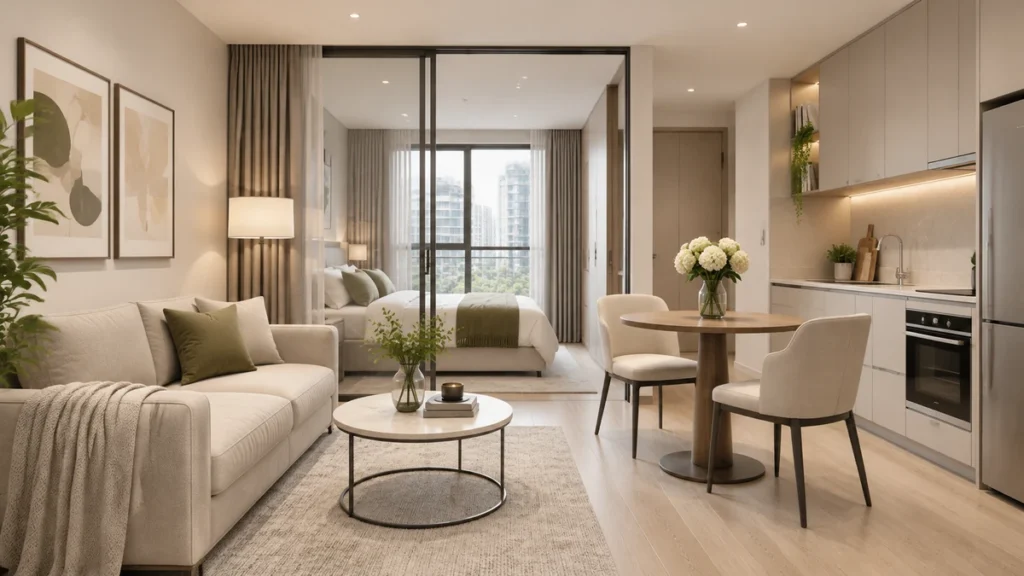
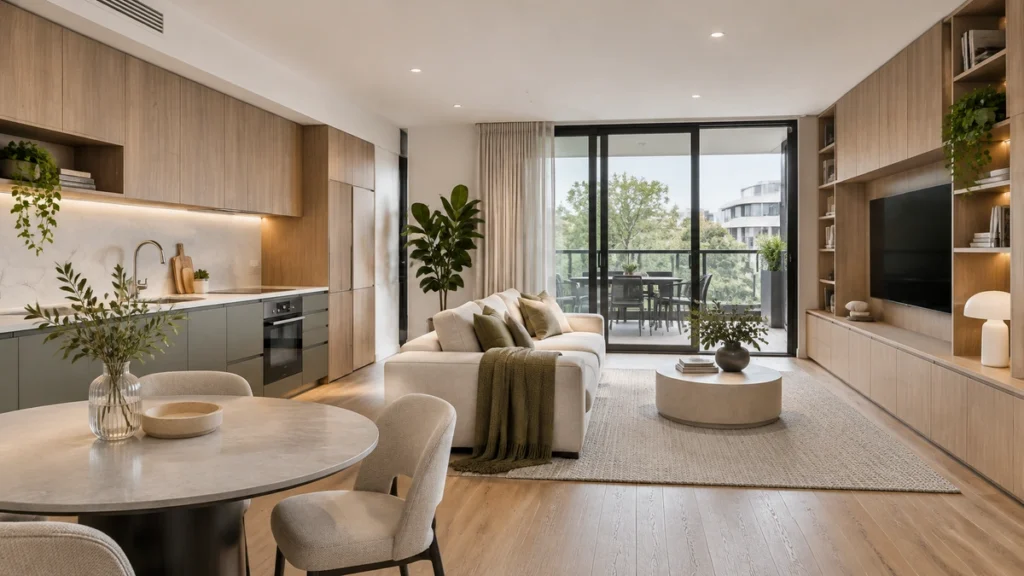
Choosing the right apartment kitchen cabinets involves more than appearance. They must fit the available space, withstand daily use, and remain easy to maintain.
So, what should you consider before choosing?
Start with cabinet dimensions, materials, construction, hardware, and maintenance requirements. Each affects how well your cabinets perform over time.
For apartment developers, consistency adds another consideration. Cabinet specifications must work across multiple units while keeping costs and installation requirements manageable.
This guide explains how to choose kitchen cabinets that balance functionality, durability, and budget. It also covers what to check before placing an order for a residential project.
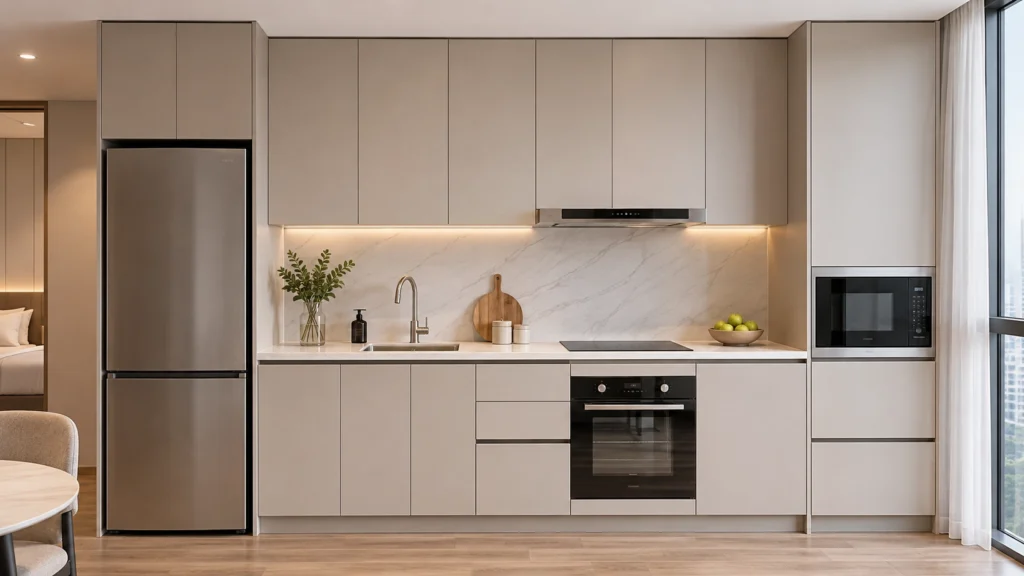
What Should You Consider When Choosing Apartment Kitchen Cabinets?
The right apartment kitchen cabinets should fit your space, withstand daily use, and remain easy to maintain. Before choosing, compare these seven factors to find the right balance between functionality, durability, and cost.
| Key Factor | Why It Matters | What to Check |
|---|---|---|
| Cabinet Size and Configuration | Ensures cabinets fit the available space and work with kitchen appliances. | Dimensions, layout, and opening clearances |
| Materials and Finishes | Affect durability, moisture resistance, and maintenance. | Substrate quality, surface finish, and edge protection |
| Cabinet Construction | Determines structural stability and load-bearing performance. | Panel thickness, joints, back panels, and mounting |
| Hardware Quality | Affects door and drawer operation over time. | Hinges, drawer slides, adjustability, and load ratings |
| Cabinet Type | Determines design flexibility and customization options. | Stock, modular, and custom cabinets |
| Cost and Maintenance | Influence initial investment and long-term expenses. | Material costs, installation, repairs, and replacement |
| Project Requirements | Help ensure consistent specifications and smooth installation. | Approved drawings, material samples, and installation details |
Appearance matters, but it shouldn’t be the only deciding factor. A cabinet that looks good but restricts appliance access or requires frequent repairs can create problems later.
The following sections explain how to evaluate each factor before placing your order.
How Do You Choose the Right Cabinet Sizes and Configuration for an Apartment Kitchen?
Apartment kitchens often have limited space, making accurate cabinet measurements essential. Even a small measurement error can affect appliance fit, door clearance, and available storage.
Which Cabinet Types Does an Apartment Kitchen Need?
Most apartment kitchens combine several cabinet types to meet different storage and functional needs.
- Base Cabinets: Sit below countertops and provide storage for cookware, kitchen supplies, and everyday essentials.
- Wall Cabinets: Make use of vertical space while keeping frequently used items within reach.
- Tall Cabinets: Provide additional pantry storage or house built-in appliances.
- Sink Base Cabinets: Accommodate sinks, plumbing connections, and under-sink storage.
- Drawer Units: Keep utensils, cookware, and other frequently used items organized and accessible.

Not every apartment kitchen needs all five types.
A compact studio may require fewer cabinet modules with carefully planned storage. Larger apartments may have room for additional drawers and tall pantry cabinets.
Start by assessing residents’ storage needs and available space. Then select a cabinet configuration that makes the most of both.
What Cabinet Dimensions and Clearances Should You Check?
Kitchen cabinet sizes affect countertop height, storage capacity, and movement throughout the kitchen.
According to the Lowe’s Kitchen Cabinet Buying Guide, common U.S. stock base cabinets typically measure:
- Height: 34.5 inches without a countertop
- Depth: 24 inches
Actual dimensions vary by manufacturer and cabinet design. Treat these measurements as general references rather than fixed requirements.
Before finalizing your cabinet configuration, check:
- Available wall width and ceiling height
- Cabinet depth and countertop height
- Door and drawer opening clearances
- Walkway space and appliance clearances
- Wall conditions and mounting requirements
The NKBA Kitchen & Bath Planning Guidelines provide professional recommendations for kitchen clearances, equipment locations, and accessible design.
Use these guidelines alongside local building codes and approved project drawings.
How Should Cabinets Coordinate With Kitchen Appliances and Plumbing?
Kitchen cabinets must accommodate appliances and service connections from the beginning.
Pay particular attention to three areas:
- Refrigerators: Allow sufficient door-opening clearance and follow the manufacturer’s ventilation requirements.
- Dishwashers: Confirm appliance dimensions, door clearance, and plumbing connections.
- Sink Cabinets: Allow space for water supply lines, drainage, and future maintenance access.
Before finalizing cabinet dimensions, confirm the approved appliance models and their installation specifications.
Why wait until installation to discover that an appliance doesn’t fit?
Early coordination helps prevent costly modifications and delays during installation.
Which Materials and Finishes Are Best for Apartment Kitchen Cabinets?
Choosing the right kitchen cabinet materials affects more than appearance. It influences durability, moisture resistance, maintenance, and overall cost.
Common options include plywood, medium-density fiberboard (MDF), and particleboard. Each has different strengths, and the best choice depends on the cabinet component and its intended use.
Plywood vs. MDF vs. Particleboard: What Are the Differences?
When comparing plywood, MDF, and particleboard, consider their performance, cost, and suitability for different cabinet components.
| Material | Main Advantages | Important Considerations | Common Applications |
|---|---|---|---|
| Plywood | Layered construction with good strength and screw-holding potential | Performance varies by grade, core construction, and moisture protection | Cabinet boxes, shelves, and structural panels |
| MDF | Smooth, uniform surface suitable for painted finishes | Standard MDF can swell with prolonged moisture exposure | Painted cabinet doors and decorative panels |
| Particleboard | Cost-effective and available in consistent panel dimensions | Density, grade, fastening, and edge protection affect performance | Melamine-faced cabinet boxes and shelves |

When comparing plywood vs. MDF kitchen cabinets, consider the intended use, moisture exposure, and project budget.
For a broader look at material selection across fixed apartment cabinetry, see our Apartment Joinery Guide.
For U.S.-bound projects, material compliance also matters. The EPA’s TSCA Title VI standards for composite wood products set formaldehyde emission limits for regulated hardwood plywood, MDF, and particleboard.
Request applicable compliance documentation from your supplier before ordering.
Which Cabinet Finishes Are Easier to Maintain?
Cabinet finishes protect underlying panels and influence cleaning, wear resistance, and long-term appearance.
Common kitchen cabinet finishes include:
| Finish | Main Advantages | Important Considerations |
|---|---|---|
| Melamine | Practical, easy-to-clean surface for many cabinet applications | Edge protection and surface quality matter |
| Laminate | Wide range of decorative options and durable surface choices | Performance varies by product grade and edge treatment |
| Painted Finish | Smooth appearance with flexible color options | Scratches and chips may require careful repairs |
| Wood Veneer | Natural wood grain and refined appearance | Requires suitable protective coatings and maintenance |
For rental apartments, prioritize easy cleaning, repairability, and consistent finishes across units.
Premium residential projects may place greater emphasis on surface appearance and decorative details.
Before choosing, compare stain resistance, scratch performance, cleaning requirements, and replacement options.
Don’t overlook the edges. Even durable surfaces can deteriorate if moisture enters through poorly protected joints.
What Should You Consider for Moisture-Prone Areas?
Kitchen cabinets regularly face humidity, spills, and occasional leaks. Sink base cabinets deserve particular attention.
When selecting moisture-resistant kitchen cabinets, check the following:
- Panel selection: Choose materials suited to the expected moisture exposure.
- Edge protection: Seal exposed panel edges and cutouts properly.
- Joint sealing: Protect connections around plumbing penetrations.
- Maintenance access: Keep plumbing connections accessible for inspection and repairs.
- Surface protection: Consider suitable protective liners in areas exposed to potential leaks.
Remember, moisture-resistant doesn’t mean waterproof.
Good material selection works best with proper sealing, installation, and regular maintenance.
What Cabinet Construction and Hardware Features Matter Most?
Cabinet durability depends on more than appearance. Construction quality and hardware determine how well cabinets withstand daily use.
How Can You Evaluate Cabinet Box Construction?
When evaluating kitchen cabinet construction, check these five details:
- Panel Specifications: Confirm panel thickness, grade, and load-bearing suitability.
- Cabinet Joints: Check connection methods and joint stability.
- Back Panels: Verify panel thickness, structural support, and mounting details.
- Shelves: Check support methods and load capacity.
- Edge Banding: Look for secure adhesion and fully covered edges.
Wall cabinets also require secure mounting and suitable wall support.
What Should You Look for in Hinges and Drawer Slides?

Reliable kitchen cabinet hardware helps maintain smooth operation and reduce maintenance needs.
Check the following features:
- Soft-Close Hinges: Reduce door slamming and provide smoother closing.
- Adjustable Hinges: Allow door alignment during installation and maintenance.
- Full-Extension Drawer Slides: Provide easier access to stored items.
- Load Ratings: Ensure drawer slides can support their intended loads.
- Replaceable Components: Simplify future repairs and maintenance.
Prioritize reliable hardware for frequently used doors and drawers.
How Do You Check Cabinet Durability Before Ordering?
Don’t rely on product photos alone. Request physical samples, hardware specifications, and performance documentation.
The Kitchen Cabinet Manufacturers Association (KCMA) offers two relevant cabinet performance certifications:
- ANSI/KCMA A161.1 Quality Certification: Evaluates cabinet structural strength, door and drawer performance, and finish durability.
- KCMA Severe Use Certification: Addresses the higher wear demands of apartment building kitchens.
Before ordering, verify that the specific cabinet product line holds the claimed certification. Certification does not automatically cover every product from a manufacturer.
Modular vs. Custom Apartment Kitchen Cabinets: Which Should You Choose?
Choosing between modular and custom apartment kitchen cabinets depends on your space, design requirements, and budget.
What Are the Differences Between Stock, Modular, Semi-Custom, and Custom Cabinets?
| Cabinet Type | Main Characteristics | Best For |
|---|---|---|
| Stock Cabinets | Fixed sizes and limited customization | Kitchens that fit standard dimensions |
| Modular Cabinets | Repeatable units with flexible configurations | Apartments with similar kitchen layouts |
| Semi-Custom Cabinets | Standard units with selected modifications | Projects needing moderate flexibility |
| Custom Cabinets | Built to project-specific dimensions and specifications | Unusual spaces, integrated appliances, or special requirements |
These terms can overlap, and suppliers may use them differently. Confirm which cabinet sizes are fixed, which modules can be combined, and what modifications are available before comparing quotations.

When Are Custom Cabinets Worth Considering?
Custom cabinetry is worth considering when standard cabinets cannot meet your space or functional requirements.
Common situations include:
- Unusual Dimensions: Irregular corners, narrow gaps, or nonstandard cabinet depths.
- Integrated Appliances: Custom housing for built-in equipment and service connections.
- Specific Design Requirements: Unique finishes, cabinet details, or project specifications.
For multifamily developments, a combined approach often works best. Use standard modules across similar units and customize only where necessary.
This helps maintain consistent specifications while accommodating different apartment layouts.
What Affects the Cost of Apartment Kitchen Cabinets?
Apartment kitchen cabinet costs depend on cabinet dimensions, materials, hardware, order volume, customization, and project scope. For multifamily developments, request an itemized quotation based on approved drawings and clearly defined delivery and installation requirements.
Which Factors Have the Biggest Impact on Cabinet Costs?
The main cost factors include:
- Cabinet Size and Quantity: Overall dimensions, cabinet count, and order volume.
- Materials and Finishes: Panel grades, door finishes, and decorative details.
- Hardware: Hinges, drawer slides, and accessories.
- Customization: Nonstandard dimensions, appliance integration, and special requirements.
- Project Scope: Packaging, shipping, installation, and site conditions.
For accurate cost comparisons, request itemized quotations based on the same specifications and scope.
How Do You Balance Initial Cost and Long-Term Maintenance?
Lower upfront costs may lead to higher expenses if cabinets require frequent repairs or replacements.
Consider these priorities for different apartment projects:
| Apartment Type | Recommended Priorities |
|---|---|
| Rental Apartments | Durable finishes, reliable hardware, and easy replacement |
| Mid-Range Apartments | Balanced material quality, appearance, and cost |
| Premium Apartments | Custom details, refined finishes, and consistent craftsmanship |
For large multifamily developments, standardized specifications can also simplify purchasing and future maintenance.
Focus on the total cost of ownership, including installation, maintenance, repairs, and replacement—not just the initial purchase price.
What Should Developers Check Before Ordering Kitchen Cabinets for Multifamily Projects?
For multifamily kitchen cabinets, consistent specifications help simplify procurement and installation. However, different apartment layouts may require adjustments.
Which Cabinet Specifications Can Be Standardized Across Units?
Studio, one-bedroom, and two-bedroom apartments can often share cabinet materials, door construction, hardware, finishes, and standard module sizes.
Keep unusual dimensions and appliance-specific details unit-specific.
For broader coordination across rooms, refer to our apartment joinery planning guide.
What Drawings and Samples Should Be Approved Before Manufacturing?

Before placing an order, confirm these four items:
- Cabinet Drawings: Approved elevations, dimensions, and cabinet configurations.
- Material and Hardware Specifications: Substrates, finishes, edge treatments, hinges, and drawer slides.
- Physical Samples: Approved colors, finishes, and key construction details.
- Installation Requirements: Appliance dimensions, plumbing connections, wall conditions, and countertop interfaces.
These checks help ensure cabinets meet project specifications before production begins.
How Can Developers Reduce Installation and Replacement Issues?
For larger projects, use unit-specific cabinet labeling, clear component schedules, and protective packaging.
Confirm the availability of replacement doors, drawers, and hardware. Also clarify responsibility for damaged components and on-site adjustments before delivery.
Apartment Kitchen Cabinet Selection Checklist
Before ordering apartment kitchen cabinets, use this checklist to confirm the key specifications and project requirements.
| Item | What to Confirm |
|---|---|
| Cabinet Layout | Matches approved kitchen drawings |
| Cabinet Dimensions | Sizes and clearances are verified |
| Appliance Compatibility | Cabinet openings fit approved appliances |
| Materials | Substrates and panel grades are specified |
| Finishes | Surface quality and maintenance requirements are approved |
| Edge Protection | Exposed edges and moisture-prone areas are protected |
| Hardware | Hinges, drawer slides, and load ratings meet specifications |
| Construction | Joints, shelves, and mounting details are approved |
| Quality Control | Samples, acceptance criteria, and material records are documented |
| Delivery & Installation | Packaging, labeling, and installation responsibilities are confirmed |
Conclusion: Choosing the Right Apartment Kitchen Cabinets
Choosing the right apartment kitchen cabinets means balancing functionality, durability, and long-term value. For residential developments, clear specifications and reliable manufacturing coordination are just as important as the cabinets themselves.
Planning an Apartment Project?
Explore our manufacturing capabilities and apartment project experience, or discuss your cabinetry requirements with VOLANT.
FAQs
Are Framed or Frameless Kitchen Cabinets Better for Apartments?
Both can work well. Framed cabinets have a face frame around the opening, while frameless cabinets provide a wider opening and easier access to the cabinet interior. Choose based on construction quality, available space, hardware, and design requirements.
What Is the Best Kitchen Cabinet Finish for Rental Apartments?
Melamine and laminate are practical choices for many rental apartments. Their smooth surfaces are generally easy to clean. Look for durable, properly sealed finishes that resist daily wear and are easy to maintain.
How Long Do Apartment Kitchen Cabinets Last?
There’s no fixed lifespan for apartment kitchen cabinets. Durability depends on materials, construction, hardware, moisture exposure, and maintenance. Well-built cabinets with replaceable components can remain functional longer and reduce the need for complete replacement.
Can You Replace Kitchen Cabinet Doors Without Replacing the Cabinets?
Yes, if the cabinet boxes remain structurally sound. Replacement doors must match the existing dimensions, hinge positions, and hardware. This can be a cost-effective way to refresh apartment kitchens without replacing the entire cabinet system.
What Should an Apartment Kitchen Cabinet Warranty Cover?
A kitchen cabinet warranty should clearly define coverage for manufacturing defects, cabinet components, finishes, and hardware. Check the warranty period, exclusions, replacement parts, and claim procedures. For multifamily projects, confirm how warranty responsibilities apply across individual units.