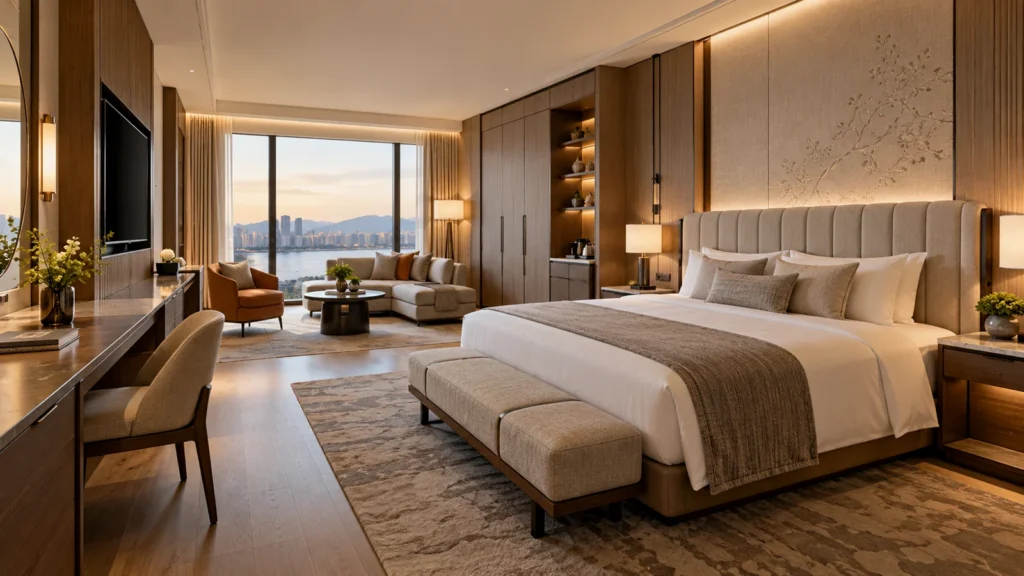
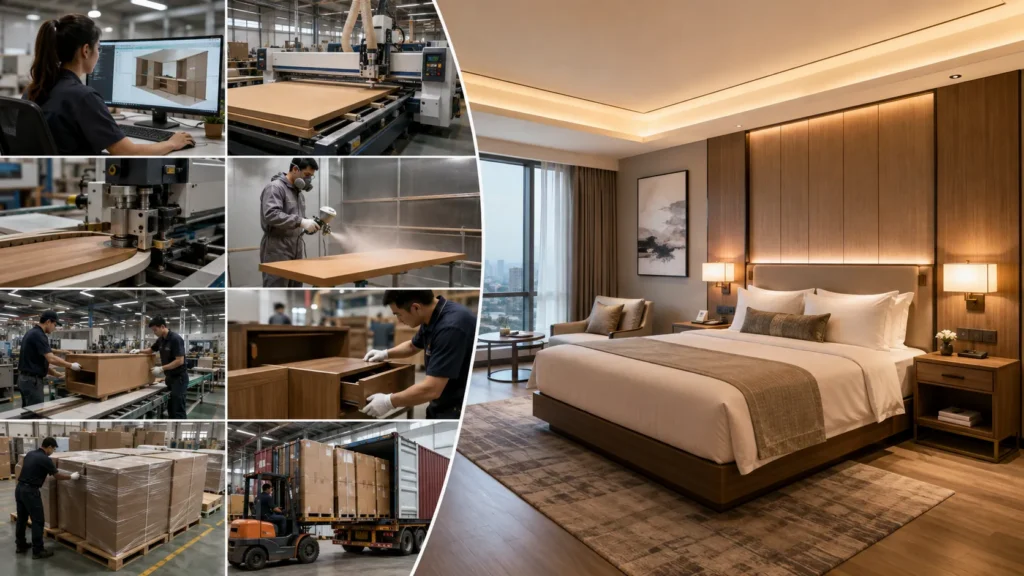
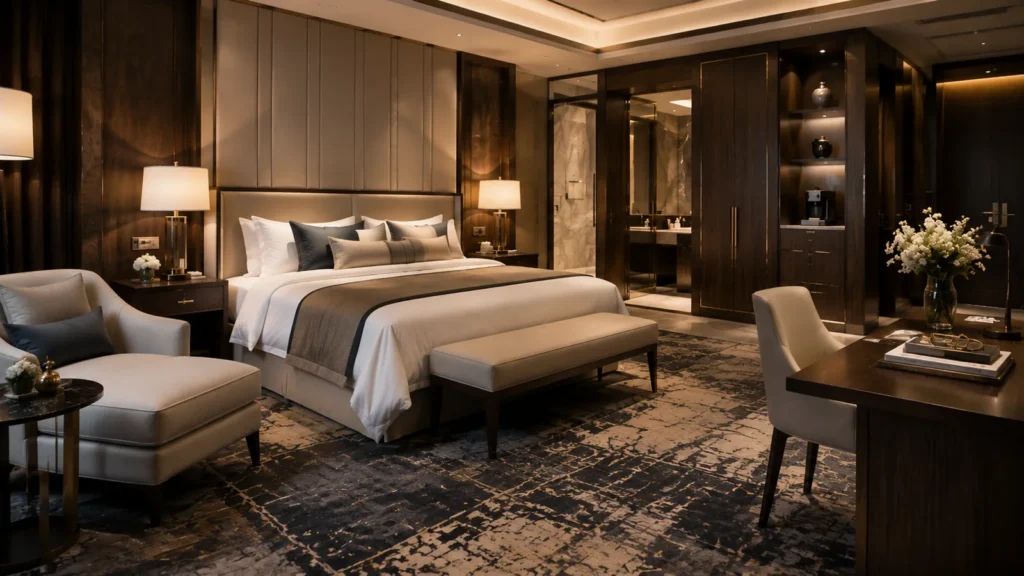
Choosing hospitality furniture suppliers can feel simple at first. Many hotel owners ask for a catalog, compare prices, and choose the best-looking furniture. Easy, right? Not really.
For hotel and resort projects, furniture is not just decoration. It is part of the guest experience. It affects comfort, safety, cleaning, maintenance, brand image, and even the opening schedule. A beautiful chair means little if it breaks in six months. A low quote means little if half the items arrive damaged.
The right hospitality furniture supplier is not just a vendor. It is a project partner that should support shop drawings, samples, mock-ups, quality control, packaging, logistics, installation, and after-sales service. This guide will help you choose that partner with more confidence.
What Are Hospitality Furniture Suppliers?
Hospitality furniture suppliers provide commercial-grade furniture for hotel and resort projects. Their work usually covers guest rooms, lobbies, restaurants, bars, lounges, meeting spaces, outdoor areas, and other public-facing spaces.
Unlike residential furniture suppliers, hospitality suppliers need to understand high-traffic use, brand standards, cleaning routines, safety needs, durability, and project delivery. In other words, they are not just selling furniture. They are helping hotels create spaces that can perform every day.
A hospitality furniture supplier may support several product categories:

Guest Room Furniture
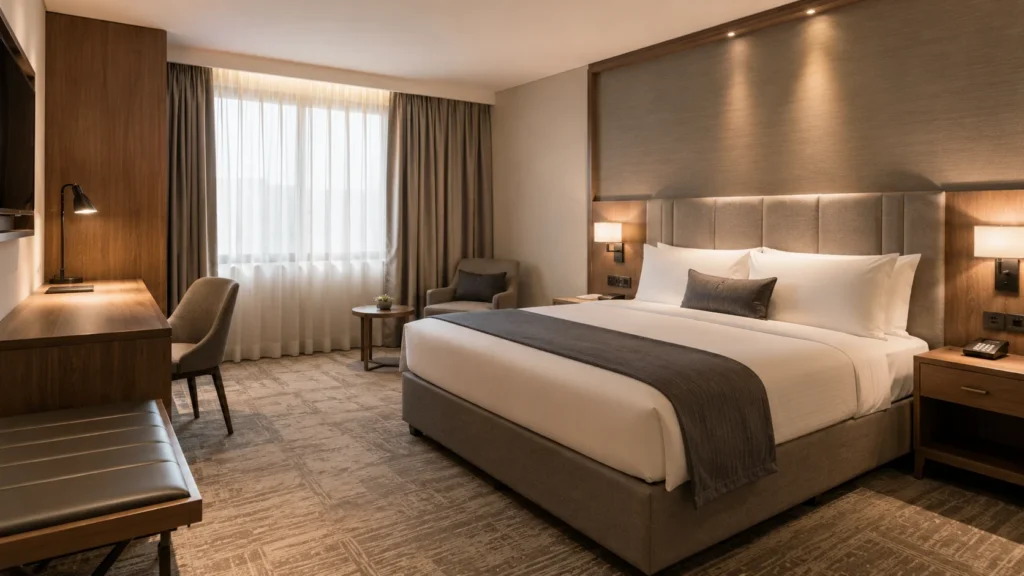
Headboards, nightstands, desks, wardrobes, luggage benches, TV panels, bathroom vanities, and hotel casegoods.
Public Area & F&B Furniture
Lobby seating, lounge chairs, reception desks, restaurant tables, dining chairs, bar counters, bar stools, and outdoor resort furniture.
Fixed Furniture & Fit-Out Elements
Wall panels, fixed millwork, built-in cabinets, banquette seating, custom counters, decorative partitions, and made-to-measure elements.
Project Support
FF&E packages, samples, mock-ups, packaging, logistics, delivery coordination, installation support, and after-sales service.
Hotel furniture faces more traffic than home furniture. It gets cleaned more often. It must also handle different guests, climates, usage patterns, and maintenance needs. That is why choosing the right supplier matters so much.
A strong hospitality furniture supplier should not only provide products. It should help protect your design intent, project schedule, operating efficiency, and guest experience.
Supplier, Manufacturer, or Fit-Out Partner: What Is the Difference?
Not every hospitality furniture supplier does the same job. Before you compare quotes, you need to know what type of partner you are talking to.
Some companies only sell standard furniture. Some manufacture custom hotel furniture. Some coordinate full FF&E packages. Others support furniture, fixed millwork, logistics, installation, and site work.
Here is a simple way to compare them:
| Partner Type | What They Do | Best For | Main Limitation |
|---|---|---|---|
| Furniture Supplier | Sells furniture products from stock or factory partners. | Small orders, standard items, quick replacement, and simple projects. | May have limited control over custom production, finish matching, and project delivery. |
| Furniture Manufacturer | Produces furniture directly in its own factory or production network. | Custom hotel furniture, repeated room types, casegoods, finish control, and bulk production. | May not manage logistics, installation, or full fit-out coordination. |
| FF&E Supplier | Coordinates furniture, fixtures, and equipment across multiple categories. | Hotel FF&E packages, multi-category sourcing, and procurement coordination. | May depend on several manufacturers, so quality control should be checked carefully. |
| Fit-Out Partner | Supports furniture, fixed millwork, wall panels, doors, vanities, installation, and site coordination. | New hotel projects, renovations, public area upgrades, and complex hotel or resort projects. | May be more than you need for a small loose furniture order. |
So, which one do you need?
If you only need a few chairs, a furniture supplier may be enough. If you need custom guest room furniture, a manufacturer may be a better fit. If your project includes many FF&E categories, you may need an FF&E supplier. If you are building or renovating a hotel, a fit-out partner can help manage drawings, samples, production, logistics, installation, and coordination.
The right choice depends on project size, furniture scope, customization level, timeline, and how much support your team needs. Pick the wrong type, and you may save money upfront but lose time later. Pick the right one, and the whole project becomes easier to control.
Why the Right Hospitality Furniture Supplier Matters
Furniture is one of the first things guests notice and touch. They sit on it, sleep on it, work at it, eat around it, and take photos beside it. If the furniture feels cheap, the hotel feels cheap. If the lobby furniture looks tired, the brand feels tired.
For hotel and resort projects, the right hospitality furniture supplier helps protect more than the look of a space. It also affects guest comfort, brand consistency, opening schedules, and long-term operating costs. According to the World Travel & Tourism Council, Travel & Tourism contributed US$11.6 trillion to global GDP in 2025, accounting for 9.8% of the global economy. In such a competitive market, hotels cannot afford poor guest experiences, early furniture failure, or delayed openings.
A strong supplier helps you protect four key areas:
Guest Experience
Furniture affects how guests feel and behave. A well-designed lounge chair can invite people to stay longer. A poor desk chair can make a business traveler uncomfortable. Good hospitality furniture supports real guest behavior, not just visual style.
Brand Consistency
Hotels are built on trust. Guests expect the guest room, lobby, restaurant, corridor, and public areas to feel connected. Your supplier should help match materials, colors, finishes, dimensions, and details across the property.
Project Schedule
A hotel opening is like a train schedule. If one carriage is late, the whole train can slow down. Late furniture can delay room handover, lobby completion, restaurant setup, and final inspection.
Long-Term Cost
The lowest price is not always the lowest cost. Cheap furniture may need more repairs, wear faster, and create more guest complaints. A good supplier helps you focus on lifecycle value, not just unit price.
Different Spaces in Hotel and Resort Projects Need Different Furniture Solutions
A common mistake is treating every hospitality space the same. A guest room is not a lobby. A resort terrace is not a city hotel corridor. A restaurant chair is not a conference chair.
Different spaces need different furniture. They also need different supplier capabilities. That is why the best hospitality furniture suppliers should understand how each space works, not just how it looks.

Guest Rooms
Guest rooms need consistency. If a hotel has 200 rooms, every headboard, nightstand, desk, wardrobe, and luggage bench must match the approved design.
A good supplier should support:
- Repeated room-type production
- Hotel casegoods
- Headboards
- TV panels
- Wardrobes
- Desks
- Bedside tables
- Luggage benches
- Finish consistency
- Room-by-room packaging
Ask one simple question: Can this supplier produce the same quality across hundreds of rooms?
If not, keep looking.
Resort and Outdoor Spaces
Resort and outdoor spaces must support relaxation, climate, and atmosphere. They may include balconies, terraces, courtyards, pool decks, rooftop areas, and outdoor dining spaces.
Your supplier should understand:
- UV-resistant finishes
- Moisture-resistant materials
- Outdoor fabrics
- Weather-friendly frames
- Relaxed seating comfort
- Natural textures
- Local design expression
- Long-term maintenance
Resort furniture is like travel clothing. It must look good, but it also needs to survive the journey.
Lobbies and Public Areas
Lobbies, lounges, corridors, reception areas, and shared waiting zones carry heavy traffic. They also shape the first impression of a hotel or resort.
A supplier for these spaces should handle:
- Durable upholstery
- Commercial seating
- Reception desks
- Lounge furniture
- Wall cladding
- Built-in millwork
- Easy-clean surfaces
- High-impact design details
Accessibility also matters. The 2010 ADA Standards set minimum requirements for public accommodations and commercial facilities in the United States. Public spaces should be usable, clear, and inclusive.
Furniture planning should support that goal.
Restaurants and Bars
Restaurants and bars need furniture that looks good and works hard. Chairs, tables, counters, and banquettes must support comfort, cleaning, traffic flow, and daily service.
A good supplier should understand:
- Commercial dining chairs
- Restaurant tables
- Banquette seating
- Bar counters
- Bar stools
- Stain-resistant upholstery
- Durable table edges
- Easy-clean finishes
In food and beverage spaces, furniture is part of the operating system. If it slows service or wears too fast, it affects both guests and staff.
10 Criteria for Evaluating Hospitality Furniture Suppliers
Now let’s get practical.
Before choosing hospitality furniture suppliers, do not compare quotes by price alone. A strong supplier should be evaluated by experience, product scope, technical support, quality control, delivery ability, and after-sales service.
Use these ten criteria to compare suppliers more clearly.
Real Hospitality Project Experience
Do not only ask, “Can you make this?” Ask, “Have you made this for hotels before?” Hospitality projects have special demands, from room counts and opening dates to mock-up rooms and site delivery.
What to check:
- Hotel project photos
- Case studies
- Similar project references
- Room counts
- Public area examples
- Resort project examples
Complete Product Scope
A strong supplier should support more than one product category, especially for large hotel and resort projects.
What to check:
- Guest room casegoods
- Loose furniture
- Fixed furniture
- Public area millwork
- Reception furniture
- Restaurant furniture
- Bathroom vanities
- Wall panels
- Custom items
Custom Design and Engineering Ability
Hotels rarely buy furniture exactly as shown in a catalog. Dimensions, finishes, hardware, and materials often change.
What to check:
- Shop drawings
- Material samples
- Finish samples
- Mock-up rooms
- Technical revisions
- Production-ready details
Material and Finish Control
Furniture is only as good as its materials. The supplier should control quality from sample approval to bulk production.
What to check:
- Wood veneer
- Laminate
- Plywood and MDF
- Metal and stone
- Glass
- Upholstery and foam
- Paint and hardware
- Edge details
Commercial Performance Standards
Hospitality furniture should be built for heavy use, daily cleaning, public traffic, and long operating hours. Organizations such as BIFMA furniture standards are useful references when discussing commercial furniture quality.
What to check:
- Load strength
- Stability
- Durability
- Upholstery performance
- Cleaning resistance
- Sustainability options
- Relevant safety requirements
Factory Capacity and Lead Time
A supplier may make one perfect sample. But can they make 500 pieces on time? Production capacity matters as much as product quality.
What to check:
- Monthly production capacity
- Peak-season lead times
- Sample lead time
- Bulk production time
- Revision process
- Backup production plans
Quality Control Process
Quality control should not happen only at the end. It should happen throughout the project.
What to check:
- Raw material inspection
- Dimension checks
- Structure checks
- Finish inspection
- Hardware checks
- Upholstery inspection
- Assembly checks
- Pre-shipment reports
Packaging and Labeling
Packaging sounds boring until the goods arrive. For hotels, furniture should be packed by room, floor, area, or installation sequence.
What to check:
- Room-by-room labels
- Floor or area labels
- Item codes
- Packing lists
- Fragile item protection
- Hardware packaging
- Installation sequence
Logistics and Installation Support
The supplier’s job should not end at the factory door. Some suppliers only ship products. Others support the full project journey.
What to check:
- Export documents
- Shipping terms
- Delivery schedule
- Site unloading support
- Installation guidance
- Damage handling
- Replacement process
- Punch-list support
Warranty and After-Sales Service
Furniture needs support after installation. Make sure the supplier explains what happens if items fail, arrive damaged, or need replacement later.
What to check:
- Warranty coverage
- Warranty period
- Spare parts policy
- Finish matching for replacements
- Damaged item handling
- Replacement lead time
- After-sales response process
Hospitality Furniture Supplier Evaluation Scorecard
Do not compare hospitality furniture suppliers by price alone. A lower unit price may look attractive, but it does not always mean lower project cost.
Use this 100-point scorecard to compare suppliers more clearly. It helps you look at experience, product scope, engineering support, quality control, logistics, installation, warranty, and cost transparency in one place.
If your project also involves FF&E budgeting, RFP preparation, and multi-category procurement, our hotel FF&E procurement guide explains the wider procurement process.
| Evaluation Area | Points |
|---|---|
| Hospitality project experience | 15 |
| Product scope | 15 |
| Custom engineering ability | 15 |
| Material and finish control | 10 |
| Production capacity | 10 |
| Quality control process | 10 |
| Packaging and logistics | 10 |
| Installation or site support | 5 |
| Warranty and spare parts | 5 |
| Cost transparency | 5 |
| Total Score | 100 |
Questions to Ask Hospitality Furniture Suppliers Before Requesting a Quote
A good quote starts with good questions. Before you choose hospitality furniture suppliers, do not only ask for price. Ask how they work, what they control, and how they handle project risk.
Use these questions before sending a formal RFQ or confirming a supplier. The answers will show whether the supplier is simply selling furniture or truly prepared to support a hotel project.
Experience Questions
- What hotel projects have you completed?
- Have you worked on resort projects or public area furniture?
- Can you show similar case studies?
- What project sizes do you usually handle?
Product Scope Questions
- What do you manufacture in-house?
- What do you outsource?
- Can you support both guest rooms and public areas?
- Can you handle custom hotel furniture?
Technical Questions
- Can you provide shop drawings?
- Can you make material and finish samples?
- Can you support a mock-up room?
- How do you control finish matching?
Production Questions
- What is your lead time?
- What is your production capacity?
- How do you manage design revisions?
- What happens if the schedule changes?
Delivery and Installation Questions
- Can you package furniture by room or floor?
- Do you support international shipping?
- Can you provide installation guidance?
- How do you handle damaged or missing items?
Commercial Questions
- What is included in the quote?
- What is excluded?
- What are the payment terms?
- What does the warranty cover?
These questions help you see beyond the price. They show whether the supplier is simply selling furniture or truly prepared to support a hotel project.
What to Prepare Before Requesting a Quote from Hospitality Furniture Suppliers
Do not send a vague message like, “Please quote hotel furniture.” That usually leads to vague pricing, missing items, unclear lead times, and difficult quote comparisons.
Before contacting hospitality furniture suppliers, prepare the key project information first. The clearer your brief is, the more accurate the quotation will be. For a deeper look at BOQ planning, supplier selection, quality control, delivery, and installation, you can also read our hotel furniture procurement guide.
You do not need every detail finalized on day one. But the supplier should understand your project scope, design direction, quantity, timeline, delivery needs, and installation expectations.
Prepare these details before requesting a quote:
Project Basics
- Hotel type
- Project location
- Room count
- New build or renovation
- Project timeline
- Target opening or handover date
Design Documents
- Floor plans
- Room layouts
- Elevations, if available
- Reference images
- Interior design concept
- Brand standards
Furniture Scope
- Furniture list
- BOQ
- Guest room furniture scope
- Public area furniture scope
- Fixed furniture requirements
- Loose furniture requirements
Material and Finish Requirements
- Finish schedule
- Material preferences
- Upholstery requirements
- Hardware requirements
- Durability requirements
- Cleaning requirements
Commercial and Delivery Details
- Budget range
- Delivery terms
- Site address
- Packaging requirements
- Installation scope
- Sample or mock-up requirements
The clearer your information, the easier it is to compare suppliers fairly. If one quote includes delivery and installation support, but another does not, the cheaper quote may not be cheaper at all.
Red Flags When Comparing Hospitality Furniture Suppliers
Some warning signs are easy to miss when comparing hospitality furniture suppliers. A low price, a beautiful catalog, or a fast promise can look attractive at first. But if the supplier cannot explain quality control, materials, packaging, delivery, or after-sales support, the project risk may be higher than it looks.
Watch for these red flags before signing with a supplier.
Red Flag Checklist
- They only show beautiful photos — Photos are helpful, but they do not prove quality, capacity, or delivery control.
- They give a low price without clear scope — A low quote may hide missing scope, weak materials, or poor support.
- They cannot provide drawings or samples — For custom hotel furniture, drawings and samples are essential.
- They avoid material questions — A supplier should explain why a material fits your hotel, resort, or public area.
- They have no QC process — No inspection means more risk. Ask for QC steps before production starts.
- They cannot package by room or area — Poor packaging and labeling can create site confusion and slow installation.
- They disappear after delivery — Warranty, spare parts, and replacement support matter after shipment.
If several red flags appear at the same time, slow down the decision. A supplier that looks cheap on paper may become expensive once delays, defects, replacements, and site confusion begin.
Local vs. Overseas Hospitality Furniture Suppliers
Should you choose a local supplier or an overseas supplier? It depends on your project size, furniture scope, customization needs, timeline, and level of site support.
A local supplier may be easier to communicate with and faster for simple replacements. An overseas supplier may offer stronger value for large hotel projects, custom production, repeated room types, and coordinated FF&E packages.
| Choose a Local Supplier When | Consider an Overseas Supplier When |
|---|---|
|
|
Many hotel owners consider overseas hospitality furniture suppliers for large projects because they can support custom production, bulk manufacturing, and multi-category supply. However, the decision should not be based on factory price alone.
Before choosing an overseas supplier, check their export experience, communication process, packaging method, quality control system, shipping documents, replacement policy, and after-sales support. A lower factory price only helps if the full project runs smoothly.
Why an Integrated Furniture and Fit-Out Partner Can Reduce Risk
Large hospitality projects involve many moving parts: furniture, millwork, doors, vanities, wall panels, hardware, logistics, delivery, and installation.
If every part comes from a different vendor, coordination becomes harder. Drawings may not match. Finishes may look different. Delivery schedules may conflict. Site teams may not know who is responsible when something goes wrong.
That is where an integrated furniture and fit-out partner can help.
A strong partner can support:
- Design coordination
- Shop drawings
- Sample approval
- Guest room furniture
- Public area millwork
- Fixed furniture
- Loose furniture
- Production planning
- Quality control
- Packaging and labeling
- Global logistics
- Installation support
This does not mean every project needs a turnkey partner. A small replacement order may only need a furniture supplier.
But for hotel and resort projects with guest rooms, public areas, restaurants, and custom fixed elements, integration can reduce gaps between design, production, delivery, and installation.
And gaps are where delays often hide.
How VOLANT FIT-OUT Supports Hotel and Resort Furniture Projects, From Guest Rooms to Public Areas

VOLANT FIT-OUT works with hospitality projects that need more than a product catalog.
As a hotel furniture manufacturer and fit-out solution provider, VOLANT provides guest room furniture, public area furniture, door and window systems, sanitary ware, and coordinated interior fit-out solutions.
This makes VOLANT suitable for:
- New hotel projects
- Hotel renovation projects
- Resort furniture packages
- Guest room furniture packages
- Public area upgrades
- Serviced apartment projects
- Custom millwork projects
- Projects that need furniture and fit-out coordination
VOLANT helps clients connect design intent with manufacturing, quality control, packaging, logistics, and installation support.
For hotel owners, developers, contractors, and designers, this means fewer loose ends between drawings, production, delivery, and site coordination.
And in hospitality projects, fewer loose ends can make all the difference.
Final Checklist Before Choosing Hospitality Furniture Suppliers
Before you choose a supplier, check this list. Your supplier should:
- Have real hospitality project experience
- Understand hotel and resort spaces, from guest rooms to public areas
- Support your full product scope
- Provide shop drawings and samples
- Control materials and finishes
- Match your production schedule
- Follow a clear QC process
- Package goods by room or area
- Support logistics and delivery
- Offer installation guidance
- Provide warranty and after-sales service
- Explain pricing clearly
The right hospitality furniture supplier should make your project easier, not harder.
So do not only ask, “How much does it cost?” Ask, “Can this partner protect our design, timeline, budget, and guest experience?”
That question will lead you to a better choice.
Conclusion
Choosing hospitality furniture suppliers is not just about finding furniture that looks good or getting the lowest quote. It is about choosing a partner who can support your design, production, quality control, delivery, installation, and long-term operation.
For hotel and resort projects, the right supplier helps protect the guest experience before the first guest even walks into the room.
If your project needs guest room furniture, public area furniture, door and window systems, sanitary ware, or coordinated interior fit-out solutions, you can contact VOLANT FIT-OUT to connect design intent with manufacturing, logistics, and project delivery.
FAQs
What are hospitality furniture suppliers?
Hospitality furniture suppliers provide commercial-grade furniture for hotels, resorts, serviced apartments, restaurants, bars, and public areas. They need to understand durability, cleaning, safety, brand standards, project timelines, packaging, logistics, and after-sales support.
How do I choose the right hospitality furniture supplier?
Choose a supplier by looking beyond price. Check their hospitality project experience, product scope, custom engineering ability, material and finish control, quality control process, production capacity, packaging, logistics support, installation guidance, warranty, and cost transparency.
What should I ask hospitality furniture suppliers before requesting a quote?
Ask about hotel project experience, in-house production, outsourced items, custom furniture ability, shop drawings, samples, mock-up support, lead time, production capacity, packaging method, shipping support, payment terms, and warranty coverage.
What should I prepare before contacting hospitality furniture suppliers?
Prepare your hotel type, project location, room count, timeline, floor plans, room layouts, furniture list, BOQ, finish schedule, reference images, brand standards, delivery terms, installation scope, and budget range. Clear information helps suppliers provide more accurate quotations.
What are red flags when comparing hospitality furniture suppliers?
Red flags include unclear pricing, no project references, no shop drawings or samples, vague material answers, no QC process, weak packaging, poor communication, unclear lead times, and no warranty or replacement support. A low price can become expensive if these risks appear later.