Hotel furniture procurement is not just about buying beds, desks, and chairs. It is a project management process that connects design, budget, production, quality control, logistics, and installation. To get it right, you need a clear furniture scope, accurate quantities, reliable suppliers, approved samples, proper packaging, and on-time delivery.
Sounds simple? It rarely is. A missing headboard can delay one room. A wrong finish can delay one floor. A weak supplier can delay the opening. For custom and large-scale hotel projects, choosing the right furniture partner can directly affect customization, quality consistency, production schedules, and final delivery. That is why developers, owners, and hospitality brands should treat hotel furniture procurement as a controlled project process, not casual purchasing.
For custom and large-scale projects, choosing the right hotel furniture manufacturer can directly affect customization, quality consistency, production schedules, and final delivery. In this hotel furniture procurement guide, we will walk you through BOQ planning, supplier selection, furniture specifications, quality control, delivery, and installation. If you are looking for a broader overview that covers fixtures, equipment, RFPs, and full FF&E planning, you can also read our hotel FF&E procurement guide.
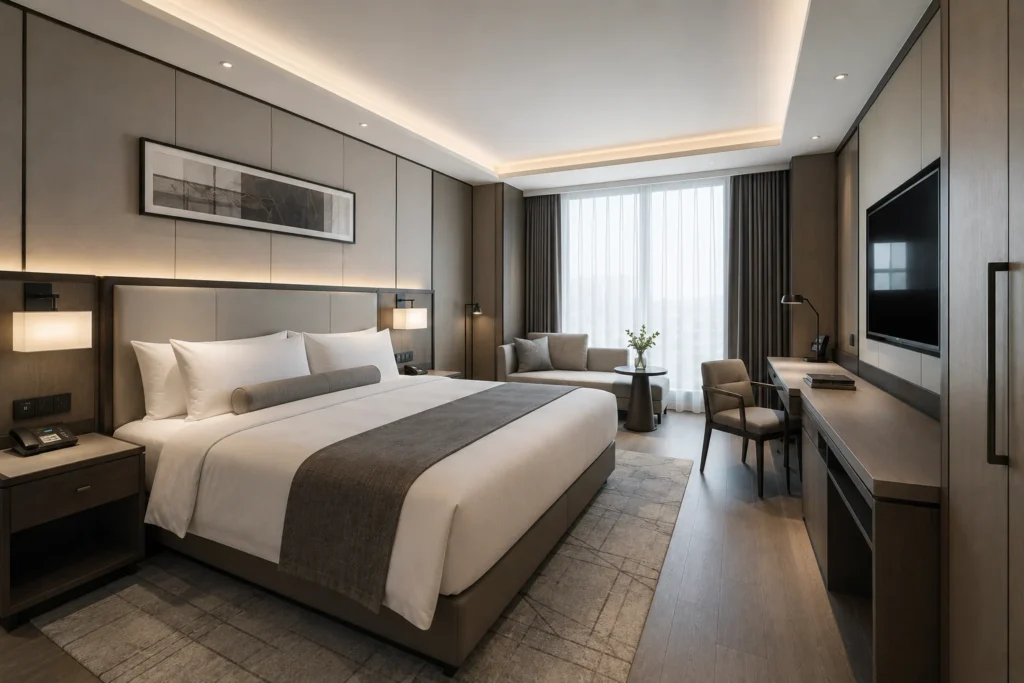
What Is Hotel Furniture Procurement?
Hotel furniture procurement is the process of sourcing, manufacturing, inspecting, delivering, and installing furniture for hotel projects. A strong hotel furniture procurement process connects the design concept with real products, real quantities, real budgets, and real site conditions.
It usually covers furniture for guestrooms and suites, lobbies, restaurants and bars, meeting rooms, outdoor areas, and back-of-house spaces. Common items include bed frames, headboards, wardrobes, nightstands, desks, chairs, sofas, dining tables, banquettes, reception counters, and custom millwork.
In short, hotel furniture procurement is the system that turns design intent into guest-ready spaces.
Hotel Furniture Procurement vs Hotel FF&E Procurement
Hotel furniture procurement is part of hotel FF&E procurement, but the scope is more focused. It covers furniture items such as beds, casegoods, sofas, chairs, tables, wardrobes, fixed furniture, and custom millwork.
Hotel FF&E procurement has a wider scope. It includes furniture, fixtures, and equipment, such as lighting, mirrors, artwork, window treatments, TVs, safes, minibars, and other guest-facing items.
The difference matters because hotel furniture directly affects comfort, durability, maintenance, and daily operations. Guests sleep on the bed, open the wardrobe, sit at the desk, and use the furniture throughout their stay. That is why furniture needs its own procurement plan, not just a line item inside a larger FF&E schedule.
What Furniture Is Included in Hotel Furniture Procurement?
A strong hotel furniture procurement plan starts with clear categories. Each area has different design goals, durability needs, cleaning requirements, and installation risks.
Guestroom Furniture
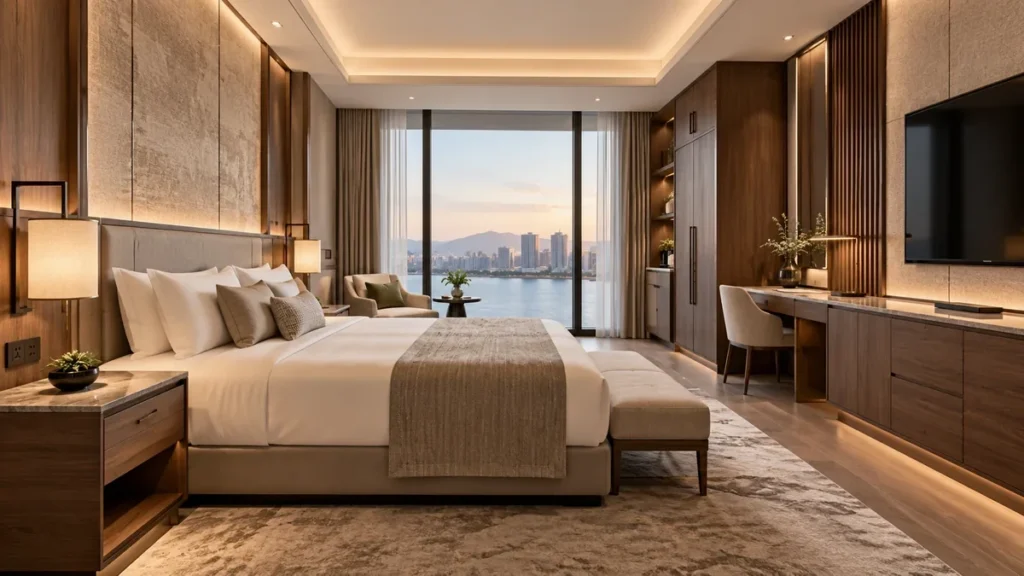
Bed frames, headboards, nightstands, wardrobes, luggage racks, writing desks, desk chairs, TV cabinets, minibar cabinets, benches, and lounge chairs.
Procurement focus: Durability, easy cleaning, guest comfort, and housekeeping access.
Lobby & Public Area Furniture
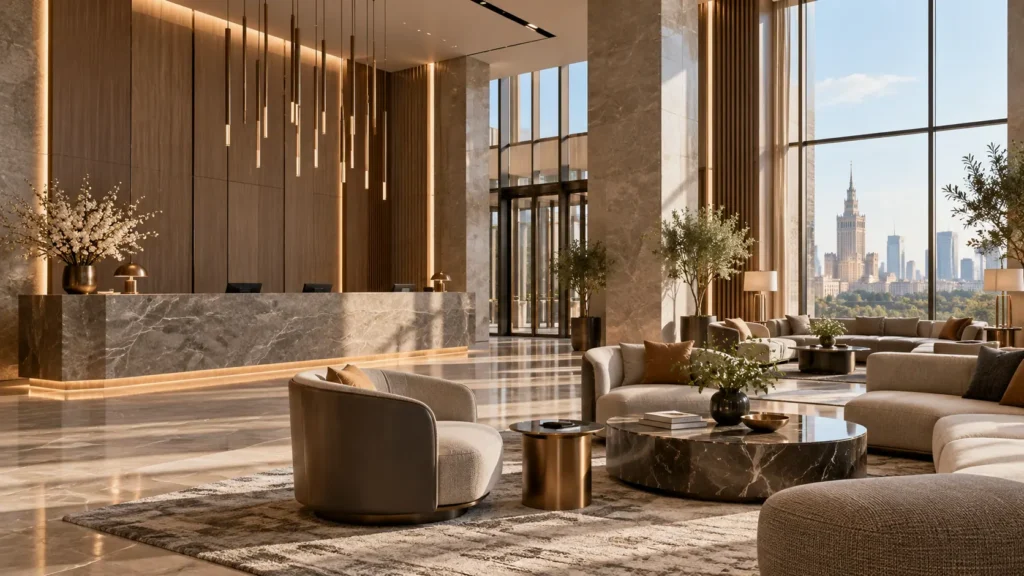
Lobby sofas, lounge chairs, coffee tables, side tables, console tables, reception desks, decorative seating, and public area millwork.
Procurement focus: Brand impression, heavy foot traffic, comfort, and long-term appearance.
Restaurant & Bar Furniture
Dining chairs, dining tables, banquette seating, bar stools, buffet counters, host stands, and service stations.
Procurement focus: Seat height, table stability, fabric cleanability, spacing, and daily service use.
Outdoor & Poolside Furniture
Outdoor chairs, tables, sun loungers, poolside seating, cabanas, and weather-resistant sofas.
Procurement focus: Sun exposure, moisture, salt air, frequent movement, and weather-resistant materials.
Fixed Furniture & Custom Millwork
Built-in wardrobes, headboard wall systems, TV wall units, vanity cabinets, wall panels, reception counters, and custom storage units.
Procurement focus: Site measurements, MEP coordination, outlets, switches, flooring, wall finishes, and installation details.
How to Build a Hotel Furniture BOQ
For hotel furniture procurement, the BOQ becomes the base document for quotation, production, delivery, and inspection. It lists what furniture is required, how many pieces are needed, where each item will be used, and how each piece should be made.
For hotel projects, a BOQ is more than a purchasing list. A detailed BOQ also helps owners and procurement teams compare suppliers, control project costs, and reduce unexpected changes during production and installation. It is the control document for pricing, production, delivery, installation, and final inspection. Without a clear BOQ, suppliers have to guess. When suppliers guess, costs change, timelines slip, and disputes become more likely.
Why a Furniture BOQ Matters
A clear furniture BOQ helps you avoid missing items, compare supplier quotes fairly, control the furniture budget, track production quantities, plan room-by-room delivery, reduce change orders, and speed up installation.
Think of the BOQ as the project map. It keeps the owner, designer, supplier, contractor, and installation team working from the same plan.

Hotel Furniture BOQ Template
A practical hotel furniture BOQ should include clear item details, quantities, specifications, packaging requirements, and delivery phases. These fields help owners, designers, suppliers, and installers work from the same document.
Item Code
Use a unique furniture code for quotation, production, delivery tracking, and on-site inspection.
Area
Define where the item will be used, such as guestroom, lobby, restaurant, outdoor area, or back-of-house space.
Room Type
Link each item to the right room type, such as king room, twin room, suite, or public area zone.
Item Name
List the furniture item clearly, such as bed frame, desk, chair, wardrobe, sofa, table, or custom unit.
Quantity
Show the total number of units required for pricing, production planning, packaging, and installation.
Dimensions
Include width, depth, height, and any project-specific size requirements for accurate manufacturing.
Material
Specify plywood, MDF, veneer, metal, stone, fabric, leather, laminate, or other approved materials.
Finish
Record the approved finish, such as laminate, veneer, paint, powder coating, stain, or custom color.
Hardware
Include hinges, drawer slides, handles, locks, connectors, adjustable feet, and anti-tip hardware.
Upholstery
Define fabric type, leather type, foam density, stitching details, and seating performance requirements.
Fire Rating
Add the required fire-retardant standard when it applies to the project, brand, or local code.
Delivery Phase
Assign each item to Phase 1, Phase 2, floor-by-floor delivery, or room-by-room installation.
Guestroom Furniture BOQ Example
For a 100-key hotel, a simple guestroom furniture BOQ may look like this. The exact quantity will depend on room types, brand standards, spare parts, and project scope.
| Item | Quantity Logic | Example Quantity |
|---|---|---|
| Bed frame | 1 per room | 100 pcs |
| Headboard | 1 per room | 100 pcs |
| Nightstand | 2 per room | 200 pcs |
| Desk | 1 per room | 100 pcs |
| Desk chair | 1 per room | 100 pcs |
| Wardrobe | 1 per room | 100 pcs |
| Luggage rack | 1 per room | 100 pcs |
| TV cabinet | 1 per room | 100 pcs |
Tip: This example looks simple, but it prevents expensive confusion later. Once the BOQ is approved, it becomes the base for quotation comparison, production planning, delivery tracking, and on-site inspection.
Hotel Furniture Cost and Budget Breakdown
Hotel furniture cost includes more than the product price. The lowest unit price is not always the lowest total project cost once packaging, freight, duties, storage, installation, damage, and replacement parts are included.
That is why hotel owners and developers should compare the full landed cost, not just the first supplier quote. Comparing total project cost helps buyers identify suppliers that provide better long-term value instead of simply choosing the lowest initial quotation.
Main Cost Categories
A practical hotel furniture procurement budget can be grouped into three areas: product costs, approval costs, and delivery and installation costs.
Product Costs
- Casegoods Headboards, wardrobes, desks, TV cabinets.
- Upholstered furniture Sofas, lounge chairs, benches, banquettes.
- Loose furniture Chairs, tables, luggage racks.
- Fixed furniture Wall panels, vanities, reception desks.
- Materials Veneer, laminate, plywood, metal, stone, fabric.
- Hardware Hinges, drawer slides, handles, locks.
Approval Costs
- Shop drawings Technical drawings for production confirmation.
- Samples Mock-up furniture and finish samples.
- Mock-up room Full room review before mass production.
- Sample revisions Adjustments before final approval.
Delivery & Installation Costs
- Packaging Export cartons, crates, corner protection.
- Freight Sea freight, local delivery, customs handling.
- Storage Temporary warehousing before site readiness.
- Installation Placement, fixing, leveling, adjustment.
- Replacement allowance Spare parts and damaged item replacement.
Compare Landed Cost, Not Unit Price
Use this simple landed cost formula before comparing supplier quotes:
Total Furniture Cost = Product Cost + Samples + Packaging + Freight + Duties + Storage + Installation + Replacement Allowance
This is the number that matters. A low unit price can become expensive if the supplier charges extra for samples, weak packaging causes damage, or the site needs additional storage before installation.
Note: For imported furniture, shipping terms also affect cost and risk. Incoterms 2020 helps define who pays for transport, who handles each shipping stage, and when risk transfers between buyer and seller.
Hidden Costs to Watch
- Sample revisions
- Mock-up room changes
- Packaging upgrades
- Storage fees
- Site access limits
- Replacement parts
- Damage during transit
- Installation delays
- Finish rework
Tip: Small costs can add up quickly. A strong budget should leave room for these items before purchase orders are signed, not after problems appear on site.
How to Choose a Hotel Furniture Supplier
In hotel furniture procurement, choosing the right supplier is one of the most important project decisions. It affects design accuracy, production control, project schedules, delivery performance, and after-sales support.
A strong supplier should be able to manage shop drawings, materials, samples, production, quality control, packaging, logistics, installation support, and replacement parts. For custom or large-scale projects, working directly with an experienced hotel furniture manufacturer can provide greater control over engineering, customization, production quality, and scheduling.

Hotel Furniture Supplier Scorecard
Use the following scorecard to compare potential suppliers and evaluate their manufacturing capability, customization ability, quality control, and project delivery experience.
Tip: The best supplier is not always the cheapest one. Choose the supplier that reduces project risk across quality, schedule, delivery, and after-sales support.
Questions to Ask a Hotel Furniture Manufacturer
Before selecting a supplier, ask questions that reveal their manufacturing capability, quality control process, customization ability, and hospitality project experience.
- Have you completed similar hotel projects?
- Can you produce both fixed and loose furniture?
- Can you provide shop drawings?
- Can you provide material samples?
- What is your production lead time?
- Can you support mock-up room furniture?
- How do you inspect furniture before shipment?
- How do you package furniture for export?
- How do you handle damaged or missing items?
- What warranty terms do you provide?
Tip: Good suppliers answer these questions clearly. Weak suppliers avoid details, delay documents, or give vague promises.
Factory Direct vs Procurement Agent vs Local Distributor
Different sourcing models work for different hotel projects. The right choice depends on how much control, speed, customization, and coordination support your team needs.
Factory Direct
Procurement Agent
Local Distributor
Tip: There is no perfect model for every project. The right choice depends on project size, timeline, furniture scope, customization needs, and your internal procurement capacity.
Hotel Furniture Specifications
In hotel furniture procurement, specifications turn design ideas into buildable products. They also protect your budget. When the specification is vague, every supplier may quote a different material, finish, structure, or hardware standard.
That makes prices hard to compare. It also increases the risk of rework, delays, and quality issues during production.
Materials & Finishes
Hotel furniture materials may include plywood, MDF, solid wood, veneer, laminate, metal, stone, glass, fabric, leather, or faux leather. Each material has different cost, weight, durability, maintenance needs, and visual impact.
For high-traffic hotels, durability should come before showroom beauty. A finish may look good in a sample box, but it still needs to handle luggage, cleaning, moisture, scratches, and daily guest use.
- Plywood
- MDF
- Solid wood
- Veneer
- Laminate
- Metal
- Stone
- Glass
- Fabric
- Leather
- Faux leather
Upholstery & Seating
For sofas, lounge chairs, dining chairs, and banquettes, buyers should check fabric durability, foam density, cushion recovery, stitching quality, stain resistance, cleaning method, frame strength, and comfort level.
Seating is not just decoration. It is used every day by guests, staff, and visitors. A chair that looks good but loses shape quickly will increase replacement cost and hurt the guest experience.
- Fabric durability
- Foam density
- Cushion recovery
- Stitching quality
- Stain resistance
- Cleaning method
- Frame strength
- Comfort level
Hardware
Hardware plays a major role in long-term furniture performance. Hinges, drawer slides, handles, locks, connectors, adjustable feet, and anti-tip hardware should be specified clearly before production.
Guests may not see drawer slides or connectors, but they will notice noisy drawers, loose handles, uneven doors, and unstable furniture. Small hardware choices can create big maintenance problems.
- Hinges
- Drawer slides
- Handles
- Locks
- Connectors
- Adjustable feet
- Anti-tip hardware
Safety, Accessibility, and Sustainability
Hotel furniture should support safe, accessible, and practical spaces. For projects in the United States, the ADA Standards set minimum requirements for public accommodations and commercial facilities. Furniture layout should also support accessible routes, clear floor space, and usable room functions.
Sustainability may also influence specifications. BIFMA develops furniture safety, performance, and sustainability standards, while LEED v4.1 supports better building performance and healthier material choices.
Before final approval, always confirm local codes, brand standards, fire-retardant requirements, accessibility needs, and project-specific performance requirements.
Sample Approval and Mock-Up Room Review
Do not rely on renderings alone. A rendering cannot show drawer noise. A photo cannot prove comfort. A finish sample cannot reveal how a full room feels.
That is why sample approval and mock-up room review are critical steps in the hotel furniture procurement process before mass production begins. They help you test the furniture in real conditions, before mistakes are repeated across every room.
Furniture Samples
Before approving hotel furniture samples, review the details that affect manufacturing quality, daily use, and long-term maintenance.
- Dimensions
- Material quality
- Veneer matching
- Color consistency
- Edge banding
- Drawer movement
- Hinge quality
- Stitching
- Foam comfort
- Surface scratches
- Odor or VOC concerns
- Packaging method
Mock-Up Room
A mock-up room helps the project team review furniture size, comfort, circulation, alignment, and brand standards inside a real room setting.
- Bed height
- Desk ergonomics
- Chair comfort
- Wardrobe door clearance
- TV cabinet cable access
- Headboard and outlet alignment
- Lighting effect on finishes
- Housekeeping access
- Guest circulation
- Brand standard compliance
Hotel Furniture Quality Control Checklist
In hotel furniture procurement, quality control should start before shipment, not after the furniture arrives on site. Once goods are delivered, fixes become slower, more expensive, and harder to coordinate.
Material Inspection
- Board quality
- Veneer
- Laminate
- Metal
- Stone
- Fabric
- Foam
- Hardware
In-Process Inspection
- Dimensions
- Structure
- Joints
- Alignment
- Drilling positions
- Panel thickness
- Assembly accuracy
Finish and Color Inspection
- Color consistency
- Surface smoothness
- Scratches
- Stains
- Edge quality
- Paint defects
- Veneer matching
Upholstery Inspection
- Stitching
- Fabric tension
- Cushion shape
- Foam density
- Seam alignment
- Wrinkle control
Pre-Shipment Inspection
- Quantity
- Item codes
- Packing list
- Room labels
- Carton condition
- Protection materials
- Product photos
- Spare parts
- Container loading plan
On-Site Inspection
- Transit damage
- Missing items
- Wrong items
- Loose hardware
- Alignment problems
- Installation defects
- Punch list items
Tip: A good QC process will not remove every issue, but it helps catch problems while they are still easy to fix.

Hotel Furniture Delivery and Installation Planning
In many hotel furniture procurement projects, delivery is where control starts to slip. The factory may finish production, but that does not mean the rooms are ready. You still need to manage shipping, customs, storage, site access, floor delivery, installation, and punch list closure.
Typical Hotel Furniture Lead Time
Timelines vary by country, scope, customization, and shipping method. Plan early, because rushed procurement rarely saves money.
- 01 BOQ and specification review 1–3 weeks
- 02 Quotation and supplier selection 1–2 weeks
- 03 Shop drawings and samples 3–6 weeks
- 04 Mock-up room approval 2–4 weeks
- 05 Mass production 6–12 weeks
- 06 QC and packing 1–2 weeks
- 07 Shipping and customs 2–6 weeks
- 08 Site delivery and installation 1–4 weeks
Packaging, Phased Delivery, and Installation
Packaging and Labeling
Strong packaging reduces damage. Clear labeling helps installers find the right items faster on a busy hotel site.
- Item code labels
- Room number labels
- Floor labels
- Packing lists
- Corner protection
- Moisture protection
- Fragile item markings
- Spare parts boxes
Phased Delivery
Do not deliver everything at once unless the site can handle it. Phased delivery can follow floor, room, wing, or opening priorities.
- Floor sequence
- Room type
- Building wing
- Public area phase
- Opening priority
Installation and Handover
Installation should include site checks, room-by-room placement, adjustment, reporting, punch list closure, and warranty handover.
- Site measurement
- Room-by-room placement
- Fixed furniture installation
- Hardware adjustment
- Leveling
- Damage reporting
- Missing item reporting
- Punch list closure
- Warranty handover
Common Hotel Furniture Procurement Mistakes
Avoiding common hotel furniture procurement mistakes is just as important as choosing the right supplier. Small decisions in BOQ, pricing, materials, samples, inspection, delivery, and spare parts can affect cost, schedule, and guest experience.
Starting Without a BOQ
Choosing Based Only on Price
Ignoring Materials and Hardware
Skipping the Mock-Up Room
Missing Pre-Shipment Inspection
Failing to Plan Phased Delivery
Forgetting Spare Parts
Hotel Furniture Procurement Checklist
Use this hotel furniture procurement checklist before purchase orders are signed and production begins. It helps your team confirm scope, budget, supplier capability, approvals, delivery planning, and installation readiness.
Planning
- Confirm hotel positioning
- Confirm room types
- Confirm furniture scope
- Prepare the BOQ
- Set the budget
- Review brand standards
- Confirm accessibility needs
Supplier Selection
- Shortlist suppliers
- Review hotel project references
- Check factory capability
- Compare landed costs
- Confirm lead times
- Review warranty terms
- Approve payment terms
Verify factory and manufacturing capability
- Approve shop drawings
- Approve materials
- Approve samples
- Approve mock-up room
- Track production progress
- Inspect before shipment
Delivery and Installation
- Confirm packing list
- Confirm labels
- Arrange shipping
- Confirm site readiness
- Inspect on arrival
- Install by sequence
- Complete punch list
- Collect warranty documents
Conclusion
Hotel furniture procurement affects much more than design. It influences budget control, project schedule, product durability, guest comfort, and opening readiness.
A strong procurement process starts with a clear BOQ, the right supplier, approved samples, pre-shipment inspection, phased delivery, and a clean punch list. When each step is managed properly, furniture moves from design intent to guest-ready space with fewer surprises.
Guests interact with furniture every day. They sleep on the bed, open the wardrobe, sit at the desk, use the luggage rack, and notice the seating in public areas. That is why hotel furniture should never be treated as an afterthought.
Need support with hotel furniture procurement? VOLANT FIT-OUT is a hotel furniture manufacturer and fit-out partner providing custom guestroom furniture, fixed furniture, public area furniture, and end-to-end project support for developers, owners, and hospitality brands. Contact our team to discuss your BOQ, timeline, and project requirements.
FAQs
What is hotel furniture procurement?
Hotel furniture procurement is the process of sourcing, manufacturing, inspecting, delivering, and installing furniture for hotel projects. It covers guestroom furniture, lobby furniture, restaurant furniture, outdoor furniture, fixed furniture, and custom millwork.
What is the difference between hotel furniture procurement and hotel FF&E procurement?
Hotel furniture procurement focuses mainly on furniture, such as beds, wardrobes, desks, chairs, sofas, tables, and fixed furniture. Hotel FF&E procurement is broader and also includes fixtures and equipment, such as lighting, mirrors, TVs, safes, minibars, artwork, and window treatments.
What is a BOQ in hotel furniture procurement?
A BOQ, or Bill of Quantities, is a detailed furniture list. It shows item names, quantities, dimensions, materials, finishes, room types, packaging needs, and delivery phases. It helps suppliers quote accurately and helps owners control cost.
How do you choose a hotel furniture supplier?
Choose a hotel furniture supplier based on hotel project experience, production capacity, material and finish control, customization ability, quality control, packaging, delivery support, warranty terms, and after-sales service. The cheapest supplier is not always the safest choice.
How long does hotel furniture procurement take?
Hotel furniture procurement can take several months, depending on project scope, customization, sample approval, production, shipping, and installation. Custom hotel furniture often needs extra time for shop drawings, mock-up approval, mass production, quality control, and phased delivery.
What should be checked during hotel furniture quality control?
Hotel furniture quality control should check materials, dimensions, structure, finishes, color consistency, upholstery, hardware, packaging, labels, quantities, spare parts, and pre-shipment photos. It should also include on-site checks for transit damage, missing items, installation defects, and punch list items.
How much does hotel furniture cost?
Hotel furniture cost depends on project scope, materials, customization, quantity, packaging, freight, installation, and replacement allowances. Compare total landed cost rather than unit price alone.
Is It Better to Buy Directly From a Hotel Furniture Manufacturer?
Factory-direct sourcing can provide better control over customization, production, quality, and cost, especially for large projects. However, it requires stronger coordination, so the best sourcing model depends on project scale, timeline, and procurement capacity.