The best hotel guest room design ideas do more than make a hotel room look good—they make the stay feel easier. Good hotel guest room design helps guests sleep well, unpack quickly, charge their devices, work comfortably, and relax without having to think about how the room works.
That balance comes from getting the details right. Lighting should feel warm and easy to control, storage should be where guests expect it, and furniture should support how people actually use the space. The following ten hotel guest room design ideas combine visual appeal with practical comfort, helping create hotel rooms that feel both memorable and effortless to stay in.
10 Hotel Guest Room Design Ideas That Improve Guest Experience
The best hotel guest room design ideas are not just visually appealing. They also make the room easier, calmer, and more comfortable to use. The ten ideas below focus on practical design choices guests can see and feel, from the headboard wall and lighting to storage, seating, bathrooms, and technology.
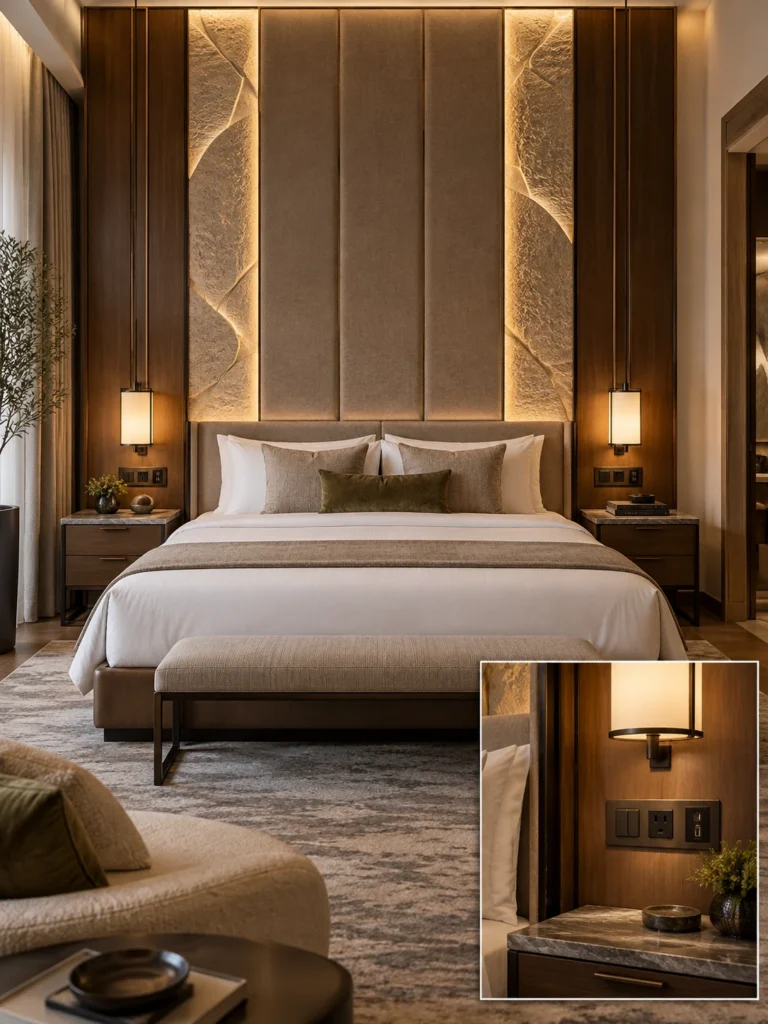
1. Create a Statement Headboard Wall
The bed is often the visual focus of a hotel room, so the wall behind it deserves more attention. A statement headboard can frame the sleeping area and add warmth through upholstered panels, wood veneer, textured finishes, or decorative wall panels.
It can also do more than look good. Integrated bedside lighting, nightstands, charging points, and switches keep everyday essentials within easy reach. This makes the room feel cleaner while giving guests more control from the bed.
Why it works for guests:
- Keeps lighting and charging within easy reach
- Creates a stronger visual focus around the bed
- Reduces clutter around bedside tables
- Makes switches and controls easier to find
- Helps the sleeping area feel warmer and more complete
For more planning details, see our hotel headboard wall design guide.
Design tip: Keep bedside lighting and controls easy to see and reach.

2. Use Warm, Layered Lighting
One ceiling light cannot create the right atmosphere for every moment. A well-designed hotel room uses multiple lighting layers to support different guest activities, from relaxing in bed to working at the desk or getting ready in the bathroom.
Ambient lighting creates the overall mood, while reading lights and task lighting provide more focused support. Features such as cove lighting and headboard backlighting can also add depth and warmth without making the room feel visually busy.
Good lighting is not only about brightness. Guests should be able to understand the controls easily and adjust the room without leaving the bed.
Why it works for guests:
- Creates a more relaxing and comfortable atmosphere
- Supports different activities throughout the stay
- Makes bedside controls easier to use
- Reduces harsh lighting and visual discomfort
- Helps the room feel warmer and more welcoming
Design tip: Test the lighting at night, not only during daytime design reviews.

3. Bring Nature Into the Guest Room
Nature-inspired interiors can make a hotel room feel warmer, calmer, and more connected to its surroundings. Guests may not always notice individual materials, but they often feel the difference when a space feels balanced and relaxing.
You do not need to turn the room into a greenhouse. Start with natural tones and textures, such as light oak, walnut finishes, woven fabrics, stone surfaces, and muted greens. These elements can add warmth while keeping the design elegant and timeless.
Why it works for guests:
- Creates a calmer and more relaxing atmosphere
- Makes the room feel warmer and more comfortable
- Adds visual depth without overwhelming the space
- Helps create a stronger sense of place
- Makes the overall stay feel more memorable
Design tip: Use natural textures as a feature, then give enough quiet space around them.

4. Choose a Calm, Cohesive Color Palette
Color plays an important role in how guests experience a hotel room. The right palette can make a space feel warmer, more spacious, and more relaxing without changing the layout.
The goal is not to make every room beige. A warm neutral palette may combine cream, oak, and soft taupe, while a modern urban room may use gray, walnut, and subtle black accents. Resorts can explore sand tones, light wood, and muted greens to create a more natural atmosphere.
A cohesive palette works best when colors connect across the entire room. The headboard, wardrobe, desk, and bathroom should feel like parts of the same design story rather than separate elements.
Why it works for guests:
- Creates a more comfortable and relaxing atmosphere
- Makes the room feel visually balanced
- Helps different furniture pieces feel connected
- Supports a stronger hotel design identity
- Creates a more memorable stay experience
Design tip: Choose one visual focus, then let the other finishes support it.

5. Make Small Guest Rooms Feel Bigger With Built-In Furniture
A small room does not always need smaller furniture. It needs smarter furniture.
Built-in furniture can reduce wasted space, improve circulation, and create a cleaner visual flow. Instead of adding more separate pieces, well-planned built-ins combine multiple functions into one organized system.
For example:
- Combine the TV unit with a compact workspace
- Integrate the minibar and safe into the wardrobe
- Add storage below a luggage bench
- Use floating nightstands to create more visible floor space
These small hotel guest room design ideas help compact rooms feel more open and easier to use. The goal is not adding more storage, but creating the right storage in the right places.
A well-designed hotel room furniture package works like a puzzle, where each piece supports the room layout and guest experience.
Design tip: Design around guest movement first. Fill the remaining space second.

6. Add a Comfortable Lounge or Window Seating Area
A hotel room needs more than a bed and a desk. Guests may want to enjoy coffee, read a book, relax after a long day, or simply take in the view.
A small lounge area gives guests another place to use the room. Depending on the layout, this can be a window bench, lounge chair, compact loveseat, or built-in banquette.
The right choice depends on the room size and purpose. A window seat works well when the view is a key feature, while a comfortable chair may be a better option for compact business rooms.
Design considerations:
- Create an additional place for guests to relax
- Support different activities beyond sleeping and working
- Keep circulation paths clear and comfortable
- Match seating size with the available space
The goal is not to add more furniture, but to create more choices. Good hotel room layout ensures every piece supports how guests actually use the space.
Design tip: Before adding a chair, ask: “Where will the guest actually use it?”

7. Create a Clutter-Free Wardrobe and Luggage Zone
What happens during the first minute after a guest enters a hotel room? The suitcase usually comes down first.
Without a dedicated luggage area, bags may end up on the floor or bed. A well-planned wardrobe zone gives guests a clear place for clothing, luggage, and personal items.
A functional wardrobe can combine hanging space, shelves, a safe, luggage storage, and even a minibar. The key is making storage easy to understand, so guests can quickly find where everything belongs.
Design considerations:
- Provide a dedicated luggage area
- Keep everyday items within easy reach
- Combine storage functions efficiently
- Maintain clear room circulation
Good hotel wardrobe design prevents clutter before it starts and helps the room feel more comfortable throughout the stay.
Design tip: Design storage around guest arrival and unpacking behavior.

8. Turn the Bathroom Into a Spa-Like Experience
A spa-like bathroom does not require marble on every surface. It requires comfort, clarity, and thoughtful details that make daily routines feel easier.
Start with the vanity. Guests need enough countertop space for personal items, practical mirror lighting, and storage that keeps essentials organized. Floating vanities, large mirrors, warm wood finishes, and soft lighting can also make smaller bathrooms feel more open and relaxing.
The best hotel bathrooms balance beauty with usability. Every detail should support the guest experience, from placing toiletries easily to creating a clean and comfortable space.
Design considerations:
- Provide practical countertop and storage space
- Use lighting that supports grooming and relaxation
- Choose materials that handle daily hotel use
- Keep the bathroom visually clean and organized
A well-designed hotel bathroom vanity design guide can help connect these decisions.
Design tip: Luxury is not only what guests see. It is how effortlessly the bathroom works.

9. Add Local Character Through Materials and Wall Details
Guests can sleep in a similar room almost anywhere. A memorable hotel room should feel connected to its location.
That does not mean adding obvious cultural symbols. Subtle materials and details often create a stronger sense of place. Regional wood tones, woven textures, stone finishes, and handcrafted elements can add personality while keeping the design timeless.
Wall panels are an effective way to introduce depth and character. Natural veneer adds warmth, upholstered panels create softness, and textured surfaces bring visual interest without overwhelming the room.
Design considerations:
- Use materials that reflect the local environment
- Add texture through walls and furniture details
- Create a unique identity without over-decoration
- Balance local character with long-term design appeal
For more wall panel inspiration, explore our hotel wall panel design ideas for different materials, textures, and design options.
Design tip: Let local inspiration influence materials and details, not just artwork.

10. Integrate Technology Without Making the Room Feel Technical
Guests want technology, but they rarely want the room to feel like a control panel.
The best hotel room technology stays simple and unobtrusive. It should be easy to access when needed and almost invisible when not in use.
Start with everyday needs. Provide convenient charging points near the bed and desk. Integrate lighting controls, USB-C charging, and room functions into easy-to-reach locations.
Smart features such as bedside control panels or motorized blackout shades can improve comfort when they solve real guest needs.
Design considerations:
- Place charging and controls where guests naturally use them
- Keep interfaces simple and intuitive
- Hide cables and unnecessary equipment
- Integrate technology with furniture design
When design and technology work together, the room feels more comfortable, not more complicated.
Design tip: If a first-time guest needs instructions for a basic function, simplify it.
How to Turn Guest Room Design Ideas Into Real Hotel Projects
Visual inspiration is only the starting point.
A successful hotel project needs more than attractive images. The design must work across dozens or even hundreds of rooms while maintaining quality, function, and consistency. Turning these concepts into reality also requires experienced hotel furniture manufacturing support.
That changes the focus from appearance to execution.
Maintain Design Consistency
One room, one complete experience
Furniture elements may come from different drawings, but guests see one finished space.
- Finishes
- Materials
- Colors
- Hardware
A consistent design language helps create a stronger brand experience across every room.
Select Materials for Hotel Performance
Designed for daily hospitality use
Hotel furniture works harder than residential furniture.
- Visual appeal
- Durability
- Easy maintenance
- Long-term performance
The right materials balance appearance with repeated daily use.
Coordinate Furniture With Room Requirements
Design must work beyond appearance
Beautiful furniture can still fail when dimensions conflict with the room layout.
- Electrical points
- Lighting
- Plumbing
- HVAC elements
- ADA accessibility requirements
Early coordination helps avoid costly changes during installation.
Partner With an Experienced Hotel Furniture Manufacturer
From concept to completed rooms
A successful hotel project requires more than a great design.
- Engineering development
- Manufacturing control
- Quality consistency
- Installation coordination
The right hotel furniture manufacturing partner helps transform design concepts into scalable hotel solutions.
Designing Better Guest Rooms Starts With the Guest
The strongest hotel guest room design ideas do more than create beautiful photos. They make everyday actions feel natural and improve how guests experience the space.
Guests may notice materials, lighting, furniture, and colors first, but they remember how the room makes them feel. Was it easy to unpack? Could they relax after a long journey? Did everything work without needing instructions?
For hotel owners, designers, and developers, the next challenge is turning great design concepts into practical, repeatable guest room solutions. This requires more than creative ideas. It requires the right materials, engineering support, manufacturing capability, and project coordination.
VOLANT FIT-OUT helps hospitality brands transform design visions into functional hotel spaces through custom hotel furniture solutions, integrated guest room systems, and professional fit-out support. Whether you are developing a new hotel project or upgrading existing guest rooms, our team can help create solutions that balance aesthetics, durability, and real-world performance.
Have a hotel project in development? Contact VOLANT FIT-OUT to discuss your guest room furniture and fit-out requirements.
FAQs
What makes a good hotel guest room design?
A good hotel guest room design balances aesthetics, comfort, and functionality. The best designs make daily activities easier by providing practical storage, comfortable lighting, intuitive furniture layouts, and thoughtful details that improve the guest experience.
How can hotel guest room design improve guest experience?
Hotel guest room design improves guest experience by reducing friction in everyday actions. Easy-to-access charging points, comfortable seating, organized storage, layered lighting, and functional furniture layouts help guests feel more relaxed and comfortable during their stay.
What furniture is essential for a hotel guest room?
Essential hotel guest room furniture usually includes a bed system, headboard wall, bedside tables, wardrobe, luggage storage, desk or workspace, TV cabinet, and bathroom vanity. The exact configuration depends on room size, hotel brand standards, and guest needs.
How can small hotel guest rooms feel bigger?
Small hotel guest rooms can feel larger by using space-efficient furniture solutions, built-in storage, clear circulation paths, and a consistent color palette. Integrated furniture such as combined TV units, wardrobes, and desks can reduce clutter and maximize usable space.
What materials are best for hotel guest room furniture?
The best materials for hotel furniture balance appearance, durability, and maintenance requirements. Common choices include wood veneer, laminate finishes, upholstered panels, engineered surfaces, and moisture-resistant materials depending on the application and project requirements.
How do hotels turn guest room design ideas into real projects?
Turning design ideas into real hotel projects requires engineering, manufacturing, and installation coordination. A reliable hotel furniture manufacturer helps transform concepts into repeatable solutions while maintaining quality, consistency, and project timelines.