Apartment Furniture Packages: What Should Be Included?

  • Home /
  • Blog /
  • Apartment Furniture Packages: What Should Be Included?
Table of Contents

Planning furniture for an apartment development involves more than selecting attractive pieces. Developers must coordinate furniture types, quantities, specifications, and delivery schedules across multiple units.

A complete package typically includes furniture for living rooms, bedrooms, dining areas, and workspaces. It may also cover fixed furniture, such as built-in wardrobes, kitchen cabinets, and bathroom vanities. The exact scope depends on the project type and procurement requirements.

For developers, defining a clear furniture schedule early helps prevent missing items, inconsistent specifications, and coordination issues during production and delivery.

This guide outlines the essential components of an apartment furniture package. It also explains how to organize room-by-room furniture checklists, plan configurations for different unit types, prepare a BOQ, and evaluate suppliers.

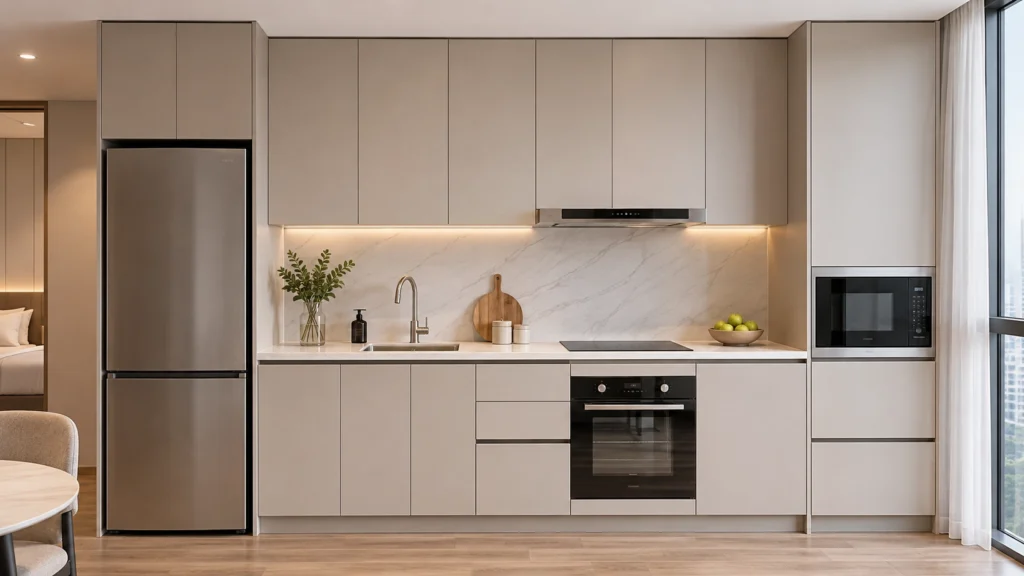
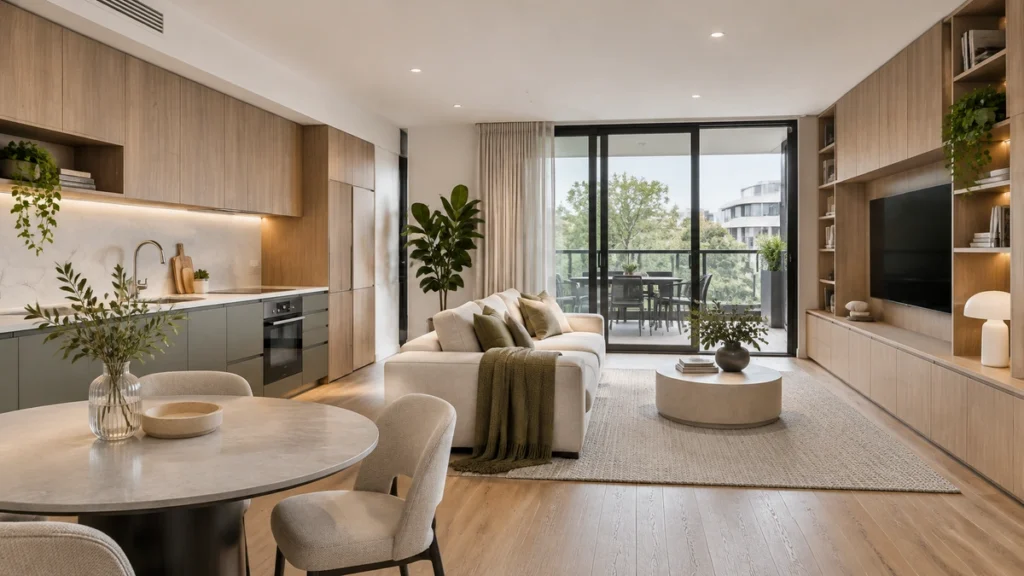
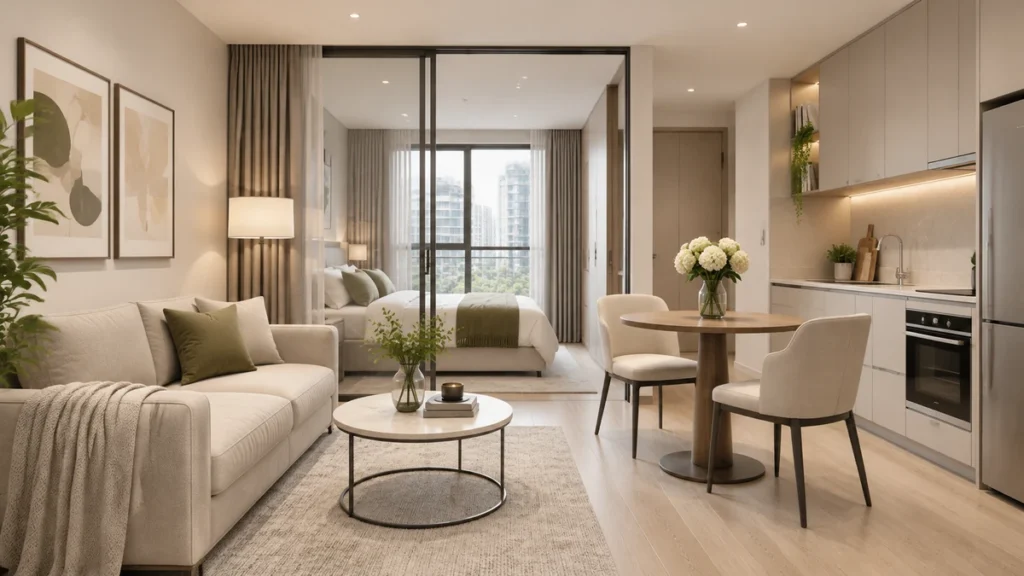
Modern compact apartment showcasing an apartment furniture package with coordinated living, dining, bedroom, and kitchen furniture.

What Is an Apartment Furniture Package?

An apartment furniture package is a coordinated selection of furniture and related interior items for individual residential units or an entire development.

Developers use furniture packages to standardize products across multiple units. This simplifies procurement and helps maintain consistent interior quality.

However, the scope varies by project. Some packages cover loose furniture only. Others also include fixed furniture, custom joinery, and selected furnishings.

Which Areas Does a Typical Package Cover?

A typical apartment furniture package may cover several areas:

Area Typical Furniture Items
Living Room Sofas, coffee tables, side tables, TV cabinets
Bedroom Bed frames, bedside tables, dressers, wardrobes
Dining Area Dining tables, dining chairs, bar stools
Workspace Desks, office chairs, bookshelves
Entryway and Utility Shoe cabinets, entryway benches, storage units
Kitchen and Bathroom Kitchen cabinets, pantry units, bathroom vanities, mirror cabinets
Balcony and Outdoor Areas Outdoor chairs, compact tables, weather-resistant seating

Some projects also include furniture for shared spaces, such as reception areas, resident lounges, and co-working spaces. These are often managed under a separate common area furniture scope.

The project brief should clearly identify which items are included, optional, or procured separately. It should also define supplier responsibilities for delivery and installation.

How Are Furniture Items Classified in an Apartment Package?

The furniture listed above can be divided into two main categories: fixed furniture and loose furniture. Understanding the difference helps developers define procurement responsibilities and coordinate different suppliers.

Fixed Furniture

Fixed furniture is designed to fit specific spaces within an apartment. It requires verified dimensions and coordination with architectural drawings before manufacturing and installation.

Typical Items
  • Built-in wardrobes
  • Kitchen cabinets
  • Bathroom vanities
  • Built-in TV cabinets
  • Custom storage units
Project Considerations: Dimensions, materials, finishes, and installation details should be confirmed before production.

Loose Furniture

Loose furniture consists of movable items that can be positioned independently. These pieces offer greater flexibility in apartment layouts.

Typical Items
  • Sofas and armchairs
  • Beds and bedside tables
  • Dining tables and chairs
  • Coffee tables and side tables
  • Freestanding storage units
Project Considerations: Selection should reflect apartment layouts, intended use, and furniture dimensions.

Both categories can form part of an apartment furniture package. However, they may involve different suppliers, specifications, installation requirements, and delivery schedules.

Clearly defining these categories helps prevent duplicated orders, procurement gaps, and coordination issues.

What Should Be Included in an Apartment Furniture Package?

A room-by-room apartment furniture checklist helps developers define the furniture scope before procurement. It also makes it easier to compare unit layouts, confirm quantities, and coordinate different furniture categories.

Use the following categories as a starting point. Final selections should reflect floor plans, intended occupancy, and project specifications.

Modern apartment living room with sectional sofa, coffee table, accent chair, and TV cabinet

Living Room Furniture

Living room furniture should balance comfort, functionality, and available floor space. The right combination creates a welcoming space without restricting movement.

Typical Furniture Items

  • Sofas and sectional sofas
  • Armchairs
  • Coffee tables and side tables
  • TV stands and media cabinets
  • Bookshelves
  • Optional rugs and floor lamps

Project Consideration: Check sofa dimensions and circulation clearances against the floor plan. Well-designed built-in media cabinets can make better use of wall space in compact layouts.

Modern apartment bedroom with upholstered bed, bedside tables, and built-in wardrobe

Bedroom Furniture

Bedroom furniture should support comfortable sleeping, convenient bedside use, and practical clothing storage.

Typical Furniture Items

  • Bed frames and headboards
  • Bedside tables
  • Dressers and drawer units
  • Built-in or freestanding wardrobes
  • Bedroom benches
  • Desks and chairs
  • Mirrors

Project Consideration: Confirm wardrobe dimensions and door clearances against the bedroom layout. Allow sufficient circulation space around furniture.

Modern apartment dining area with wooden dining table, upholstered chairs, and pendant lighting

Dining Room Furniture

Dining furniture should reflect the apartment layout and expected occupancy. The goal is to provide comfortable seating without overcrowding the dining area.

Typical Furniture Items

  • Dining tables
  • Dining chairs
  • Bar stools
  • Sideboards and buffet cabinets
  • Extendable dining tables

Project Consideration: Check table dimensions, seating capacity, and circulation clearances before finalizing the furniture schedule.

Modern apartment home office with wooden desk, ergonomic chair, laptop, and built-in shelving

Home Office and Workspace Furniture

Dedicated workspaces have become an important consideration in many residential developments. Even a small workspace can improve apartment functionality.

Typical Furniture Items

  • Writing desks
  • Office chairs
  • Bookshelves
  • Storage cabinets
  • Compact shelving units

Project Consideration: Match desk dimensions and chair clearance to available floor space. Avoid blocking windows, doors, and circulation paths.

Modern apartment entryway with built-in storage cabinets, coat hooks, bench seating, and open shelving

Entryway and Utility Furniture

Entryways and utility areas need practical furniture without obstructing everyday movement. Well-planned storage helps keep these spaces organized.

Typical Furniture Items

  • Shoe cabinets
  • Entryway benches
  • Console tables
  • Coat racks and wall hooks
  • Utility storage cabinets
  • Laundry storage units

Project Consideration: Check door swings, corridor clearances, and access to utility equipment before specifying cabinets or freestanding furniture.

Modern apartment kitchen and bathroom with custom cabinetry, kitchen island, floating vanity, and built-in storage

Kitchen and Bathroom Fixed Furniture

Kitchen and bathroom cabinetry usually falls under the fixed furniture or apartment joinery scope. These products must coordinate with architectural drawings and building services.

Kitchen Furniture

  • Base and wall cabinets
  • Tall and pantry cabinets
  • Kitchen islands or peninsula cabinetry
  • Integrated storage units

Bathroom Furniture

  • Bathroom vanity cabinets
  • Mirror cabinets
  • Under-sink storage
  • Wall-mounted storage cabinets

Project Consideration: Confirm dimensions, service connections, materials, and finishes before manufacturing.

Modern apartment balcony with outdoor lounge chairs, wooden coffee table, potted plants, and glass railing

Balcony and Outdoor Furniture

Balcony furniture should suit the available space, weather exposure, and intended use. Compact and weather-resistant pieces are often practical choices.

Typical Furniture Items

  • Outdoor chairs
  • Compact outdoor tables
  • Weather-resistant seating
  • Outdoor storage units

Project Consideration: Choose materials and finishes suited to local weather conditions and maintenance requirements.

Essential, Optional, and Separately Procured Items in an Apartment Furniture Package

Not every apartment furniture package includes the same products. Developers should classify the procurement scope into essential furniture, optional upgrades, and separately procured products or services.

This helps define the procurement scope, control budgets, and avoid confusion between suppliers.

Essential Furniture Items

Core Package

For furnished apartments, the core furniture package typically includes the main items needed for comfortable everyday living.

Typical Inclusions

  • Main seating furniture, such as sofas and armchairs
  • Bed frames and bedside tables
  • Dining tables and chairs
  • Basic workspace furniture, where required
  • Essential storage furniture
  • Built-in wardrobes, where specified
  • Kitchen cabinets and bathroom vanities, where included

Project Consideration: The essential furniture list should reflect the apartment's intended use. Unfurnished residential developments have different requirements from furnished or serviced apartment projects.

Optional Furniture and Upgrades

Additional Scope

Optional furniture can improve comfort, functionality, and interior presentation. Selection usually depends on project positioning and available budget.

Common Options

  • Accent chairs
  • Decorative side tables
  • Bedroom benches
  • Rugs and cushions
  • Premium furniture finishes and material upgrades
  • Additional shelving
  • Outdoor lounge furniture

Project Consideration: Optional upgrades can be included in selected apartment units or shared residential spaces. They do not need to be specified across every unit.

Items Usually Procured Separately

Some products and services are not automatically included in an apartment furniture package. They may fall under separate supplier contracts or procurement packages.

Item Typical Procurement Scope
Kitchen appliances Separate appliance package
Refrigerators and washers Appliance supplier
TVs and electronics Electronics supplier
Lighting fixtures Electrical or lighting contractor
Sanitaryware Bathroom fixture supplier
Bedding and linens OS&E or furnishing package
Curtains and decorative accessories Separate furnishing scope
Shipping and installation Contract-dependent

These are typical procurement arrangements, not universal rules. Some suppliers may offer combined packages.

Before requesting quotations, confirm all inclusions, exclusions, delivery requirements, and installation responsibilities. A clearly defined scope helps prevent duplicated orders and unexpected costs.

How to Plan Furniture Quantities for Different Apartment Types?

Furniture requirements vary across apartment types. However, planning a furniture package involves more than selecting products for each room.

Developers must determine which furniture items each unit needs, how many units require the same configuration, and whether upgrades are included.

A clear furniture schedule helps translate these requirements into accurate procurement quantities.

Typical Furniture Requirements by Apartment Type

Different apartment types require different combinations of loose furniture. The following examples provide a starting point for quantity planning.

Apartment Type Typical Loose Furniture Quantity Considerations
Studio Sofa or compact seating, bed, dining table, chairs, and optional desk Prioritize multifunctional pieces and compact dimensions
One-Bedroom Sofa, coffee table, bed, bedside tables, dining table, and chairs Coordinate furniture quantities with living and bedroom layouts
Two-Bedroom Living room seating, dining set, and furniture for two bedrooms Calculate bedroom furniture separately for each room
Three-Bedroom and Larger Multiple bedroom sets, larger dining furniture, living room seating, and additional chairs Adjust quantities according to bedroom count and occupancy

These configurations are examples rather than fixed standards. Final selections should reflect the project brief, target residents, and furnishing level.

Built-in wardrobes, kitchen cabinets, and bathroom vanities should be identified separately in the joinery schedule unless they are included in a combined procurement package.

What Affects Furniture Quantities Across Apartment Units?

Several factors influence the quantity and configuration of furniture required for a residential development.

  • Expected occupancy: Determines the required number of beds, dining seats, and other everyday furniture.
  • Bedroom count: Affects the number of bed frames, bedside tables, and bedroom furniture sets.
  • Dining capacity: Helps establish the appropriate number of dining tables and chairs.
  • Workspace requirements: Determines whether desks and office chairs are needed in individual units.
  • Furnishing level: Fully furnished, partially furnished, and unfurnished apartments require different product quantities.
  • Balcony and outdoor areas: May require additional outdoor seating and tables.

Developers should confirm these factors before finalizing the furniture package. This reduces unnecessary purchases and helps prevent missing items.

How to Prepare a Furniture Schedule for Multiple Unit Types?

For developments with multiple apartment layouts, a furniture schedule provides a structured way to manage product quantities and specifications.

A typical schedule should include:

  • Apartment type and unit number
  • Furniture item and product description
  • Required quantity per unit
  • Total quantity across the development
  • Dimensions, materials, and finish specifications
  • Standard or optional product classification
  • Supply and installation responsibilities

For designated accessible units, include any project-specific furniture dimensions and clearance requirements in the schedule. These should follow approved drawings and applicable accessibility requirements.

A well-prepared furniture schedule gives developers, designers, and suppliers a shared reference for procurement, production planning, and delivery coordination.

How to Prepare an Apartment Furniture BOQ for Procurement

A furniture schedule and Bill of Quantities (BOQ) turn design decisions into actionable procurement documents.

They help developers calculate product quantities, compare supplier quotations, and coordinate production and deliveries.

Preparing an apartment furniture BOQ involves five key steps.

Five-step apartment furniture BOQ workflow from unit identification to procurement responsibilities

1. Identify Apartment Types and Unit Quantities

Start by reviewing the latest architectural drawings and apartment unit schedule.

Group the development into unit categories, such as:

  • Studio apartments
  • One-bedroom apartments
  • Two-bedroom apartments
  • Three-bedroom apartments
  • Accessible or specially configured units

Record the number of units in each category. This provides the basis for calculating total furniture quantities across the development.

2. List Furniture Items by Room and Category

Use the existing room-by-room furniture schedule to prepare itemized BOQ entries.

Give each product a clear description and identify its procurement category.

For example:

  • Living room: Sofa, coffee table, and TV cabinet
  • Bedroom: Bed frame, bedside tables, and wardrobe
  • Dining area: Dining table and chairs
  • Kitchen: Base cabinets and wall cabinets
  • Bathroom: Vanity cabinet and mirror cabinet

Classify each product as fixed or loose furniture. Also identify which supplier or contractor is responsible for each item.

Built-in wardrobes, kitchen cabinets, and bathroom vanities may fall under the joinery package. Avoid listing them twice across separate procurement schedules.

3. Confirm Dimensions, Materials, and Finishes

Clear product specifications help prevent manufacturing errors and inconsistent deliveries.

Include the following information for each furniture item:

  • Overall dimensions
  • Material specifications
  • Surface finishes and color references
  • Hardware requirements
  • Performance requirements
  • Installation details

For projects in the United States, check applicable TSCA Title VI requirements when specifying regulated composite wood products.

Regulated products include qualifying hardwood plywood, medium-density fiberboard (MDF), and particleboard. Confirm relevant supplier documentation and labeling requirements for applicable products.

4. Calculate Quantities per Unit and Across the Project

Total furniture quantities depend on the number of apartments and the required quantity of each item per unit.

For example, consider a development with:

  • 20 studio apartments
  • 30 one-bedroom apartments
  • 25 two-bedroom apartments

The following example shows an unpriced furniture quantity takeoff that can be used to prepare a procurement BOQ.

Unit Type Furniture Item Type Qty / Unit No. of Units Total Qty
Studio TV Cabinet Fixed 1 20 20
Studio Wardrobe Fixed 1 20 20
1BR Wardrobe Fixed 1 30 30
1BR Bedside Table Loose 2 30 60
2BR Wardrobe Fixed 2 25 50
2BR TV Cabinet Fixed 1 25 25

Apartment Furniture BOQ Example

ILLUSTRATIVE PROJECT QUANTITIES

20 Studio Units
30 1BR Units
25 2BR Units

Quantity Calculation

Total Qty = Qty per Unit × Number of Units
Example: 2 bedside tables × 30 apartments = 60 tables

Note: These figures are illustrative, not standard furniture requirements. Actual quantities should follow approved layouts and project specifications. Add separate allowances for spare items when required.

5. Define Supplier Responsibilities and Delivery Requirements

The apartment furniture BOQ should be supported by a procurement scope that defines supplier responsibilities throughout the project.

Organize these requirements into three stages:

01 / PREPARATION

Before Production

  • Product design and technical drawings
  • Material and finish approvals
  • Sample and mock-up requirements
02 / EXECUTION

Production and Delivery

  • Manufacturing responsibilities
  • Quality inspection
  • Packaging and labeling
  • Delivery schedules and project phases
03 / COMPLETION

Installation and Handover

  • Installation responsibilities
  • Site coordination
  • Final inspection and handover
  • After-sales support

Clearly assigning these responsibilities helps developers coordinate suppliers, control delivery schedules, and reduce project delays.

A detailed furniture BOQ provides a shared reference for developers, designers, procurement teams, and manufacturers.

What Should Developers Consider When Choosing an Apartment Furniture Supplier?

Choosing an apartment furniture supplier involves more than comparing product prices.

For large residential developments, manufacturing consistency, product quality, and project coordination are equally important.

Developers should evaluate five key areas before selecting a supplier.

Manufacturing and Customization Capabilities

Check whether the supplier can manufacture furniture according to project specifications.

Important capabilities include:

  • Custom furniture dimensions and configurations
  • Loose furniture and fixed furniture production
  • Custom joinery manufacturing
  • Material and finish customization
  • Technical drawing preparation and coordination

Ask whether the supplier handles manufacturing in-house or relies on subcontractors. Also confirm whether production capabilities match the project’s required quantities and schedule.

A manufacturer with integrated production capabilities can simplify procurement and improve coordination. For projects involving custom cabinets and built-in furniture, review its experience in apartment joinery manufacturing.

Automated panel processing equipment in a furniture manufacturing facility

Consistency Across Multiple Apartment Units

Large residential developments often require identical furniture specifications across dozens or hundreds of apartments.

The supplier should maintain consistent:

  • Product dimensions and construction
  • Material specifications
  • Colors and surface finishes
  • Hardware specifications
  • Manufacturing quality

Ask how the manufacturer controls product consistency during batch production.

Approved samples and documented specifications provide useful reference points. They also make future replacements and additional orders easier to manage.

Material Quality and Long-Term Durability

Apartment furniture must withstand regular residential use. Material selection should reflect the product’s function and expected service conditions.

Consider the following factors:

  • Surface resistance: Protection against scratches, stains, and everyday wear.
  • Edge finishing: Consistent edge treatment and resistance to peeling.
  • Hardware durability: Reliable hinges, drawer slides, and other fittings.
  • Moisture resistance: Suitable materials for kitchens, bathrooms, and other humid areas.
  • Maintenance: Surfaces that are easy to clean and maintain.
  • Repair and replacement: Availability of compatible components and replacement parts.

For shared amenity furniture, ask whether relevant performance testing is available. BIFMA publishes furniture standards covering safety, durability, and performance for specific furniture categories. Check whether the applicable standard matches the product type and intended use.

Quality Control and Sample Approval

Never rely on product descriptions or catalog images alone.

Request material samples and approve important finishes before mass production begins.

A reliable furniture quality control process should include:

  • Technical Drawing Review: Check dimensions, construction details, and specifications.
  • Material and Finish Confirmation: Verify materials, colors, and surface treatments.
  • Sample or Mock-Up Approval: Review product appearance, functionality, and workmanship.
  • First-Piece Inspection: Check the first production item against approved samples.
  • Production Quality Checks: Monitor consistency throughout manufacturing.
  • Final Inspection: Verify product quality and quantities before shipment.

Documenting each approval helps reduce discrepancies between approved designs and delivered products.

Packaging, Logistics, and Installation Coordination

Protectively wrapped furniture components with identification labels in a manufacturing facility

Furniture delivery becomes more complicated when hundreds of units share the same project schedule.

Choose a supplier that can organize products according to:

  • Building and floor
  • Apartment unit
  • Room and furniture category
  • Delivery and installation sequence

Clear product labeling helps site teams identify furniture and components quickly.

Also evaluate the supplier’s ability to coordinate:

  • Protective packaging and product handling
  • Transportation and unloading
  • Phased deliveries based on site readiness
  • On-site installation and coordination
  • Damaged or missing item replacement

Confirm transportation, unloading, installation, and replacement responsibilities in the contract.

A supplier with reliable manufacturing and project coordination capabilities can help reduce delivery problems and maintain consistent results across the development.

How VOLANT Supports Apartment Fixed Furniture and Fit-Out Projects

Apartment developments require furniture that combines functionality, consistent finishes, and reliable manufacturing.

VOLANT FIT-OUT is an Industry 4.0 hotel furniture manufacturer specializing in custom joinery, guestroom furniture systems, and integrated interior manufacturing.

VOLANT’s integrated manufacturing capabilities can support fixed furniture and custom joinery for multi-unit residential developments, while loose furniture supply should be confirmed separately.

01

CUSTOM MANUFACTURING

Custom Fixed Furniture and Joinery Manufacturing

VOLANT manufactures custom interior products that can be specified for residential developments. Products can be coordinated with project drawings, dimensions, and interior specifications.

Product Capabilities

  • Built-in wardrobes
  • Headboard wall systems
  • Bedside cabinets
  • TV cabinets and media units
  • Bathroom vanities
  • Custom wall panel systems
  • Public area millwork
Project Value: Coordinated manufacturing across different fixed furniture categories.
02

DIGITAL PRODUCTION

Industry 4.0 Digital Engineering and Manufacturing

VOLANT connects digital engineering with automated furniture manufacturing to support precise processing and repeatable production.

Manufacturing Workflow

  • Digital engineering and design optimization
  • Automated material preparation
  • CNC machining and edge banding
  • Surface finishing
  • Factory pre-assembly
  • Quality inspection
Project Value: Supports repeatable production and consistent specifications across multiple apartment units.
03

PROJECT COORDINATION

Coordinated Production and Project Delivery

Large apartment developments require organized production, product identification, and coordinated delivery planning .

Project Coordination Capabilities

  • Protective product packaging
  • Barcode tracking
  • Furniture component identification
  • Organized product handling
  • Coordination across fixed furniture categories
Project Value: Helps identify and organize furniture components for more structured site logistics.

PROJECT CONSULTATION

Planning an Apartment Development?

Discuss your fixed furniture and custom joinery requirements with VOLANT. Our team can help explore suitable manufacturing and fit-out solutions for your project.

A Few Details That May Help

You don't need to have everything ready. Any details you can share will help us better understand your project.

  • Apartment floor plans
  • Unit mix and quantities
  • Furniture schedules or BOQs
  • Material and finish specifications
  • Project delivery timeline

Conclusion

A successful apartment furniture package starts with a clearly defined project scope. Developers should distinguish fixed and loose furniture, confirm room-by-room requirements, and prepare an accurate BOQ.

Clear specifications, quality control, and delivery planning help maintain consistency across multiple apartment units and reduce procurement risks.

For residential developments requiring custom fixed furniture and joinery, VOLANT combines digital engineering with integrated manufacturing to support consistent production and coordinated fit-out solutions.

The right planning and manufacturing partner can turn furniture requirements into a more efficient and manageable procurement process.

FAQs

What Should Be Included in an Apartment Furniture Package?

A typical apartment furniture package includes living room, bedroom, dining, workspace, and entryway furniture. It may also cover built-in wardrobes, kitchen cabinets, bathroom vanities, and outdoor furniture, depending on the project scope.

Fixed furniture is installed or integrated into the apartment, such as built-in wardrobes, kitchen cabinets, and bathroom vanities. Loose furniture includes movable items, such as sofas, beds, dining tables, and chairs.

Not usually. Kitchen appliances, TVs, lighting fixtures, sanitaryware, bedding, and linens are often procured separately. Confirm all inclusions and exclusions before requesting supplier quotations.

A studio apartment typically needs compact seating, a bed, a small dining table and chairs, a bedside table, and wardrobe storage. A compact desk may also be included, depending on available space.

A furniture schedule lists products and specifications by room or apartment type. A Bill of Quantities (BOQ) calculates the required quantities per unit and across the entire development for procurement planning.

Furniture quantities are calculated by multiplying the required quantity per unit by the number of matching apartments. For example, two bedside tables across 30 apartments require 60 tables. Each apartment type should be calculated separately.

Not always. Delivery and installation depend on the supplier’s contract. Packaging, transportation, unloading, installation, handover, and replacement responsibilities should be clearly defined before an order is placed.

Table of Contents
Share this Article

Related News & Insights

*100% Privacy Guaranteed

Ready to Manufacture Your Vision?

Don't leave your project's quality to chance. Partner with a factory that delivers precision, scale, and certainty.
VOLANT Brand | Product | Service Introduction 
VOLANT Company Profile