Planning a hotel fit out involves many moving parts — design, budget, manufacturing, logistics, installation, and coordination — all happening at once.
That is why a hotel fit out is never just about furniture or finishes. It is about turning a concept into a working guest experience, on time and on budget.
And timing matters more than ever. According to Lodging Econometrics, the U.S. hotel pipeline exceeded 6,146 projects as of late 2025, with renovation and conversion activity also remaining strong across major markets. This kind of momentum does not just disappear overnight—it is clearly carrying into 2026.
This guide is written for developers, owners, and project teams who want fewer surprises and better decisions.
What Is Hotel Fit Out and Why Does It Matter?
A hotel fit out is the work that turns a completed shell or an outdated property into a guest-ready hotel. It covers the interior build, fixed elements, finishes, guest-facing details, and the coordination needed to make the space operate well.
It is easy to confuse a hotel fit out with renovation, refurbishment, or FF&E procurement. They overlap, but they are not the same thing.
A hotel renovation usually means improving an existing property. A refurbishment is often lighter and more cosmetic. FF&E usually refers to movable items like beds, chairs, casegoods, and lighting. A fit out is broader. It connects design, built-in elements, FF&E, coordination, and installation into one delivery path.
Why does this matter? Because guests do not experience your project in separate categories. They do not say, “Nice FF&E, but poor coordination.” They judge the whole stay.
That is also why brand standards matter so much. According to the American Hotel & Lodging Association (AHLA) HTNG design guidance, brand design standards should apply to renovations, and that properties that fail to meet standards can create extra burdens for hotel operations and guest service.
What Does a Hotel Fit Out Scope Include?
Guest-Facing Areas
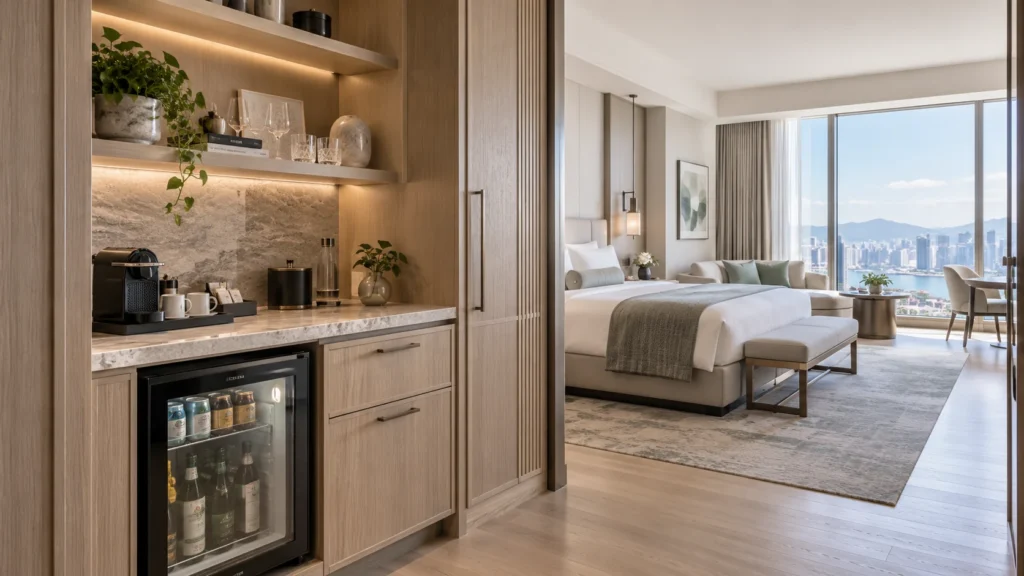
- Guest rooms and suites
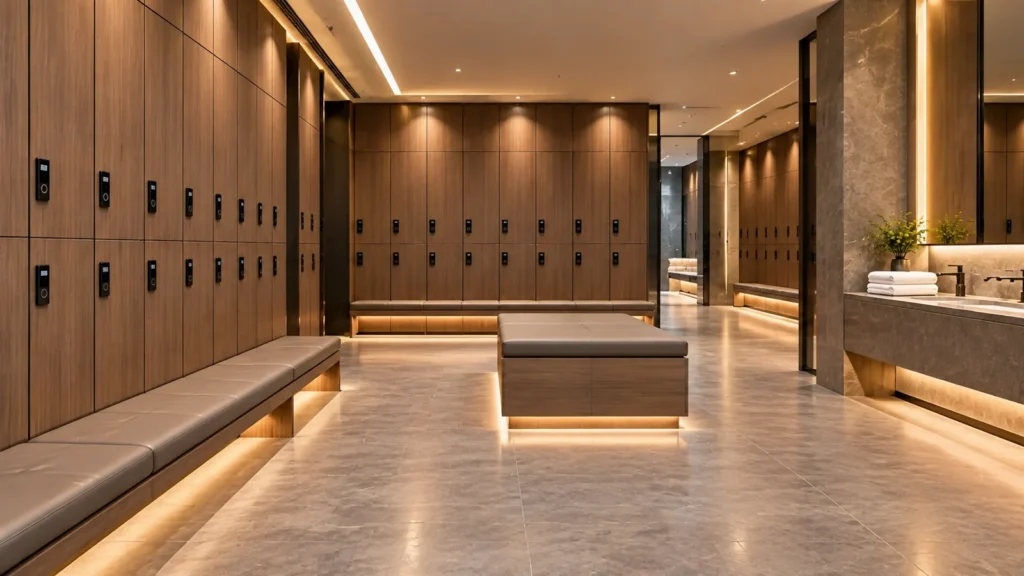
- Corridors and circulation areas
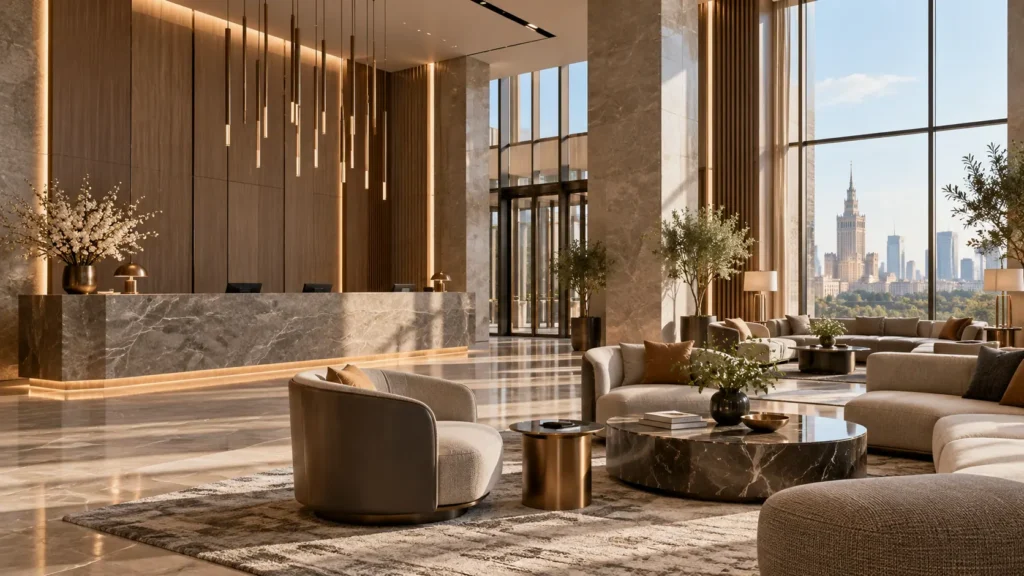
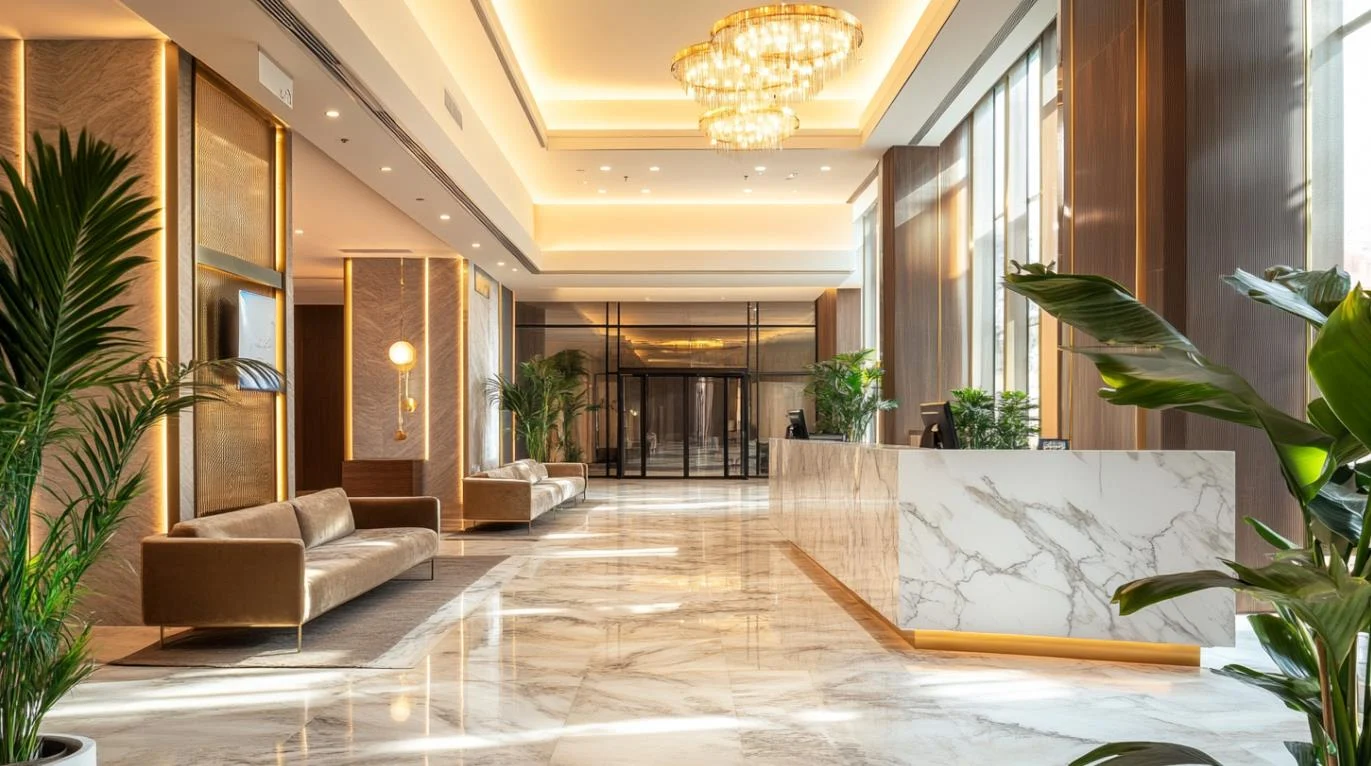
- Lobby, reception, and lounge
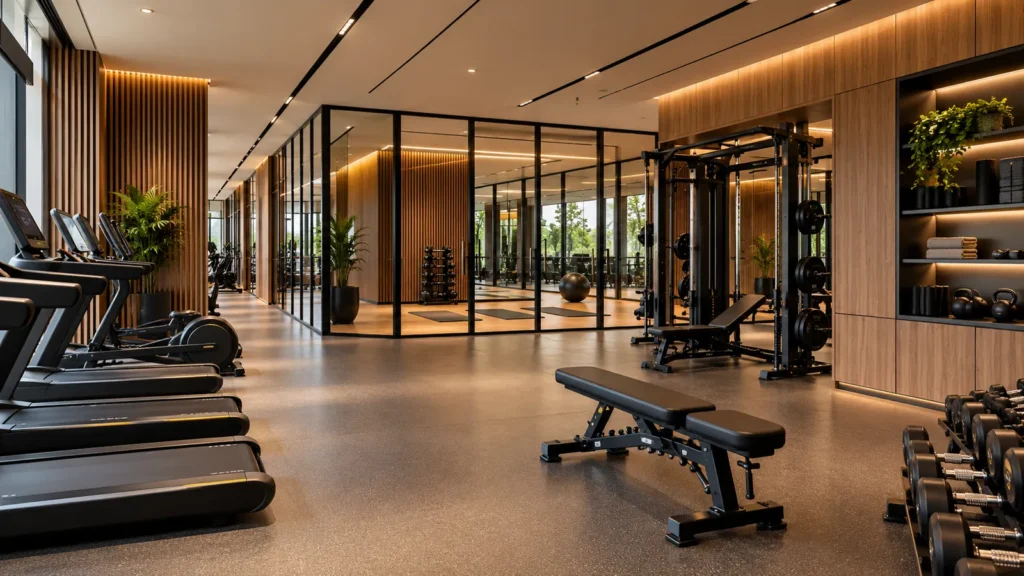
- Restaurants, bars, and public spaces
This is what guests see and experience every day. It shapes first impressions, comfort, and brand perception.
Fixed and Built-In Elements
- Joinery and wardrobes
- Bathroom vanities and fixtures
- Doors, wall panels, and finishes
- Integrated lighting and storage
These elements affect durability, maintenance, and how consistently the hotel delivers its design standards.
Delivery and Coordination
- Design development and shop drawings
- Mock-up room approval
- Procurement and manufacturing
- Logistics, installation, and handover
This is where many delays and cost overruns begin. Good coordination keeps the project moving and reduces risk.
At first glance, this structure looks straightforward. You define the spaces, select the materials, and move the project forward.
But in practice, things are rarely that simple. Teams often think they are only buying hotel furniture or finishes. In reality, they are managing a full chain of decisions, approvals, coordination, and delivery work. This is where many budgets start to drift away from the original plan.
A simple way to understand it is this:
- FF&E = what moves
- Fit out = what stays, plus how everything comes together
- Project delivery = how it all reaches opening day
That’s why scope matters more than it seems. A hotel fit out is not just about what is included—it is about how everything is coordinated from design to installation. When that coordination is not clearly defined, small gaps between design and reality often turn into delays, rework, and extra costs.
What Does the Hotel Fit Out Process Look Like Step by Step?

Concept and Brief
Start with the hotel’s positioning. Is it upscale, lifestyle, luxury, or budget? What guest experience are you creating, and what standards must be met? This stage should lock the big decisions early, including room mix, material direction, brand language, budget, and opening timeline.
Design Development
The vision becomes buildable. Layouts, finishes, lighting, joinery, and operational needs are coordinated here. Many teams focus on visuals and forget operations. A beautiful room that housekeeping cannot maintain is not a success.
Procurement and Manufacturing
After approvals, sourcing and production begin. Materials, lighting, hardware, and custom items all move on different timelines. One delayed item can affect the entire schedule. A fit out rarely moves in a straight line—it works more like a relay race.
Installation
Developers should enforce a clear area release plan before installation starts. Monitor progress against the schedule daily. Start snagging immediately as each room or zone is completed. Log every defect and require correction before moving to the next area. Do not wait until the end.
Handover
Final inspection by the developer's team. All snags closed, spare parts inventory verified, as-built drawings and warranties collected. Confirm that the hotel operator's staff have been trained and the property is ready for opening. A clean handover protects your investment and long-term asset value.
A smooth handover is not about luck. It is the result of clean approvals, clear scope, and disciplined coordination.
How Long Does a Hotel Fit Out Take from Start to Opening?
This is the question every developer asks, and the honest answer is: it depends on scope, complexity, approvals, and procurement.
A hotel fit out does not follow a fixed timeline. It depends on project size, positioning, and how clearly the scope is defined from the start.
For most projects, the timeline is not about one long phase. It is about how time is distributed across different stages—and where delays are most likely to happen.
In general, a hotel fit out timeline can be understood in three parts:
The first part is planning and design
This includes concept definition, design development, and approvals. If decisions are made quickly, this stage can move fast. But unclear briefs and repeated changes often stretch it longer than expected.
The second part is production and procurement
This is usually the longest phase. Materials, custom items, and different suppliers all operate on different timelines. Long-lead items, such as custom joinery or imported materials, can easily affect the overall schedule.
The third part is delivery and installation
This is where everything comes together on site. Even if production is completed on time, delays can still happen due to site readiness, coordination issues, or installation sequencing.
So the real question is not just “how long does it take,” but “where can time be lost.”
Most delays come from a few common sources:
- Late design changes
- Incomplete or unclear drawings
- Long-lead materials
- Poor coordination between suppliers and site teams
A well-managed fit out does not just move faster. It reduces uncertainty at every stage, making the opening timeline more predictable.
How Much Does a Hotel Fit Out Cost and Where Does the Budget Go?

Hotel fit out costs vary by location, brand tier, room count, public area ambition, material selection, and local labor conditions. A lifestyle boutique hotel and a select-service property may both be called “hotels,” but their fit out math can look very different.
Instead of chasing a generic number, look at cost in layers.
Layer one: guest rooms
This is where most of the core budget sits. It includes casegoods, wardrobes, vanities, beds, lighting, bathrooms, doors, finishes, and installation.
Layer two: public areas
Public spaces often carry stronger design pressure. Lobbies, restaurants, and meeting areas usually involve more customization and higher finish expectations.
Layer three: coordination and delivery
This is where many hidden costs sit. Packaging, freight, duties, staging, site handling, installation management, and defect resolution all affect the final budget. These costs are often underestimated at the start, but they have a direct impact on both timeline and total spend.
Where Most Fit Out Budgets Go Wrong
The biggest budget mistakes usually come from four places:
- underestimating scope
- over-customizing too early
- approving design before pricing logic is tested
- ignoring logistics and installation costs
A smart budget is not just a spending cap. It is a control system.
For a more detailed breakdown of hotel fit out costs, read our Hotel Fit Out Cost Guide.
Turnkey Hotel Fit Out or Multi-Vendor—Which Is Better?
Turnkey Hotel Fit Out
A turnkey hotel fit out model means one lead partner manages most of the process. This usually includes design coordination, production, procurement, logistics, and installation support. It works best when speed, coordination, and delivery control matter most.
Multi-Vendor Model
A multi-vendor model splits the project across different suppliers or contractors. This gives the owner more flexibility, but it also means the project team must manage more handoffs, approvals, and coordination risk. It works better when the owner has a strong in-house team and enough time to manage complexity.
Neither model is always right. The better choice depends on your team structure, timeline, and risk tolerance.
For a deeper comparison, read our Turnkey vs Multi-Vendor Hotel Fit Out: Which One Works Better to see how each model affects cost, timeline, control, and coordination.
How Do You Choose the Right Hotel Fit Out Company?
Not every fit out company is built for hotel work. Some are good at interiors. Fewer are good at hotel delivery.
When evaluating a hotel fit out company, look for these five things:
- proven hospitality project experience
- strong drawing and coordination capability
- manufacturing or sourcing control
- realistic logistics and installation planning
- clear accountability after delivery
Then go beyond the checklist. Ask practical questions—this is where most teams get clarity:
- Have they handled mock-up rooms before?
- Can they coordinate built-in joinery and FF&E together?
- How do they manage brand standards across rooms and public areas?
- Who takes responsibility when issues show up on site?
These questions matter because hotel projects are no longer just about finishing spaces. They are about delivering a consistent guest experience.
According to EHL Hospitality Business School’s hospitality industry trends report, hospitality leaders in 2026 are responding to rising expectations around experience, personalization, and operational efficiency.
This shift means a hotel room is no longer just a functional space. It is part of the overall guest journey and brand experience.
For a deeper breakdown of the steps to choose the best hotel fit out company, read our detailed guide – How to Choose a Hotel Fit Out Company for Your Project, where we dive into red flags, qualification questions, and supplier evaluation.
How Can Developers Reduce Risk During a Hotel Fit Out?

Risk never disappears, but it can be managed.
The best developers reduce fit out risk before production begins, not after containers arrive.
Start with a few practical controls:
- Freeze scope as early as possible
- Approve mock-up rooms before mass production
- Identify long-lead items early
- Align design, procurement, and site teams on a weekly basis
- Track change orders tightly
- Phase live-property renovations carefully
And remember this: the cheapest mistake is the one caught on paper.
What Mistakes Do Developers Commonly Make in Hotel Fit Out?
Treating Fit Out as a Buying Exercise
Fit out is not just about buying products. It is a delivery system that connects design, production, logistics, and installation.
Starting with Mood Boards Before Budget Logic
Design direction should follow a real budget framework. Starting with visuals too early often leads to redesign, value engineering, and cost pressure later.
Underestimating Coordination
One missing decision on power, plumbing, access, or dimensions can create a domino effect across multiple trades and delay the whole project.
Skipping Mock-Up Discipline
Mock-up rooms are where problems are found early. Skipping this step often means fixing the same issue across dozens or even hundreds of rooms.
Chasing the Lowest Quote
Low prices can look attractive at tender stage. But without delivery capability and coordination depth, they often become the most expensive option during installation.
What Should You Prepare Before Starting a Hotel Fit Out?
Before starting a hotel fit out, make sure a few core decisions are already clear.
- A defined hotel positioning statement
- A realistic budget range
- A confirmed opening target with a reverse timeline
- A clearly defined scope by area
- A decision on the delivery model
If these pieces are not clearly defined, the fit out will stay unclear—and so will the outcome.
Final Thoughts: How Do You Plan a Successful Hotel Fit Out Project?

A successful hotel fit out is not just stylish. It is buildable, coordinated, and commercially smart.
The best projects balance design ambition with operational logic. They respect budget without losing identity. And they treat the timeline like a living system, not a guess.
That is the real goal. Not just to finish the hotel, but to open it with fewer compromises.
If you are planning a hotel project, start by getting four things clear: scope, process, budget, and timeline. Once those are aligned, better decisions come faster.
And that is exactly where a strong fit out partner adds value.
If you are ready to take the next step, reach out to our team at VOLANT FIT-OUT to explore how we can help you align scope, process, and timeline for your hotel fit out.
FAQs
What is hotel fit out and how does it differ from a renovation?
Hotel fit out is the process of transforming a space into a fully functional hotel, including design, procurement, and installation. Unlike a renovation, which updates an existing hotel, a fit out is usually applied to new builds or major refurbishments.
What are the main stages in a hotel fit out process?
The key stages are:
- Concept & Brief – Define vision and guest experience.
- Design Development – Create detailed layouts.
- Procurement – Source materials and furniture.
- Installation – Assemble and install all elements.
- Handover – Final inspection and project completion.
How long does a hotel fit out project usually take?
Fit out projects can take anywhere from a few months to over a year, depending on the scope, design, and site conditions. A typical project may take 6 to 18 months from start to finish.
What are the biggest cost drivers in a hotel fit out budget?
The biggest cost drivers are:
- Guest room FF&E
- Public areas and high-end finishes
- Coordination and logistics
- Underestimating scope and design changes can cause significant budget overruns.
How can developers reduce risk during a hotel fit out?
Developers can reduce risk by:
- Freezing scope early
- Approving mock-ups before mass production
- Tracking long-lead items and change orders
- Coordinating closely between teams
- Phasing live-property renovations carefully