Luxury hotel furniture design is evolving in 2026 as hotels focus more on guest experience, sustainability, and operational efficiency. Hotel furniture is no longer just a decorative element; it has become a key part of hospitality design that shapes comfort, brand identity, and long-term value.
Today’s hotel developers and designers face a new challenge: how to create distinctive spaces while maintaining durability, consistency, and cost control. From quiet luxury aesthetics and sustainable materials to modular solutions and smart manufacturing, the future of hotel furniture design requires a balance between creative vision and production expertise.
In this article, we explore the key luxury hotel furniture design trends for 2026 and how innovative manufacturing solutions help hotels transform design concepts into high-quality hospitality spaces.
What Defines Modern Hotel Furniture Design in 2026?
Luxury hotel furniture design in 2026 is no longer defined only by appearance. Hotels are looking for furniture solutions that combine aesthetics, performance, and long-term value.
Modern hospitality furniture must balance five key elements that influence guest experience, brand identity, operational efficiency, and long-term investment value.
Guest Experience: Designing Furniture Around the Guest Journey
Furniture is one of the first elements guests interact with during their stay. From headboards and bedside tables to wardrobes and lounge seating, every detail influences comfort, functionality, and the overall hotel experience.
Durability: Built for the Demands of Hospitality
Hotel furniture faces much heavier use than residential furniture. High-quality materials, reliable construction methods, and durable finishes support long-term hotel operations. Commercial furniture standards from BIFMA help ensure durability and performance in high-use environments.
Brand Identity: Turning Furniture Into a Design Language
Furniture communicates a hotel's personality. Whether it is a luxury resort or a modern city hotel, the right materials, forms, and finishes help create a consistent brand experience.
Sustainability: Creating Responsible Hospitality Spaces
Modern hotels are paying more attention to responsible materials, lower production waste, longer product lifecycles, and efficient manufacturing processes that support sustainable development.
Manufacturing Capability: Turning Design Concepts Into Reality
A successful hotel furniture project requires more than creative design. Advanced manufacturing systems, quality control, and experienced production teams ensure consistent results across hundreds of guestrooms.
7 Luxury Hotel Furniture Design Trends Shaping Hospitality in 2026
Luxury hotel furniture design is shifting from simple decoration to strategic experience design.
Hotels are looking for furniture solutions that combine aesthetics, functionality, durability, and brand identity. The latest trends focus on creating spaces that feel personal, flexible, and memorable while meeting the practical demands of hospitality operations.
From timeless materials and sustainable solutions to modular systems and customized designs, these trends are redefining how hotels approach furniture selection.
1. Quiet Luxury: Timeless Hotel Furniture Design Replaces Excessive Decoration

Quiet luxury is becoming one of the key directions in modern hotel furniture design.
Instead of excessive decoration, hotels are focusing on craftsmanship, premium materials, and timeless details that remain elegant for years.
This approach creates spaces that feel refined, comfortable, and sophisticated without appearing overly designed.
Key design elements include:
- Natural wood veneers
- Warm neutral colors
- Soft upholstery fabrics
- Elegant curved forms
- Minimal hardware details
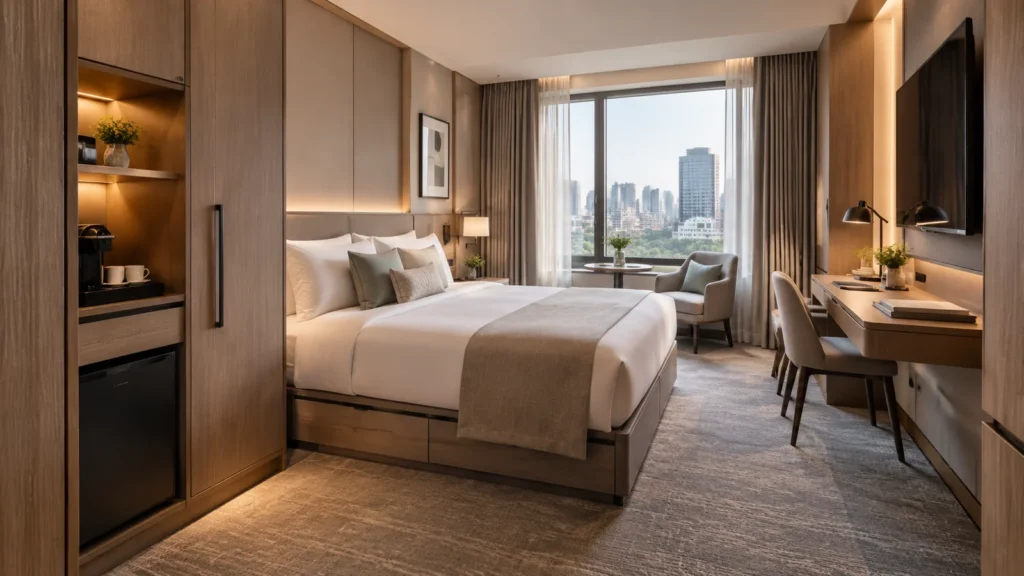
In guestroom furniture design, quiet luxury is reflected through upholstered headboards, premium bedside tables, custom wardrobes, and integrated storage solutions.
The goal is simple: create hotel spaces that feel luxurious today and remain relevant for years to come.
2. Sustainable Hotel Furniture Design: From Responsible Materials to Long-Term Value

Sustainability has become a key consideration in modern hospitality projects.
Hotels are paying more attention to material sourcing, production methods, and furniture lifecycle performance.
Sustainable hotel furniture design focuses on balancing environmental responsibility with quality, durability, and long-term performance.
Key considerations include:
- Responsibly sourced wood materials, including FSC-certified products
- Low-VOC finishes
- Durable surface treatments
- Reduced production waste
- Longer product lifecycles
For hotel owners, sustainability is not only an environmental choice. It is also a long-term investment strategy.
Furniture with longer lifecycles reduces replacement frequency, lowers maintenance costs, and creates better long-term value for hotel operators.
3. Modular Hotel Furniture Systems Create Flexible Hospitality Spaces

Modern hotels need spaces that can adapt to changing guest expectations.
This is why modular hotel furniture systems are becoming increasingly popular in modern hospitality projects.
A hotel lobby may serve as a social area, workspace, or event space depending on the time of day. Adaptable furniture allows hotels to maximize space usage without major renovations.
Common applications include:
- Modular lounge seating
- Flexible lobby furniture systems
- Adaptable guestroom layouts
- Easy-to-replace furniture elements
For hotel developers, modular solutions provide greater flexibility, faster installation, better cost control, and easier future upgrades.
As hospitality spaces continue to evolve, adaptable furniture systems will become an important part of modern hotel furniture design strategies.
4. Smart Technology Integration Enhances Hotel Furniture Design

Technology is becoming part of hotel furniture, but the best solutions remain almost invisible.
Luxury hotels are integrating smart functions into furniture without disrupting the overall design experience.
Modern hotel furniture design increasingly includes:
- Wireless charging solutions
- USB-C charging ports
- Hidden cable management
- Integrated lighting systems
- Smart bedside control systems
The focus is not on adding more technology.
It is about creating smoother guest experiences through thoughtful design.
A well-designed bedside table, headboard, or workspace can provide convenience while maintaining a clean and elegant appearance.
In luxury hospitality, technology works best when guests enjoy the benefits without noticing the complexity behind it.
5. Residential-Inspired Hotel Furniture Design Creates Home-Like Experiences

Modern hotels are adopting residential-inspired furniture design to create warmer and more personalized guest experiences.
Guests increasingly expect hotel rooms to feel less like temporary accommodation and more like private retreats.
This trend is especially popular in:
- Luxury resorts
- Boutique hotels
- Extended-stay properties
Residential-inspired hospitality furniture often includes:
- Comfortable lounge seating
- Larger upholstered areas
- Warm wood finishes
- Relaxed furniture layouts
- Residential-style storage solutions
The goal is not to copy residential interiors. It is to create familiar and welcoming environments where guests feel comfortable staying longer.
This shift is changing how designers approach modern hospitality furniture, with greater focus on comfort, functionality, and emotional connection.
6. Tactile Materials and Custom Finishes Define Modern Luxury

Luxury is not only about what guests see.
It is also about what they feel.
In 2026, hotel furniture design is placing more emphasis on sensory experiences through materials, textures, and customized finishes.
Popular material directions include:
- Natural veneer surfaces
- Linen and fabric textures
- Leather finishes
- Brushed metals
- Stone-inspired details
Guests interact with furniture through everyday touch points, including upholstered headboards, lounge seating, bedside tables, and storage surfaces.
Custom finishes help hotels create unique interiors that reflect their brand identity while enhancing comfort and design quality.
The combination of visual beauty, tactile materials, and customized craftsmanship is becoming an important part of modern hospitality furniture design.
7. Personalized Hotel Furniture Design Builds Unique Brand Identity

As competition increases, hotels are looking for stronger ways to express their identity.
Standard furniture solutions are no longer enough for many luxury and boutique properties.
Personalized hotel furniture design allows brands to create spaces that reflect their positioning, location, and guest expectations through customized furniture solutions.
Common customized solutions include:
- Signature headboards
- Bespoke lobby furniture
- Brand-specific storage solutions
- Unique furniture pieces
- Customized furniture details
Customized furniture helps hotels create stronger storytelling experiences and memorable guest environments in different hospitality projects.
However, successful customization requires more than creative ideas. It requires an experienced hotel furniture manufacturer that can transform unique concepts into consistent, high-quality production.
Future Outlook: How Hotel Furniture Design Will Continue to Evolve
Luxury hotel furniture design is moving toward solutions that are more personalized, intelligent, sustainable, and efficient. As hospitality spaces continue to evolve, furniture will play an even greater role in shaping guest experience, operational performance, and brand identity.
Turning these future trends into reality requires advanced hotel furniture manufacturing capabilities, from design development and engineering to precision production and quality control.
Hotels will increasingly use customized furniture solutions to create stronger brand identities and more memorable guest experiences.
Technology will become more integrated into hotel furniture, improving convenience while maintaining clean and elegant designs.
Material selection, production efficiency, and longer product lifecycles will become increasingly important for hospitality projects.
Modular systems, digital manufacturing, and streamlined production processes will help hotels complete projects with greater speed and consistency.
Conclusion: The Future of Luxury Hotel Furniture Design
Luxury hotel furniture design in 2026 is no longer defined only by visual appeal. It represents a balance between guest experience, brand identity, sustainability, technology, and manufacturing capability.
Successful hospitality furniture solutions combine:
- Timeless design
- Guest experience
- Sustainable solutions
- Smart integration
- Manufacturing capability
The future belongs to hotel furniture manufacturers that can connect creative design concepts with reliable, scalable production capabilities.
For hotel developers, the question is no longer:
“Which furniture looks good?”
The better question is:
“Which furniture solution creates long-term value for our guests and our business?”
By combining innovative design, engineering expertise, and advanced manufacturing capabilities, Volant Fit-Out helps hospitality brands create furniture solutions built for the future.
Ready to bring your hotel furniture design concepts into reality? Contact us to discuss your next hospitality furniture project.
FAQs
What are the latest hotel furniture design trends in 2026?
The latest hotel furniture design trends in 2026 focus on quiet luxury, sustainable materials, smart furniture integration, flexible modular systems, residential-inspired comfort, tactile finishes, and personalized design. Hotels are increasingly using furniture to improve guest experience, strengthen brand identity, and create long-term operational value.
Why is custom hotel furniture important for luxury hotels?
Custom hotel furniture allows brands to create unique spaces that reflect their identity, location, and guest expectations. Unlike standard furniture solutions, customized designs provide greater flexibility in materials, dimensions, finishes, and functionality while maintaining a consistent brand experience.
What is the difference between hotel furniture and residential furniture?
Hotel furniture is designed for higher usage intensity, durability requirements, and operational needs compared with residential furniture. Hospitality furniture must withstand frequent guest use while maintaining appearance, comfort, safety, and long-term performance.
How do hotels choose sustainable furniture materials?
Hotels typically evaluate sustainable furniture materials based on responsible sourcing, durability, lifecycle performance, and environmental impact. Common considerations include FSC-certified wood, low-VOC finishes, durable surface treatments, and manufacturing processes that reduce waste.
Why should hotels work with a professional hotel furniture manufacturer?
A professional hotel furniture manufacturer helps transform design concepts into reliable production through engineering support, quality control, material expertise, and project coordination. For large hospitality projects, manufacturing capability is essential to achieve consistent quality across multiple guestrooms and locations.