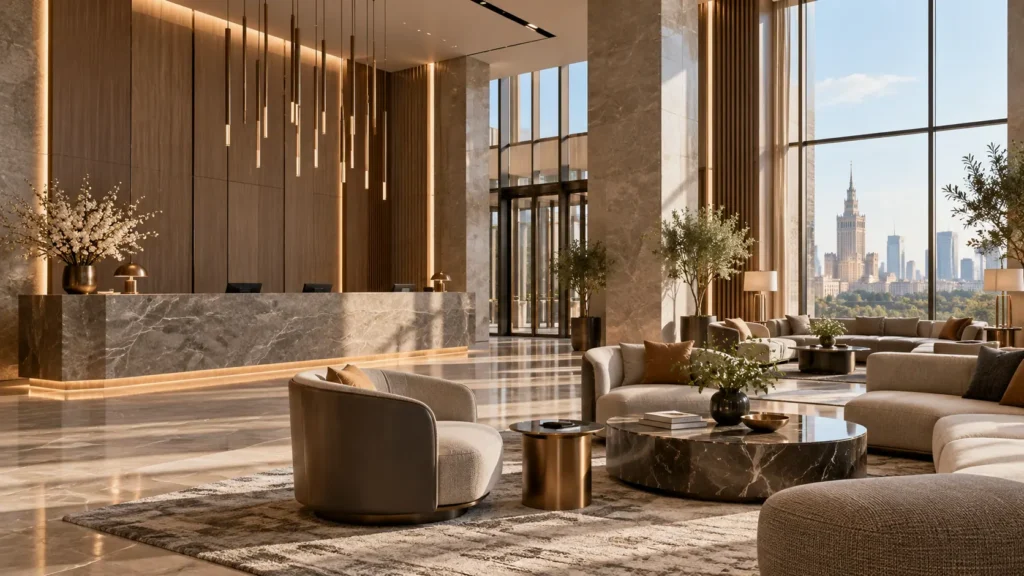
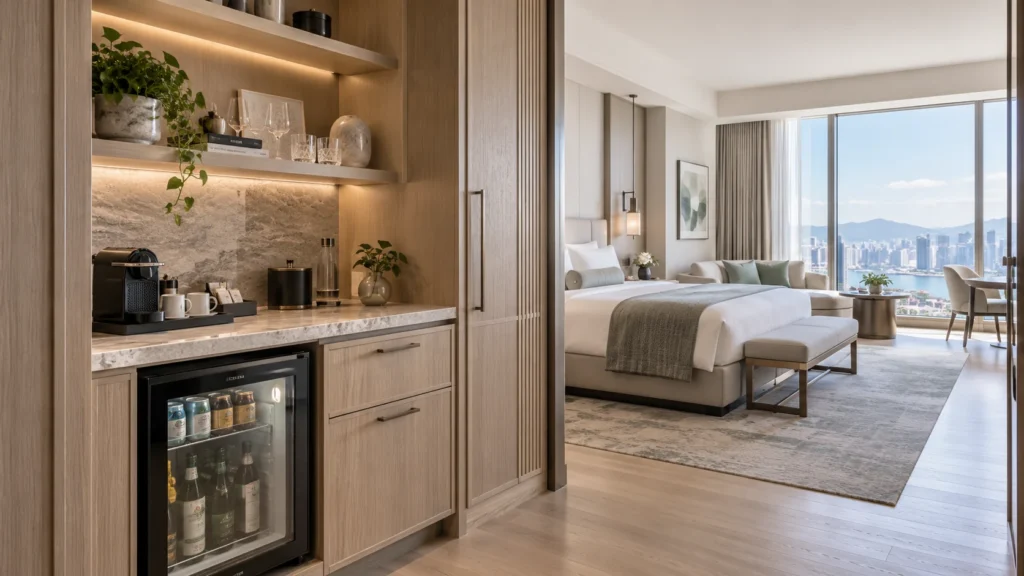
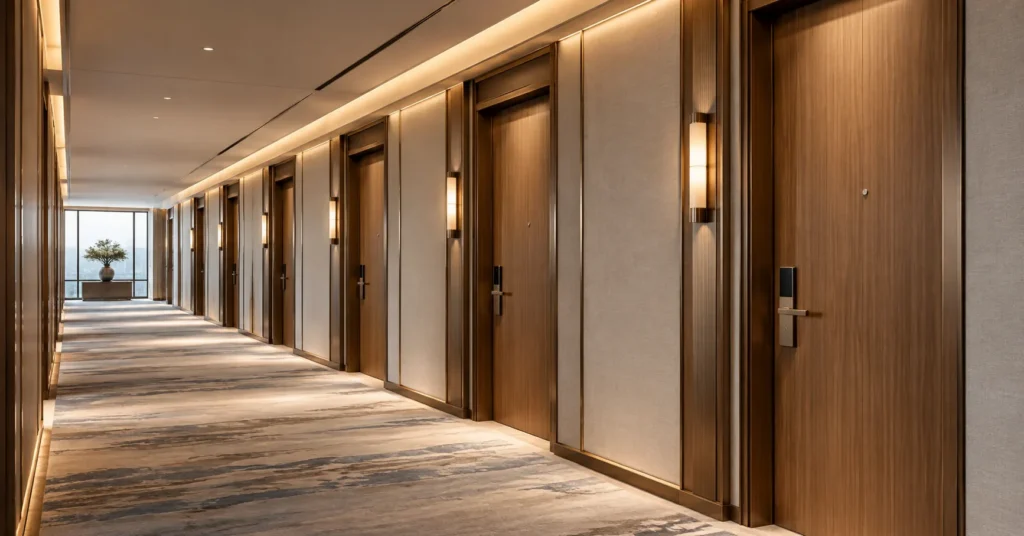
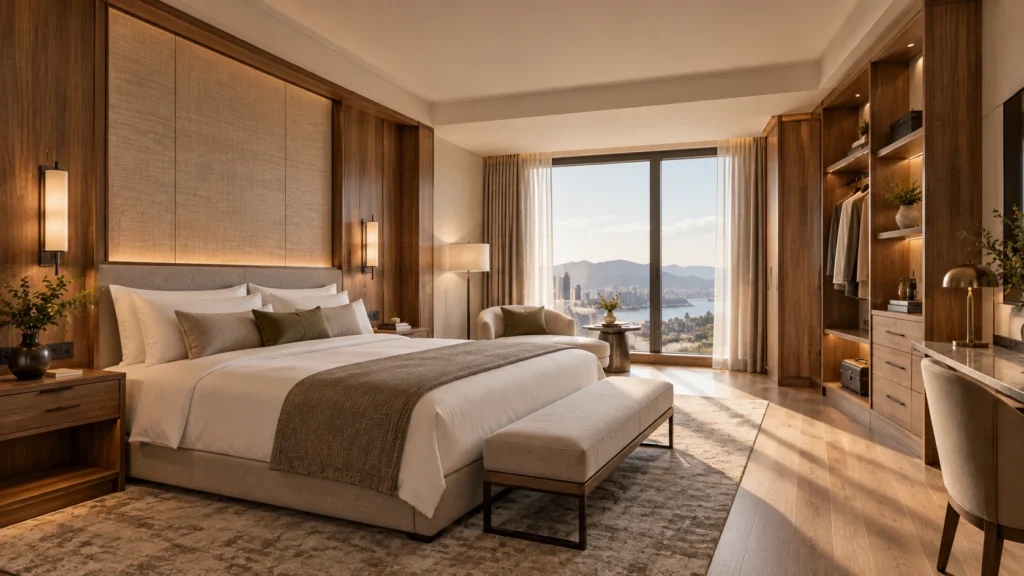
Hotel lobby furniture does more than fill an empty space. It shapes how guests arrive, wait, relax, work, ask questions, and move through the lobby.
Think of the lobby as the hotel’s living room. The reception area welcomes guests. The seating area gives them a place to pause. Public area furniture connects the lobby with elevators, lounges, cafés, meeting spaces, and outdoor zones.
When these pieces work together, the lobby feels calm and easy to use. When they don’t, guests feel it right away. A beautiful sofa can still fail if it blocks the main path. A stylish coffee table can become a problem if luggage keeps hitting it.
In this hotel lobby furniture guide, we’ll look at hotel lobby seating, reception furniture, public area furniture, layout planning, materials, hotel types, and procurement tips.

What Furniture Is Used in a Hotel Lobby?
Most hotel lobbies need more than a front desk and a few chairs. They need a clear hotel lobby furniture system with commercial-grade pieces that support arrival, waiting, relaxing, working, and movement.
Here are the main hotel lobby furniture categories:
| Furniture Type | Main Function | Best Used In |
|---|---|---|
| Reception desk | Check-in, check-out, guest service | Main arrival area |
| Reception back wall | Branding, lighting, visual focus | Behind the front desk |
| Concierge counter | Guest support and local service | Luxury and full-service hotels |
| Lobby sofas | Waiting, relaxing, social seating | Lounge and waiting zones |
| Lounge chairs | Flexible, private seating | Boutique and business lobbies |
| Benches | Short waiting and compact seating | Small lobbies and corridors |
| Ottomans | Flexible seating or footrest | Lounge clusters |
| Coffee tables | Drinks, phones, brochures, décor | Seating areas |
| Side tables | Guest convenience | Beside chairs and sofas |
| Console tables | Décor, wayfinding, display | Walls and transition zones |
| Luggage benches | Bags and short-term support | Near reception or concierge |
| Planters and accents | Softening the space | Public areas and corners |
The goal is not to buy every piece on the list. The goal is to choose furniture that supports your lobby layout, guest behavior, and hotel brand.
Ask one simple question: what will guests do here?
If they wait, add comfortable seating. If they work, add small tables and power access. If they arrive with luggage, keep main walking paths open and place support furniture nearby.
Hotel Lobby Seating: Sofas, Lounge Chairs and Waiting Areas
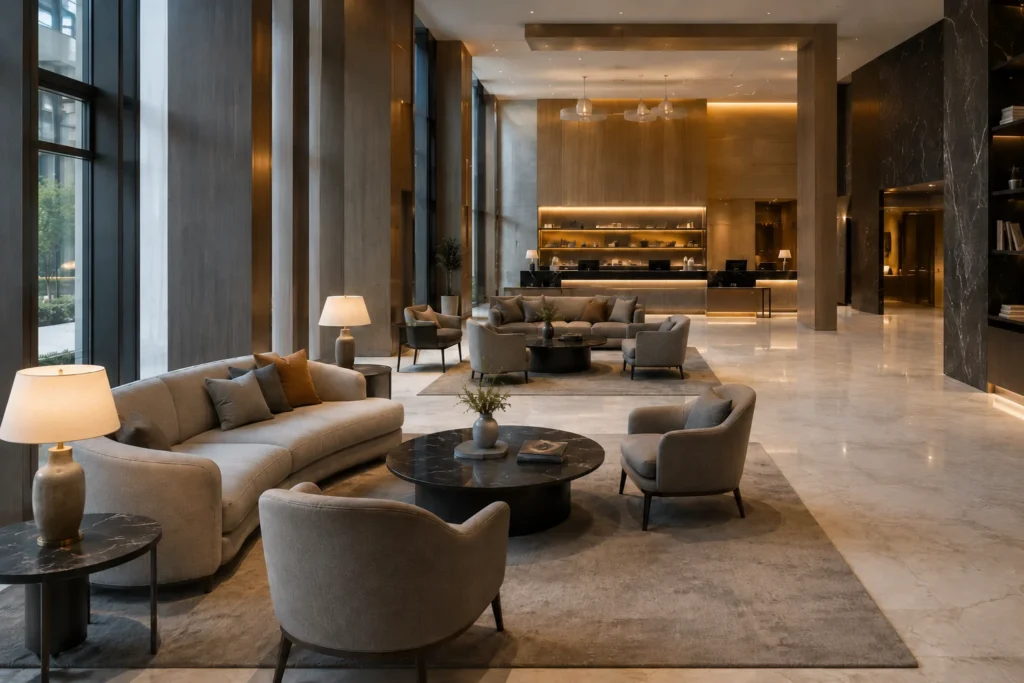
Hotel lobby seating is where comfort becomes visible. A good hotel lobby seating area quietly tells guests, “You can relax here.”
Lobby Sofas
Sofas work well when guests wait longer or arrive in groups. They are useful in resorts, luxury hotels, serviced apartments, and large lobbies.
Choose commercial-grade frames and upholstery. Residential sofas may look good at first, but hotel traffic is much harder on furniture.
Scale matters too. A sofa that looks perfect in a showroom may feel too large in a narrow lobby.
Lounge Chairs and Armchairs
Lounge chairs give guests more personal space. They work well in boutique hotels, business hotels, and quiet corners.
They are also flexible. You can place two chairs around a side table, or create small seating clusters across the lobby.
Use lounge chairs when the lobby needs a relaxed, residential-style feel.
Benches and Ottomans
Benches are useful for small hotels and short waiting times. They take less visual space than large sofas.
Ottomans add flexibility. Guests can sit, rest their bags, or move them within a lounge area.
These pieces help when the lobby needs flexible seating without looking crowded.
Coffee Tables and Side Tables
Tables are small, but they matter.
Guests need a place for coffee, phones, room cards, documents, or bags. A seating area without tables often feels unfinished.
Use coffee tables for sofa areas. Use side tables near lounge chairs. Choose rounded corners when luggage movement is heavy.
Work-Friendly Seating
Many hotel lobbies now serve as casual work zones. Business travelers may answer emails, take calls, or wait between meetings.
Work-friendly seating can include upright lounge chairs, small laptop tables, communal tables, power access, and task-friendly lighting. CCOHS notes that workstations should fit the person using them and support neutral posture, which is a useful reference when planning work-friendly lobby seating.
Don’t turn the lobby into an office. Just give guests a few useful options.
Reception Area Furniture: Keep the Arrival Zone Connected

The reception area is where the guest journey begins. It should be visible, organized, and easy to approach. In a hotel lobby furniture plan, this zone should also connect with seating, luggage support, circulation paths, and nearby public areas.
Reception Desk
The reception desk is the main service point for check-in, check-out, room keys, payment, guest questions, and daily support.
In this article, we won’t repeat the full reception desk design guide. For desk height, dimensions, layout, materials, and accessibility details, read our Hotel Reception Desk Design Guide. For visual inspiration, see our 15 Modern Reception Desk Design Ideas for Hotel Lobbies. For a more detailed sizing reference, including counter height, width, depth, and clearance, see our Hotel Reception Desk Dimensions Guide.
The key point here is simple: the desk should match the rest of the hotel lobby furniture. Its material, lighting, color, and scale should work with the seating, wall panels, flooring, and nearby public areas.
A stone desk with soft lounge seating feels premium. A wood desk with relaxed chairs feels warmer. A compact desk with slim benches works better in small hotels.
For U.S. projects, accessible counter design should follow ADA Standards for sales and service counters.
Reception Back Wall and Feature Panel
The back wall is not just decoration. It frames the reception desk and helps guests find the front desk faster.
Common options include wood wall panels, stone or tile feature walls, backlit logo walls, display shelves, fluted panels, and soft wall lighting. A strong back wall can make simple hotel reception furniture feel more custom and polished.
Concierge Counter
Not every hotel needs a separate concierge counter. But luxury hotels, resorts, and full-service hotels often benefit from one.
A concierge counter supports guest questions, transportation, reservations, luggage help, and local recommendations. It should sit close to reception, but it should not interrupt the main check-in flow.
Use matching materials so the reception and concierge zones feel connected.
Luggage Support Furniture
Luggage is often forgotten in lobby planning. That’s a mistake.
Guests arrive with suitcases, backpacks, shopping bags, and strollers. Luggage benches, bell desks, or small support tables can make the arrival process smoother.
Place them near reception or concierge. Keep them away from main circulation paths.
Public Area Furniture Beyond the Reception Zone

Hotel lobby furniture does not stop at the front desk or seating area. Hotel public area furniture also needs planning, because guests move through these spaces every day.
Elevator Lobby Furniture
Elevator areas often need simple, lightweight furniture rather than too many pieces. A slim bench, console table, planter, or accent chair can make the space feel finished without blocking movement.
Keep the furniture light and narrow. Guests with luggage need space to wait, turn, and enter the elevator comfortably.
Corridor and Transition Area Furniture
Corridors and transition areas connect the lobby to guest rooms, meeting rooms, restaurants, lounges, and elevators. The furniture here should guide movement, not slow it down.
Use narrow benches, wall consoles, art ledges, or planters. Avoid large tables, deep chairs, or loose pieces that can block the walking path.
Café, Bar and Lounge Furniture
Many modern hotel lobbies now connect with cafés, bars, and lounge areas. This makes the lobby feel more active and social, but it also makes furniture planning more important.
Common furniture includes dining chairs, lounge chairs, bar stools, café tables, sofas, and communal tables. The key is zoning. Guests should quickly understand where to check in, where to wait, and where to eat or drink.
Meeting Pre-Function Area Furniture
Hotels with meeting rooms often need furniture for guests before events. These spaces may be used for business meetings, weddings, breakfast service, or casual waiting.
Pre-function areas often use modular seating, standing tables, sideboards, benches, and small lounge groups. Flexibility matters here, because different events can use the same space in different ways.
Outdoor or Semi-Outdoor Lobby Furniture
Resorts and warm-climate hotels often connect the lobby with terraces, courtyards, or covered outdoor areas. These zones need outdoor-rated furniture that still matches the indoor lobby style.
Use weather-resistant cushions, metal frames, stone tables, treated wood, or easy-clean woven materials. Comfort matters, but cleaning and durability matter too. Outdoor hotel lobby furniture should handle sun, moisture, and heavy guest use.
How to Plan Hotel Lobby Furniture Layout
A good hotel lobby furniture layout should feel natural. Guests should know where to go without thinking too hard.
Start with the main paths. Where do guests enter? Where do they check in? Where are the elevators? Where does luggage move? Once these paths are clear, place furniture around them, not across them.
| Lobby Zone | Furniture Needed | Layout Tip |
|---|---|---|
| Arrival area | Reception desk, back wall, luggage bench | Keep it visible from entry |
| Waiting area | Sofas, chairs, tables | Keep it near reception, not in the queue |
| Lounge area | Sofas, lounge chairs, coffee tables | Create relaxed seating clusters |
| Business corner | Work chairs, small tables, power access | Keep it quieter and well-lit |
| Elevator lobby | Bench, planter, console | Leave clear walking space |
| Public lounge | Mixed seating and tables | Separate from check-in flow |
Avoid overcrowding. Empty space is not wasted space. In a hotel lobby, open space helps guests move, breathe, and understand the room.
For accessibility, ADA Standards also include requirements for accessible routes. Walking surfaces generally need a minimum clear width of 36 inches, with some exceptions. Always check local codes before final layout approval.
Best Materials for Hotel Lobby Furniture

Hotel lobby furniture faces constant use. Guests sit, move bags, spill drinks, and drag luggage through the space.
That’s why hotel lobby furniture materials should be chosen for both style and long-term performance.
| Material | Best For | Advantages | Design Notes |
|---|---|---|---|
| Commercial fabric | Sofas and chairs | Many colors and textures | Choose stain-resistant options |
| Leather | Luxury seating | Premium feel and easy cleaning | Can scratch or age visibly |
| Faux leather | Busy lobbies | Easier cleaning and lower cost | Choose high-quality grades |
| Wood veneer | Desks, panels, tables | Warm and elegant | Protect edges and corners |
| Solid wood | Accent furniture | Natural and durable | Needs proper finishing |
| Metal | Legs, trims, frames | Strong and modern | Match finishes across the lobby |
| Stone | Tables and reception fronts | Premium and durable | Heavy and needs careful installation |
| HPL or laminate | High-traffic surfaces | Practical and cost-effective | Use good edge detailing |
| Outdoor materials | Terraces and resort lobbies | Weather resistance | Check cushion and frame durability |
A good material plan should answer three questions: Will it match the brand? Will it survive daily use? Can the hotel maintain it easily?
If the answer is no, it may not be the right material for your lobby.
Hotel Lobby Furniture Ideas by Hotel Type
Different hotels need different lobby furniture ideas. Business hotels, boutique hotels, and resorts should not feel the same. Each space has different guests, waiting habits, luggage needs, and service expectations.
| Hotel Type | Reception Furniture | Seating Furniture | Public Area Notes |
|---|---|---|---|
| Small hotel | Compact desk, slim back wall | Bench, two lounge chairs | Keep pathways open |
| Boutique hotel | Custom desk, feature wall | Accent chairs, statement sofa | Add distinctive style details |
| Business hotel | Functional desk, clear zones | Work chairs, small tables | Add power access |
| Luxury hotel | Stone desk, concierge counter | Layered sofas, lounge chairs | Use rich materials and lighting |
| Resort | Open reception, natural finishes | Deep sofas, relaxed clusters | Connect indoor and outdoor areas |
| Serviced apartment | Compact reception, storage | Durable seating, simple tables | Focus on daily use |
| Airport hotel | Efficient desk, luggage support | Durable chairs, quick waiting zones | Prioritize flow and cleaning |
| Wellness hotel | Wood desk, green accents | Soft seating, natural textures | Keep the mood calm |
This is where many hotel lobby furniture plans become clearer. Start with your hotel type, then choose furniture that supports how guests actually use the space.
Hotel Lobby Furniture Procurement Checklist
Furniture planning is not only a design task. It is also a procurement task. This is especially important when sourcing custom hotel lobby furniture for new hotels, renovations, or branded hospitality projects. The right checklist helps hotel owners, designers, contractors, and procurement teams avoid delays, mismatched finishes, and installation problems.
Use this checklist before ordering:
- Confirm lobby dimensions and site conditions
- Define reception, seating, and public zones
- Check guest flow and luggage movement
- Choose commercial-grade materials
- Review fabric durability and cleaning needs
- Match wood, stone, and metal finishes
- Plan power access for work seating
- Review accessibility and local code needs
- Confirm delivery access and elevator size
- Plan installation sequence and lead time
- Order finish samples before production
- Check warranty and maintenance terms
- Plan spare parts or extra fabric
This step saves time later. It also helps owners, designers, contractors, and procurement teams stay aligned from design to installation.
Common Hotel Lobby Furniture Mistakes
Even expensive furniture can fail if the planning is weak. A beautiful sofa, table, or chair still needs to fit the space, traffic, cleaning needs, and guest behavior.
Watch out for these common mistakes:
- Choosing style before layout
- Overcrowding the lobby
- Using residential-grade furniture in high-traffic areas
- Blocking reception visibility
- Forgetting luggage space
- Choosing sofas that are too large
- Using fragile materials in busy areas
- Ignoring fabric cleaning and maintenance
- Mixing too many finishes
- Forgetting power outlets
- Skipping long-term maintenance planning
The best hotel lobby furniture feels effortless. But that “effortless” feeling comes from careful planning.
Conclusion
Hotel lobby furniture performs best when it is planned as a complete system. The reception area, seating zones, tables, luggage support, and public area furniture should feel connected, not chosen separately.
A strong lobby should feel welcoming, clear, and easy to move through. It should support guests, staff, and the hotel brand at the same time.
Planning a new lobby, renovating an existing space, or sourcing custom hotel lobby furniture? VOLANT FIT-OUT works with hotel owners, interior designers, contractors, and procurement teams to create reception furniture, lobby seating, and public area furniture for hospitality spaces.
Tell us about your project, and we’ll help you create a hotel lobby furniture solution that looks good, works hard, and fits your guest experience.
FAQs
What furniture is needed in a hotel lobby?
Most hotel lobbies need a reception desk, lobby seating, coffee tables, side tables, luggage support, and public area furniture. Larger hotels may also need a concierge counter, lounge furniture, work-friendly seating, and meeting-area furniture.
How to choose hotel lobby furniture?
Start with the lobby size, guest flow, hotel type, and brand style. Then choose furniture that supports how guests use the space, including check-in, waiting, relaxing, working, luggage movement, and public area circulation.
What is the best seating for a hotel lobby?
The best seating depends on the hotel type and guest behavior. Sofas work well for groups and longer waits. Lounge chairs create more personal space. Benches save room in small lobbies, while work-friendly seating helps business travelers.
What materials are best for hotel lobby furniture?
Durable and easy-to-clean materials work best for hotel lobby furniture. Common options include commercial-grade fabric, leather, faux leather, wood veneer, solid wood, metal, stone, HPL, laminate, and outdoor-rated materials for terraces or resort lobbies.
How should furniture be arranged in a hotel lobby?
Hotel lobby furniture should be arranged around guest flow, not across it. Keep the reception area visible, place waiting seating near but not inside the queue, leave clear paths to elevators, and allow enough space for luggage movement.