Buying commercial hotel furniture may sound simple at first. You need beds, chairs, tables, cabinets, and sofas for guest rooms and public areas. Easy enough, right? Not quite.
Commercial hotel furniture works much harder than furniture used at home. A guest room chair may serve hundreds of travelers. A lobby sofa may welcome people from morning to night. A restaurant table may be cleaned, moved, and reused many times in a single day. That is why commercial hotel furniture should be planned with durability, comfort, maintenance, and brand image in mind.
It is not just about filling empty rooms. It is about creating spaces that look good, function well, and last through daily hotel operations. The right furniture helps guests feel comfortable. It also helps hotel teams clean faster, reduce repairs, and protect the overall guest experience.
According to AHLA, the U.S. lodging industry includes more than 64,000 properties and 5.7 million guest rooms. In a market of that size, hotel furniture is not a small design detail. It is a long-term investment in guest satisfaction, operational efficiency, and brand value.
So, what should hotels actually buy for guest rooms and public areas? Let’s walk through it, space by space.
What Is Commercial Hotel Furniture?
Commercial hotel furniture is furniture made for hotels, resorts, serviced apartments, and other hospitality spaces. It includes guest room furniture, lobby furniture, restaurant furniture, meeting room furniture, outdoor furniture, and fixed millwork.
The word “commercial” matters here. This furniture is built for heavier use than home furniture. It should be easy to clean, simple to maintain, and strong enough for daily hotel operations. It also needs to match the hotel’s design concept, brand positioning, and guest expectations.
A beautiful chair is not enough for a hotel. It also has to survive luggage bumps, coffee spills, daily cleaning, and constant movement. Think of hotel furniture like a reliable team member. It should look professional, stay steady, and perform well every day.
Fixed Furniture, Loose Furniture, and FF&E
Before building a hotel furniture list, it helps to understand three common terms: fixed furniture, loose furniture, and FF&E. They often appear in hotel design, procurement, and fit-out discussions.
| Term | What It Means | Common Examples |
|---|---|---|
| Fixed furniture | Furniture that is built into the room or public space. | Headboards, wardrobes, TV walls, vanities, reception desks, banquette seating. |
| Loose furniture | Furniture that can be moved or repositioned. | Chairs, sofas, tables, stools, benches, outdoor loungers. |
| FF&E | Furniture, fixtures, and equipment used in a hotel project. | Furniture, lighting, mirrors, artwork, curtains, equipment, decorative items. |
In simple terms, fixed furniture is part of the space. Loose furniture sits inside the space. FF&E is the wider project category that includes furniture and other movable items.
This article focuses on furniture, not the full FF&E scope. The goal is to help you understand what commercial hotel furniture to buy for guest rooms and public areas first.
Commercial Hotel Furniture vs Residential Furniture
Residential furniture is made for homes. It can look stylish and comfortable, but it is not always built for hotel use.
Commercial hotel furniture has to meet a different standard. It usually needs stronger frames, durable finishes, stable hardware, easy-clean surfaces, stain-resistant upholstery, and fire-retardant material options. For hotel projects, it also needs consistent production quality across many rooms and strong packaging for delivery and installation.
A home nightstand may serve one family for years. A hotel nightstand may serve hundreds of guests in the same period. It may face luggage scratches, spilled drinks, frequent cleaning, and daily use from different travelers.
That is why the lowest price is not always the best value for hotel owners. A cheap product can become expensive if it breaks early. Repairs, replacements, bad reviews, and room downtime can all reduce the real return on investment.
Guest Room Furniture Checklist

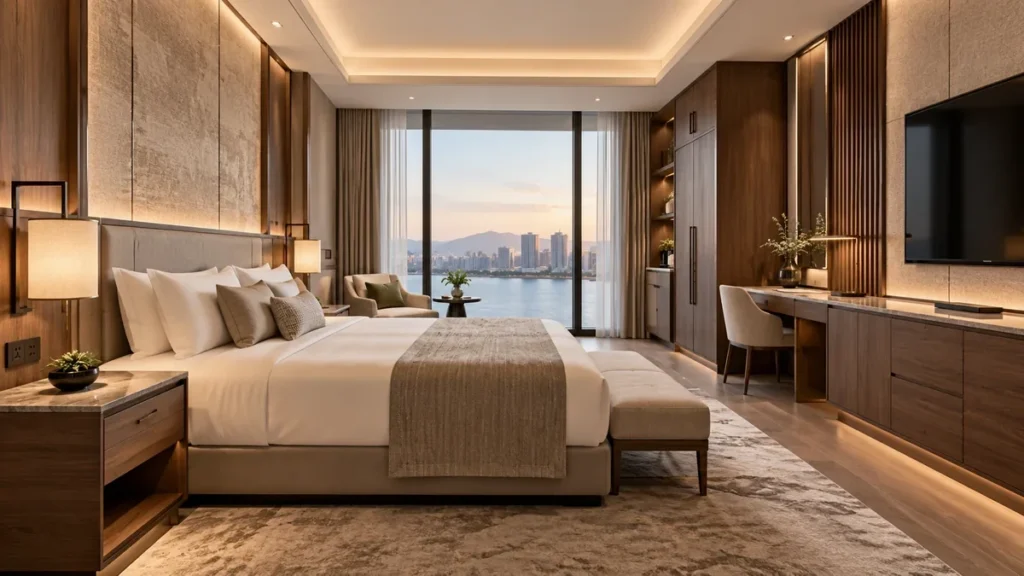
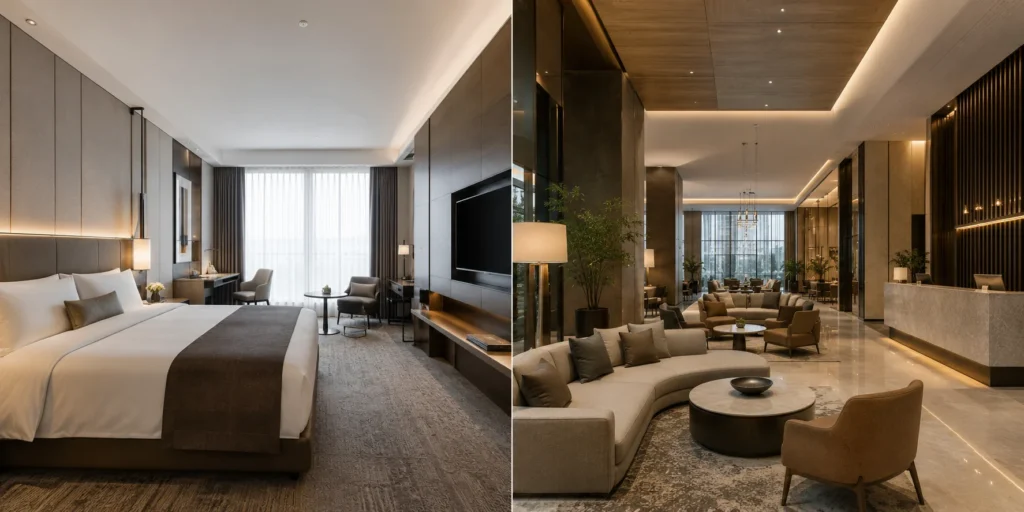
Guest rooms are where guests spend their most private time. The furniture should support sleep, work, storage, dressing, and relaxation. It should also help housekeeping clean faster and keep the room easy to maintain. In guest rooms, commercial hotel furniture should balance comfort, storage, durability, and efficient use of space.
For most hotels, the best guest room furniture is not the furniture that fills every corner. It is the furniture that makes the room easier to use.
| Furniture Item | Priority | Buying Notes |
|---|---|---|
| Bed base or bed frame | Required | Choose a stable, quiet structure that is easy to clean around. |
| Headboard | Required | Great for branding and room style. Often custom made for the project. |
| Nightstands | Required | Use durable tops, simple storage, and built-in power options if needed. |
| Wardrobe or closet | Required | Size it based on room type, stay length, and guest profile. |
| Luggage bench | Recommended | Helps protect beds, walls, and flooring from luggage damage. |
| Writing desk | Depends | Important for business hotels, city hotels, and long-stay rooms. |
| Desk chair | Depends | Choose a comfortable, durable chair for work and daily use. |
| TV cabinet or media unit | Required | Can combine storage, wiring, minibar space, and display surfaces. |
| Lounge chair | Optional | Adds comfort and a more premium feeling to the room. |
| Coffee table or side table | Optional | Useful in suites, resorts, and larger guest rooms. |
| Vanity or mirror unit | Optional | Helps improve daily convenience and the guest experience. |
When choosing hotel guest room furniture, ask one simple question: will this piece make the room easier to use? If the answer is no, think twice. A small room does not need more furniture. It needs smarter furniture.
Hotel Bathroom and Vanity Furniture
Bathroom and vanity furniture is easy to overlook. But guests notice it quickly. A loose vanity door, swollen cabinet, or stained surface can make a room feel older than it really is.
Common bathroom-related furniture includes:
- Vanity cabinets
- Mirror frames
- Towel shelves
- Open storage units
- Under-sink cabinets
- Makeup vanity units
Moisture resistance is the key point here. These pieces must handle humidity, cleaning products, water splashes, and daily use. For hotel bathrooms, choose stable substrates, sealed edges, durable finishes, and hardware that will not loosen too quickly.
Material safety also matters. The U.S. EPA notes that volatile organic compounds, or VOCs, are emitted as gases from certain solids or liquids. It also states that concentrations of many VOCs are often higher indoors than outdoors. For hotel interiors, this is a good reason to discuss low-VOC finishes, adhesives, and boards with your supplier.
Guests may not ask about VOCs. But they do notice odor, stains, swelling, and poor finishing. In a bathroom, small furniture problems can make the whole room feel tired.
Commercial Hotel Furniture for Public Areas
Public areas carry the hotel’s first impression. They also handle some of the heaviest foot traffic in the whole property.
A lobby chair is not just a chair. It is part of the hotel’s handshake. It tells guests what kind of stay they can expect before they even reach the room. The same is true for reception desks, lounge sofas, restaurant chairs, corridor benches, and outdoor seating.
That is why public area furniture should be strong, comfortable, easy to clean, and consistent with the brand. It should support guest flow, daily cleaning, and long-term use without making the space feel crowded.
Below are the key types of commercial hotel furniture to consider for public areas.

Lobby and Reception Area Furniture
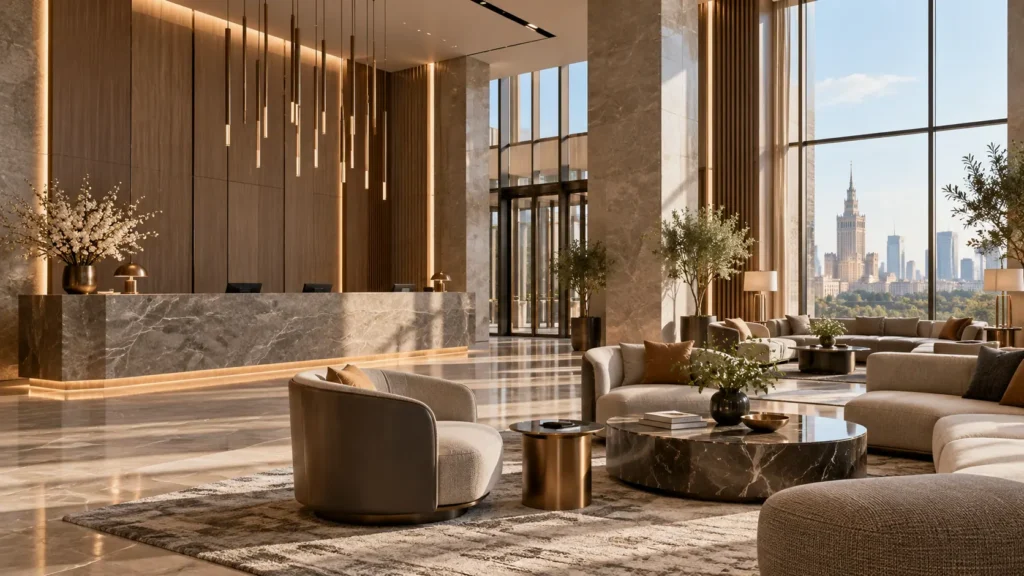
The lobby is the stage every guest walks onto. It should feel welcoming, organized, and easy to move through.
Common lobby and reception furniture includes reception desks, lobby sofas, lounge chairs, coffee tables, side tables, console tables, waiting benches, luggage storage furniture, decorative shelving, custom feature walls, and public area millwork.
The reception desk is especially important. It must look good, but it also needs to work smoothly for daily operations. Staff need storage, cable access, transaction space, and clear sightlines. Guests need a simple and comfortable check-in point.
For lobby seating, balance style with traffic flow. Avoid bulky layouts that block walkways. Also avoid fragile fabrics in heavy-use zones. A good hotel lobby should feel open, not crowded.
Hotel Restaurant and Bar Furniture
Hotel restaurants and bars need commercial hotel furniture that can handle constant use. Breakfast rush, coffee spills, business meals, family dinners, and quick table turnover all put pressure on the furniture.
Typical restaurant and bar furniture includes dining chairs, dining tables, booth seating, banquette seating, bar stools, bar counters, buffet stations, host stands, and service cabinets.
For dining chairs, check weight, stability, and comfort. Staff may move them many times a day. For tabletops, think about heat, stains, scratches, and cleaning. For banquette seating, custom sizing often works best because it uses wall space well and creates a polished look.
Restaurant furniture should support the dining experience, but it should also make cleaning and maintenance easier.
Meeting Room and Banquet Furniture
Meeting rooms and banquet areas need flexibility. One day, the space may host a training session. The next day, it may host a wedding, dinner, or company event.
That means the furniture should move, stack, fold, and store well. Common items include conference tables, meeting chairs, banquet chairs, folding tables, stackable chairs, mobile partitions, podiums, and storage cabinets.
In these areas, the best furniture is often quiet, lightweight, and modular. A beautiful chair is not enough if staff find it hard to move. Choose pieces that help the hotel change layouts faster. This saves labor and helps protect the furniture over time.
Corridor, Elevator Lobby, and Transitional Area Furniture
Many hotel furniture guides skip corridors, elevator lobbies, and transition zones. That is a missed opportunity.
These spaces shape the guest journey between the lobby, guest rooms, restaurants, and meeting areas. Furniture for these areas may include console tables, small benches, accent chairs, wall-mounted shelves, decorative cabinets, signage furniture, and small waiting seats.
Still, these areas must stay clear and safe. Avoid bulky furniture that blocks movement. Use durable edges, stable structures, and easy-clean finishes.
A small bench near an elevator can feel thoughtful. A large sofa in a narrow hallway can feel annoying. Good transitional furniture should support the space without drawing too much attention.
Outdoor, Poolside, and Resort Furniture
Outdoor hotel furniture has a tough job. It faces sun, rain, moisture, wind, and heavy daily use.
Common outdoor furniture includes sun loungers, poolside chairs, outdoor dining sets, patio sofas, side tables, cabana furniture, outdoor bar furniture, umbrellas, and shade pieces.
For resorts and coastal hotels, material choice is critical. Look for UV-resistant fabrics, rust-resistant frames, quick-dry cushions, and moisture-resistant finishes. Outdoor furniture is like hotel furniture with a second job. It must serve guests and fight the weather at the same time.
Commercial Hotel Furniture by Hotel Type
Not every hotel needs the same furniture plan. A budget hotel, business hotel, boutique property, and luxury resort all serve different guests. Their furniture should reflect that.
The goal is not to copy another hotel, but to choose commercial hotel furniture that fits your own guests and operations.
| Hotel Type | Furniture Priority | Smart Strategy |
|---|---|---|
| Economy hotel | Durability and cost control | Use standardized guest room furniture, simple finishes, and replaceable parts. |
| Business hotel | Work comfort and storage | Focus on desks, ergonomic chairs, wardrobes, and meeting room furniture. |
| Boutique hotel | Brand identity | Use custom headboards, feature seating, unique finishes, and statement pieces. |
| Resort hotel | Comfort and relaxation | Invest in lounge seating, outdoor furniture, natural textures, and resort-style public areas. |
| Luxury hotel | Premium experience | Use bespoke casegoods, fine finishes, custom public areas, and high-comfort upholstery. |
| Serviced apartment | Long-stay function | Add storage, dining furniture, wardrobes, sofa seating, and residential-style comfort. |
This is where many projects go wrong. They copy a look instead of serving their own guests. Before buying furniture, ask one simple question: who will use this space most often? The answer should shape the furniture plan.
Custom vs Standard Commercial Hotel Furniture

Should every piece be custom made? Not always.
Custom furniture is powerful, but it should be used wisely. It works best when size, layout, brand image, or built-in function matters. Standard or modified furniture can work well when the item is loose, easy to replace, or not tied to the architecture.
Best for Custom Furniture
Custom production is usually the better choice for furniture that connects directly to the building, room layout, or brand identity.
- Headboards
- Wardrobes
- TV walls and media units
- Minibar cabinets
- Bathroom vanities
- Reception desks
- Banquette seating
- Feature walls
- Built-in public area furniture
Best for Standard or Modified Furniture
Standard or modified furniture works well for loose pieces that can be moved, replaced, or adapted across different areas.
- Dining chairs
- Lounge chairs
- Coffee tables
- Side tables
- Outdoor chairs
- Banquet chairs
- Meeting tables
Best Materials for Commercial Hotel Furniture

Materials shape the cost, look, durability, and maintenance of commercial hotel furniture. The right choice depends on where the furniture will be used and how much traffic it will face.
Wood, Veneer, and Laminate
Wood veneer gives hotel furniture a warm and premium look. It is often used for guest room casegoods, headboards, wardrobes, and public area millwork.
Laminate and HPL are practical choices for heavy-use surfaces. They can work well for desks, cabinets, tabletops, and media units because they are easier to clean and maintain.
Plywood, MDF, and particleboard can all be used in hotel furniture, depending on the product quality and application. For hotel casegoods, surface durability matters. Edge finishing matters too. Weak edges are often the first place damage appears.
Metal, Stone, and Glass
Metal is useful for frames, legs, trims, bar furniture, and public area pieces. Powder-coated metal can add durability and help protect the surface from daily wear.
Stone and quartz work well for reception counters, vanity tops, tabletops, and bar areas. Tempered glass can create a clean look, but it needs careful placement in high-traffic spaces.
Do not choose materials only from a mood board. Think about luggage, cleaning, food, water, and daily guest use.
Upholstery and Fabrics
Upholstery should match the traffic level. A fabric that works in a quiet suite may not work in a busy lobby or restaurant.
For public areas, ask about stain resistance, abrasion performance, and fire-retardant options. For restaurants and bars, choose fabrics that clean easily and do not absorb stains too easily.
Soft does not have to mean weak. The best hotel fabrics feel comfortable, support the design, and stand up to daily use.
Outdoor Materials
Outdoor hotel furniture needs weather-ready materials. Common options include aluminum, teak, synthetic rattan, outdoor fabrics, and quick-dry foam.
For pool areas, avoid materials that absorb too much water. For coastal hotels and resorts, ask about rust resistance, salt-air performance, UV resistance, and moisture resistance. The best commercial hotel furniture materials should match the space, climate, traffic level, and maintenance plan.
How to Choose Furniture for High-Traffic Areas
High-traffic areas require tougher furniture choices. These spaces include lobbies, restaurants, corridors, elevator lobbies, meeting rooms, and outdoor zones. They face constant movement, frequent cleaning, and more accidental damage.
Before buying furniture for high-traffic areas, check:
- Is the frame reinforced?
- Are the edges protected?
- Is the fabric easy to clean?
- Can key parts be replaced?
- Will the finish hide small scratches?
- Can housekeeping clean around it easily?
- Does it support smooth guest flow?
- Is the scale right for the space?
Traffic is like water. It finds every weak point. If a hotel area gets heavy use, choose furniture as if it will be tested every day, because it will be.
Commercial Hotel Furniture Buying Checklist
Before placing an order for commercial hotel furniture, review the key details. A simple checklist can prevent expensive mistakes later.
Product and Material
- Is the furniture commercial-grade?
- Is it suitable for heavy daily use?
- Can it be cleaned quickly?
- Are materials suitable for the local climate?
- Is the upholstery stain-resistant?
- Are fire-retardant options available?
Design and Brand Fit
- Does it match the hotel brand level?
- Are finishes approved with physical samples?
- Is a mock-up room possible?
- Can custom sizes be supported if needed?
Production and Project Support
- Can production stay consistent across rooms?
- Is the packaging suitable for shipping?
- Are installation drawings available?
- Are replacement parts available?
This checklist is simple, but it can prevent expensive mistakes. A hotel project is like a puzzle. Missing one piece can slow everything down.
Common Mistakes When Buying Commercial Hotel Furniture
Buying commercial hotel furniture is not only about style and price. Small decisions can create big problems once the hotel starts operating. Here are common mistakes to avoid.
Mistake 1: Buying Residential Furniture for Hotel Use
Residential furniture may look good at first, but it is not always built for daily hotel use. Weak frames, fragile finishes, and light-duty hardware can fail quickly in busy guest rooms and public areas.
Mistake 2: Choosing Price Over Lifecycle Cost
A low price can hide future costs. Repairs, replacements, guest complaints, and room downtime can cost more than the original savings.
Mistake 3: Ignoring Housekeeping Needs
If furniture is hard to clean, staff lose time every day. Heavy pieces, tight gaps, fragile surfaces, and hard-to-reach corners can slow down housekeeping.
Mistake 4: Skipping Samples Before Bulk Production
Renderings are useful, but they are not enough. Without physical samples, hotels may face color mismatch, finish issues, hardware problems, or costly rework.
Mistake 5: Over-Customizing Every Item
Custom furniture can improve a hotel project, but too much customization can raise costs and slow delivery. Not every loose chair, table, or stool needs to be fully custom made.
Where to Buy Commercial Hotel Furniture
Hotels can buy commercial hotel furniture from several sources, including hotel furniture manufacturers, hospitality furniture suppliers, custom furniture factories, FF&E procurement partners, and turnkey hotel fit-out companies.
For simple replacements, a furniture supplier may be enough. For new hotels, renovations, or multi-room projects, a commercial hotel furniture manufacturer with project support is often more useful. These projects usually need more than products. They also need shop drawings, samples, mock-up support, production control, packaging, logistics, and installation coordination.
That is where the right partner simplifies the project. A good hotel furniture partner helps connect design intent with real production, so guest rooms and public areas stay consistent across the whole project.

Final Thoughts: Choose Commercial Hotel Furniture That Works as Hard as Your Hotel
Commercial hotel furniture is more than a product list. It needs to fit the space, support the brand, handle daily use, and stay practical for hotel operations.
For hotel owners, developers, contractors, and designers, the right furniture partner can make the project easier. You need support with drawings, materials, samples, production, packaging, delivery, and installation coordination. You also need furniture that works across guest rooms and public areas without losing consistency.
VOLANT FIT OUT provides hotel furniture and fit-out solutions for hospitality projects, including guest room furniture, hotel casegoods, public-area millwork, modular furniture systems, and FF&E solutions.
Our product scope can include:
- Hotel room furniture
- Headboard wall systems
- Wardrobes
- TV cabinets
- Public area furniture
- Reception desks
- Lobby furniture
- Restaurant and bar furniture
- Bathroom vanities
- Custom millwork
If you are planning a hotel, resort, serviced apartment, or renovation, start with one simple question: will this furniture make the space better for guests and easier for your team to operate?
That is the real value of commercial hotel furniture. It helps your hotel look ready, feel ready, and stay ready. If you need support with guest room furniture, public area furniture, or custom hotel furniture, talk to VOLANT FIT OUT about your project.
FAQs
What is commercial hotel furniture?
Commercial hotel furniture is furniture made for hotels, resorts, serviced apartments, and other hospitality spaces. It is built for heavier use, easier cleaning, and long-term hotel operations.
What furniture is needed in a hotel guest room?
Most hotel guest rooms need a bed base, headboard, nightstands, wardrobe, luggage bench, desk, chair, TV cabinet, and storage units. Larger rooms may also include lounge chairs, coffee tables, and vanity units.
What furniture is used in hotel public areas?
Hotel public areas often use reception desks, lobby sofas, lounge chairs, coffee tables, restaurant tables, dining chairs, bar stools, banquet chairs, corridor benches, and outdoor seating.
Should hotel furniture be custom made?
Not every piece needs to be custom made. Built-in furniture, such as headboards, wardrobes, TV walls, reception desks, and banquette seating, often works better as custom furniture. Loose items, such as dining chairs and side tables, can often be standard or modified.
Where do hotels buy commercial hotel furniture?
Hotels usually buy commercial hotel furniture from hotel furniture manufacturers, hospitality furniture suppliers, custom furniture factories, FF&E partners, or turnkey hotel fit-out companies. Larger projects often need a supplier that can support drawings, samples, production, delivery, and installation coordination.