A hotel PIP can slip off course faster than many owners expect. Not because the concept was wrong, but because one unchecked detail made it into production. A finish can look right on a sample board, then fall flat under real guest room lighting. A vanity can seem fine on paper, then restrict movement in a tight bathroom. That is why a hotel PIP mock-up room matters. It is the cheapest place to catch expensive mistakes.
In a standard renovation, one mistake is frustrating. In a hotel PIP, the same mistake can spread across dozens or even hundreds of rooms. Brand approval, occupancy pressure, phased installation, and repeated room types all raise the risk. Once rollout begins, even a small miss can turn into rework at scale. That is why a hotel mock-up room is not optional. It is a control point.

What Is a Hotel PIP Mock-Up Room?
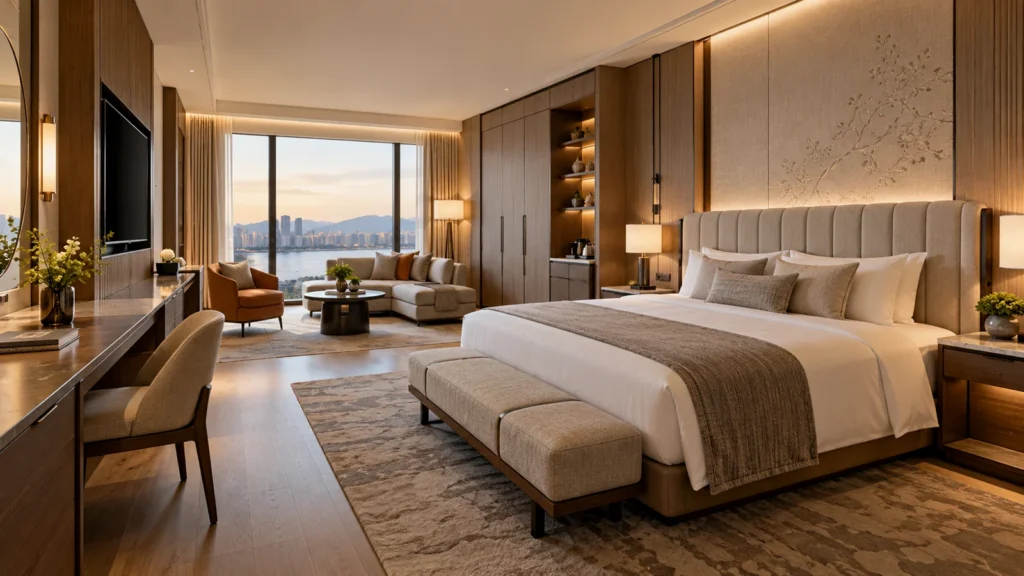
A hotel PIP mock-up room is a full-scale test room built before full renovation or large-scale production begins. It gives the project team a chance to test the room in real conditions, not just on drawings, samples, or renderings. Instead of reviewing one detail at a time, the team can assess how the layout, lighting, finishes, furnishings, functionality, and key accessible guest room requirements work together in the actual space.
That matters because a hotel PIP is more than a design refresh. It is a brand-driven upgrade process with approvals, deadlines, and business risk attached. In a well-managed hotel PIP, the mock-up stage happens before procurement for a reason. It is the point where ideas stop being theoretical and start becoming buildable.
Why a Hotel Mock-Up Room Matters More in a Hotel PIP
Why does a hotel mock-up room matter more in a hotel PIP? Because a PIP is not just a design exercise. It is tied to approvals, procurement, installation, budget, and room turnover. Once one decision slips, the next stage often slips with it.
That is why a mock-up room matters early. It helps the team catch layout mistakes, finish mismatches, lighting issues, and functional problems before they spread across dozens of rooms. More importantly, once it is approved, it becomes the standard for everything that follows. You are not building one perfect room. You are protecting the rollout.
Why Drawings and Samples Still Miss Expensive Problems

Drawings, finish boards, and renderings all have value. But they still show only part of the story.
A drawing cannot fully show how a guest will move through a tight room. A finish board cannot reveal how metal, wood grain, wall color, and lighting will look together at night. A rendering cannot test whether the bathroom will work smoothly for daily use and housekeeping. That is why model rooms matter. They help teams assess real quality, workmanship, outlet locations, thermostat placement, and closet usability in ways renderings cannot. More importantly, they allow decisions to be based on real experience rather than assumptions.
Skipping the hotel mock-up room is like approving a dish from the menu photo without tasting it first. The image may be appealing, but the real experience is what tells you whether it works.
7 Costly Mistakes a Hotel Mock-Up Room Can Catch Before They Spread

In a hotel PIP, the most expensive mistakes are often not the biggest ones. They are the small details that get approved too early and repeated too many times. A hotel mock-up room helps the team catch those issues before they spread across the rollout and turn into rework, delay, and added cost.
Layout and Clearance Mistakes
Small layout problems can become big rollout problems. A hotel mock-up room helps the team test bed spacing, desk clearance, luggage bench placement, wardrobe door swing, and overall guest movement. If one room feels tight or awkward, that same issue can easily be repeated across dozens of rooms. Catching it early is far cheaper than fixing it after installation starts.
Lighting and Finish Mismatches
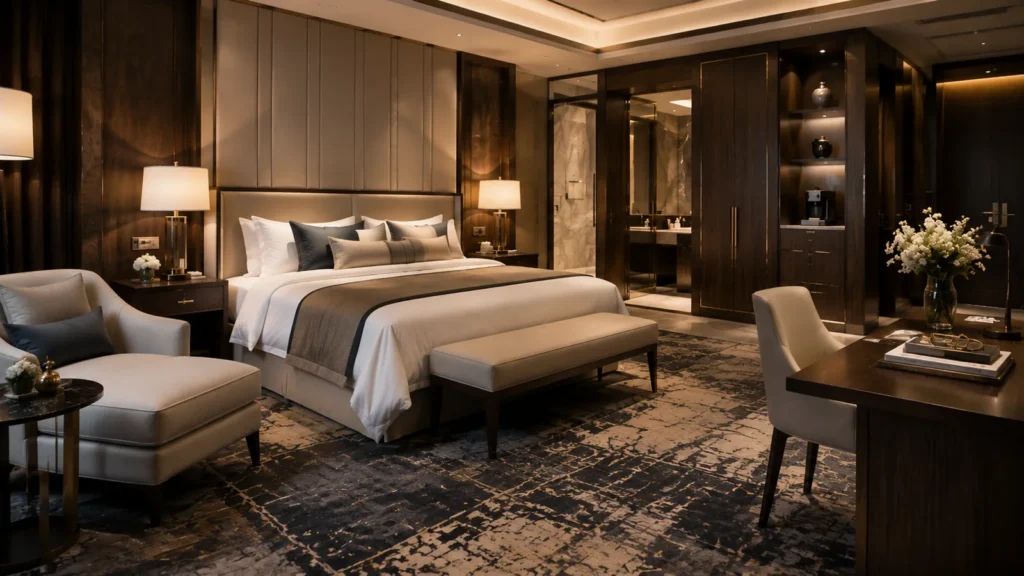
Materials often look different in real conditions than they do on a sample board. A finish that feels warm in daylight may look dull at night. Metal accents can create glare, and wall finishes can lose depth under guest room lighting. A hotel mock-up room lets the team judge the full visual effect in the actual space, before those choices are repeated at scale.
FF&E Fit, Comfort, and Vendor Quality Gaps
A product can meet the spec and still feel wrong in the room. A chair may be uncomfortable, a casegood may feel oversized, or a headboard detail may look less refined after installation. Mock-up review helps the team assess comfort, proportion, workmanship, and overall fit in a real setting. That makes final FF&E decisions much safer before volume orders are placed.
Bathroom and Wet-Area Errors
Bathrooms are compact, technical, and expensive to correct once work begins. A mirror can sit too high, a vanity can reduce movement, tile lines can drift, and drain or glass details can create long-term service issues. A mock-up room helps teams test these details early, when changes are still manageable. In a hotel PIP, bathroom mistakes are far better caught in one room than repeated across a full floor.
MEP and Construction Interface Problems
Some of the most costly mistakes happen where trades overlap. Outlet locations, switch heights, thermostats, sprinkler heads, curtain pockets, AC grilles, and millwork details may all look fine on drawings until they meet real site conditions. A hotel mock-up room helps expose those coordination issues before they turn into field fixes, delays, and repeated installation problems.
Brand Approval Gaps That Turn Into Re-Submittals
A mock-up room is not only about design review. It is also part of approval control. If the room misses key details, the team may face extra comments, late revisions, re-submittals, and even re-orders. In a hotel PIP, that can affect both cost and schedule. A well-reviewed mock-up helps close approval gaps early, before procurement and rollout move too far ahead.
Replication Failures During Full Rollout
The goal of a hotel PIP mock-up room is not to create one perfect room. It is to create a standard that can be repeated with consistency. Once materials, details, and installation methods are approved, the mock-up should guide every room that follows. Without that benchmark, different crews may interpret the work differently, and small inconsistencies can turn into large-scale quality and cost problems.
Who Should Walk the Mock-Up Room Before Approval?
A strong mock-up review should involve more than the designer and contractor. At a minimum, the walkthrough should include the owner, brand representative, design team, contractor, procurement lead, and key suppliers. The operations team should also be included, and housekeeping should not be left out. Daily use and cleanability matter just as much as appearance.
That input is easy to overlook, but it matters. The people who will use, service, and manage the room after opening often spot issues faster than the people who drew it.
What Should Be Approved Before Full Rollout Starts?
A hotel PIP mock-up room review should end with more than a handshake. It should produce a clear standard for the rooms that follow.
Before rollout starts, the team should lock down several key items:
- Approved materials and finishes
- Approved room photos or marked comments
- Updated shop drawings
- Written confirmation of substitutions
- Approved installation details
- Punch items closed or clearly assigned
- A documented benchmark room for future quality control
This is not paperwork for paperwork’s sake. It is what keeps one approved room from turning into ten different versions later. Clear documentation helps the team protect consistency, control quality, and reduce confusion during rollout.
When Should a Hotel PIP Mock-Up Room Happen?
Not too late. Not too early. The mock-up should happen once the design is far enough along to reflect the actual scope, but before procurement and installation begin to lock in costly decisions.
In a strong hotel PIP process, the mock-up sits between design submission and large-scale purchasing. That is where it belongs. This timing also makes sense because brand design standards for renovations still need to be interpreted and applied before the project moves into procurement. Build it too early, and the room may not reflect what will actually be delivered. Build it too late, and the team may already be making purchasing decisions based on assumptions that should have been tested first.
How a Mock-Up Room Protects Budget, Schedule, and Revenue

A good mock-up room protects budget by reducing rework, re-orders, double handling, and avoidable correction costs. The later a mistake is found, the more expensive it usually becomes.
It also protects schedule. Approval gaps and coordination issues are easier to solve before mass rollout begins. Once procurement and installation move forward, even a small mistake can create a much larger delay. That is why early control matters more than late heroics.
Just as important, it protects revenue. A hotel is not a warehouse. Rooms under renovation affect handback timing, availability, and operating pressure. A mock-up room cannot remove every risk, but it can reduce the chance of repeated mistakes slowing the rollout and keeping rooms out of service longer than planned.
What a Hotel Mock-Up Room Cannot Solve by Itself
Let’s keep this honest. A hotel mock-up room is powerful, but it is not magic.
It cannot replace a full scope review or solve hidden building conditions behind walls. It also does not replace waiver strategy, procurement planning, or phasing around occupancy. Owners still need site verification, approval discipline, contingency, and sequencing control before construction begins.
Think of the mock-up as the dress rehearsal, not the whole show. It can reduce risk, but it cannot replace the planning and coordination that make the rollout work.
Final Thought
A hotel mock-up room is not a showroom. In a hotel PIP, it is the cheapest place to find expensive mistakes.
It gives the team a chance to test the room before repeating it, align decisions before scaling the work, and move into full rollout with fewer surprises, fewer revisions, and a stronger standard to build against. That is exactly why the mock-up stage sits where it does in a well-managed hotel PIP process: before volume, before repetition, and before correction gets expensive.
For owners under deadline pressure, that is not a small advantage. It is the difference between a room that only looks approved and a room that is truly ready to be repeated.
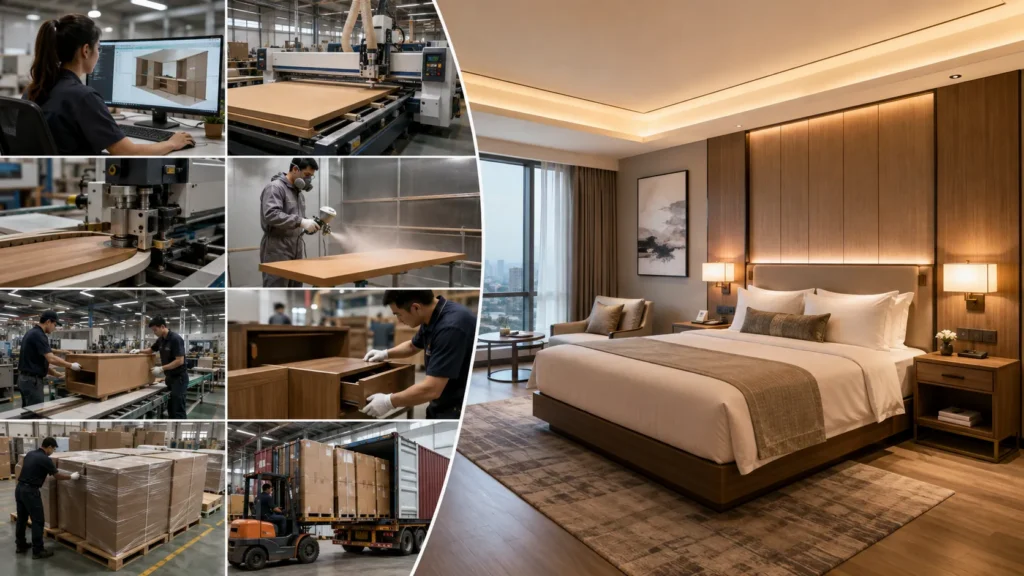
A mock-up room only creates value when the process behind it is managed well. If you are preparing for a hotel PIP, contact VOLANT FIT-OUT. With a one-stop solution that connects design, precision manufacturing, and on-site installation, VOLANT FIT-OUT helps owners reduce coordination gaps, control rollout quality, and move from approval to execution with greater confidence.
FAQs
What is a hotel PIP mock-up room?
A hotel PIP mock-up room is a full-scale test room built before full rollout. It helps the team review layout, finishes, lighting, furnishings, and functionality in real conditions before the work is repeated across more rooms.
Is a mock-up room necessary before full rollout?
In many hotel PIP projects, yes. It helps catch layout mistakes, coordination issues, and approval gaps before they spread across multiple rooms.
When should a hotel mock-up room happen in the PIP timeline?
It should happen after the design is developed enough to reflect the real scope, but before procurement, production, and large-scale installation begin.
What should be approved before full rollout starts?
The team should lock down approved materials, finishes, room comments, updated shop drawings, substitutions, installation details, and the benchmark room standard before rollout begins.
How does a hotel PIP mock-up room reduce cost and delays?
It reduces risk by catching layout, finish, approval, and coordination problems early, before they lead to rework, re-orders, delays, and repeated installation mistakes.