A hotel PIP budget can look manageable at first. Then design moves, approvals take time, purchasing starts, and a few rooms go out of service. Suddenly, the number on paper feels much heavier. That is why the real question is not just how much a hotel PIP costs, but where the money actually goes and how to keep it under control.
In our What Is a Hotel PIP: Scope, Budget, Timeline and Owner Risks, we explained what a hotel PIP is, what it usually includes, and why it matters. In this guide, we will focus on the budget side and break down where costs rise, where hidden expenses appear, and what owners can do early to stay in control.

Why Hotel PIP Budgets Feel Heavy Before Construction Even Starts
A hotel PIP budget is wider than a construction quote. It includes physical work, but also design, engineering, project management, approvals, procurement, shipping, handling, and a safety buffer for surprises. That is why the budget often starts to feel real before the first wall is opened up. In a hotel PIP, costs begin to spread once design, approvals, sourcing, delivery, and installation start moving at the same time.
This early pressure is built into the process. Hotel renovation budgeting is not a single number. It is a layered system, with costs often spread across guestrooms, bathrooms, corridors, public spaces, function areas, guest amenities, infrastructure, and common additives. That is why even a simple-looking PIP can become much heavier once the full scope is broken down.
The market has also become less forgiving. A hotel labor costs and trends report from HotelData found that labor cost per occupied room rose 12.8% in 2025 to $48.32, while Q4 wage pressure jumped 21.1% year over year. When labor stays high, late decisions do not just slow the project down. They also make the budget harder to control.
The 5 Hotel PIP Cost Buckets — and What Actually Drives Each One

Most hotel PIP budgets do not become difficult because of one single expense. They become difficult because several cost layers start moving at the same time. Breaking the budget into five main buckets makes it easier to see where the money usually goes, which areas carry the most risk, and where owners need tighter control.
1. Hard Costs: The Physical Work That Shapes the Core Budget
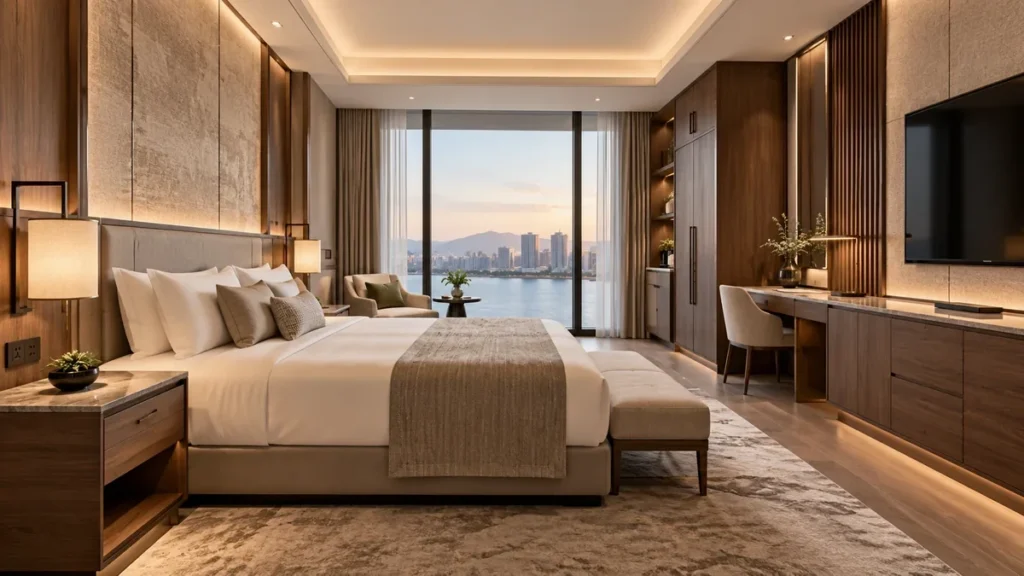
Hard costs cover the physical improvements to the property, including guest room and public area renovations, construction labor, materials, millwork, MEP systems, doors, and windows. This bucket gets the most attention because it is the most visible, but that does not make it the easiest to control.
Guest rooms often drive hard costs by volume, while public areas drive them by complexity. In older hotels, this bucket can rise even faster because demolition may reveal damaged substrates, outdated wiring, plumbing issues, waterproofing problems, or ADA-related upgrades.
2. Soft Costs: The Professional Layer That Keeps the Project Moving
Soft costs include design and architecture, engineering, project management, owner representation, permits, and legal or consulting fees. They are less visible than hard costs, but they help keep the entire project organized, approved, and moving in the right direction.
This bucket usually grows when scope stays unclear or decisions move too slowly. Extra reviews, drawing revisions, consultant time, and approval cycles can quietly add up and make the rest of the budget harder to control.
3. FF&E and OS&E: The Visible Spend Owners Notice First
FF&E and OS&E include furniture, fixtures, equipment, operating supplies, artwork, décor, and guest amenities for guest rooms and public spaces. These are the items guests see first, so owners often focus on them early.
But visible does not always mean most dangerous. This bucket matters, yet budget drift can happen just as quickly through logistics, approvals, or hidden systems work. Standardizing repeated room types and recurring items can help improve consistency, shorten approvals, and make purchasing easier to manage.
4. Logistics and Delivery: The Cost Bucket That Looks Smaller on Paper
Logistics and delivery usually include procurement, shipping, receiving, handling, and installation supervision. In early budget drafts, this bucket can look manageable. On site, it often becomes more disruptive than expected.
Hotels are not empty boxes. Deliveries must be sequenced, some materials may need off-site storage, and certain items may arrive before rooms are ready. When approvals come late or goods must be moved twice, logistics costs can rise quickly and start affecting the wider budget.
5. Contingency Reserve: The Bucket That Protects Everything Else
Contingency reserve is the budget buffer for unforeseen conditions, scope changes, material price fluctuations, schedule impacts, and other project risks. It is not extra padding. It is part of responsible planning.
This bucket becomes even more important when the building is older, the scope is still evolving, or the hotel stays open during renovation. A hotel PIP budget without contingency may look lean at first, but it is much more fragile once real project conditions start to appear.
What Usually Pushes These 5 Cost Buckets Higher
Four factors usually push these five cost buckets higher: building age, brand tier, scope depth, and whether the hotel stays open during the work.
Building Age Raises Hidden Technical Risk
A newer hotel may need mostly cosmetic work. An older property may trigger deeper infrastructure upgrades once finishes are removed. That is why building age often becomes one of the fastest budget multipliers in a hotel PIP.
Brand Tier Raises Cost and Approval Pressure
More demanding brands usually expect tighter finish quality, stronger visual consistency, and cleaner approval discipline. The more exact the standard, the less room there is for loose substitutions or late design changes.
Scope Depth Matters More Than Scope Size
A soft refresh and a systems-heavy upgrade can affect similar areas and still land in very different budget ranges. Cosmetic work changes what guests see, while infrastructure work can quietly reshape the entire capital plan.
Keeping the Hotel Open Adds Operational Pressure
Keeping the hotel open affects labor efficiency, room turnover, guest-ready planning, delivery windows, and noise control. That is why occupied renovation is harder to schedule, harder to price, and easier to underestimate.
Hidden Costs Owners Often Miss in a Hotel PIP Budget
This is where many hotel PIP budgets begin to drift. Common hidden costs include storage fees, out-of-service rooms, brand-required consultants, delayed approvals, and hidden building conditions. These are not side notes. They are some of the most common reasons a budget moves after the “real” number was supposed to be settled.
Storage Fees and Held Inventory
When products arrive before rooms are ready, someone pays to store them. Then someone often pays again to move them. If approvals lag, even well-purchased items can turn into expensive inventory sitting in the wrong place.
Out-of-Service Rooms and Revenue Pressure
A room under renovation is not just a construction event. It is also a revenue event. One Hospitality Net article used a hypothetical 50-room hotel example to show how long PIP payback can take. In that scenario, a $500,000 PIP with a $5 ADR increase and a 5% occupancy lift would still have a modeled payback period of 5.81 years. That example also did not include the lower ADR and occupancy that can happen during renovation itself. Room downtime is not an invisible cost. It is real cost.
Brand-Required Consultants and Re-Submittals
Some owners budget for design, then underestimate the cost of getting decisions approved the right way. If the first submission is incomplete or the mock-up misses key details, revision cycles can quickly add both time and cost. In some cases, one re-submittal can quickly become two when the scope was not translated into a clear, buildable package early enough.
Hidden Building Conditions
Old wiring, moisture damage, uneven floors, outdated plumbing tie-ins, weak walls, and ADA triggers rarely announce themselves politely. They usually appear after work begins, which is exactly why contingency matters so much in older properties.
Delayed Approvals, Re-Orders, and Double Handling
What gets delayed often gets handled twice, and what gets handled twice usually costs more. Late approvals can trigger re-orders, extra storage, delivery reshuffling, and repeated handling. Approval delay is not just a timeline problem. It is a budget problem.

How Owners Can Control Hotel PIP Cost Before Construction Starts
The smartest cost control usually happens before construction starts. Once ordering begins, every mistake becomes more expensive to fix.
Step 1: Review the PIP Line by Line
Start by reviewing the PIP carefully with the brand team. Do not rush past vague wording or assume site conditions will probably be fine. Clarity is cheaper than correction. Before you compare prices, make sure you fully understand what the PIP is actually asking for.
Step 2: Separate Must-Have Items from Negotiable Ones
Not every requirement carries the same weight. Some items are non-negotiable because they affect compliance, life safety, or core brand approval. Others may be phased, substituted, or deferred if the case is strong enough. This step helps owners focus capital where it matters most.
Step 3: Verify Site Conditions Before Finalizing Scope
Do not price an illusion. If the building hides deeper issues, it is usually cheaper to find them early than after purchasing decisions are locked. Field measurements, preconstruction checks, ADA triggers, and room-by-room review can all help reduce expensive surprises later.
Step 4: Use Mock-Ups to Catch Problems Early
A mock-up is not just for presentation. It is a risk filter. It helps catch layout mistakes, finish mismatches, lighting problems, and functional issues before they repeat across dozens or hundreds of rooms. Fixing one room on paper or in mock-up form is far cheaper than fixing fifty after rollout.
Step 5: Identify Long-Lead Items and Plan Around Occupancy
Long-lead items should be identified early, especially if the hotel stays open during renovation. Timeline decisions and budget decisions are closely linked. Noisy work, delivery sequencing, and room turnover all need to be planned around occupancy. A strong phasing plan helps protect revenue-generating rooms and reduces budget drift.
How Timeline Decisions Affect Budget Control
Timeline decisions are budget decisions. That may sound strong, but it is true in hotel PIP work. In practice, four early stages often have direct budget impact before installation even starts: scope review, waivers and timeline negotiation, mock-up and approval, and procurement.
A good scope review protects the budget before money is committed. A strong waiver strategy helps keep noncritical items from crowding the capital plan. A well-run mock-up reduces rework before it spreads across multiple rooms. Smart procurement timing also lowers exposure to delay, substitution pressure, and storage waste. Miss these stages, and the budget starts leaking through schedule mistakes.
That is why “we will make it up later” is such a dangerous phrase in a hotel PIP. Later usually means after approvals, after orders, after storage fees, and after rooms have already gone out of service. By then, the cheapest fix has already passed.

Budget Risk vs. Operational Risk: What Owners Should Protect First
Not every dollar serves the same purpose. Some spending protects revenue. Some protects compliance. Some prevents rework. Treating every line item the same does not work, because each one protects a different part of the project.
Protect Revenue-Critical Items First
Out-of-service rooms, poor handback timing, weak guest-ready planning, and phasing mistakes can damage the revenue stream that is helping fund the renovation. Revenue disruption is often one of the biggest owner risks in a hotel PIP, which is why these items deserve early protection.
Do Not Underfund Compliance-Driven Work
ADA, life safety, ventilation, and other system-related issues may be less visible than a new guest room finish, but they carry far more risk when ignored. A fresh room does not solve a compliance gap.
Prevent Rework Before It Multiplies
Written approvals, signed punch lists, clear mock-ups, and disciplined document control may seem boring at first. But once mistakes start repeating across rooms, they become some of the cheapest insurance in the whole project.
Keep the Asset Decision in View
Budget questions do not always stay inside the construction budget. In some cases, they become asset strategy questions. If PIP ROI no longer aligns with the broader investment outlook, owners may need to consider wider options rather than treating every required spend as automatic.
A Practical Hotel PIP Budget Checklist for Owners
Before construction starts, owners should be able to answer these questions clearly:
- ✓ Have you reviewed every PIP item line by line with the brand reviewer?
- ✓ Have you separated must-have items from negotiable ones?
- ✓ Have you verified site conditions before locking the final scope?
- ✓ Does your budget include all five cost buckets, not just hard costs and FF&E?
- ✓ Is your contingency realistic for the age, scope, and operating condition of the hotel?
- ✓ Have you identified long-lead items before procurement begins?
- ✓ Is the mock-up process planned early enough to reduce rework?
- ✓ Is phasing aligned with occupancy, guest impact, and delivery realities?
Final Thoughts
Hotel PIP budgets rarely fail because of one huge item. They fail because small decisions stay unclear while the project keeps moving. A vague scope here. A late approval there. A delivery mismatch. A room held out of order for too long. That is how budget drift begins.
The good news is that hotel PIP cost control is not magic. It comes down to timing, clarity, and coordination. When owners understand the five cost buckets clearly, they can see where the money goes, where cost pressure starts, and where early decisions matter most.
That is also why delivery strategy matters. A hotel PIP is not just about products. It is about how approvals, sourcing, logistics, and installation work together. If you are planning a hotel PIP and want clearer budget visibility before construction starts, contact us to discuss your project. Volant Fit-Out can help you review scope, reduce handoff risk, and build a more controlled delivery path.
FAQs
What is included in a hotel PIP budget?
A hotel PIP budget usually includes hard costs, soft costs, FF&E and OS&E, logistics and delivery, and contingency reserve. In simple terms, that means physical renovation work, professional fees, furniture and operating items, delivery-related costs, and a budget buffer for change and risk.
What hidden costs do owners often miss in a hotel PIP budget?
The most common hidden costs in a hotel PIP budget are storage fees, out-of-service rooms, delayed approvals, re-orders, consultant costs, and hidden building conditions. These costs usually appear after the “main” budget is set, which is why they often cause budget drift.
How can owners control hotel PIP cost before construction starts?
The best way to control hotel PIP cost is to act early. Review the PIP line by line, separate must-have items from negotiable ones, verify site conditions, plan mock-ups early, and identify long-lead items before procurement begins. Cost control is usually strongest before orders are placed, not after.
Can a hotel stay open during a PIP renovation?
Yes, many hotels stay open during a PIP renovation, but that usually makes the project harder to schedule and harder to price. Occupied renovation adds pressure to phasing, room turnover, delivery timing, guest experience, and labor efficiency, which is why it can raise both operational risk and hotel PIP budget pressure.
Why does hotel PIP budget drift happen so often?
Hotel PIP budget drift usually happens because scope stays unclear while approvals, procurement, logistics, and operations keep moving. A vague scope, late brand comments, hidden site conditions, and weak phasing can all push costs higher even when the original budget looked reasonable.